Iraqi archaeologists piece together ancient treasures ravaged by Islamic State
The Hindu
Archaeologists painstakingly reconstruct ancient Assyrian treasures destroyed by jihadists, preserving humanity's heritage at Nimrud site.
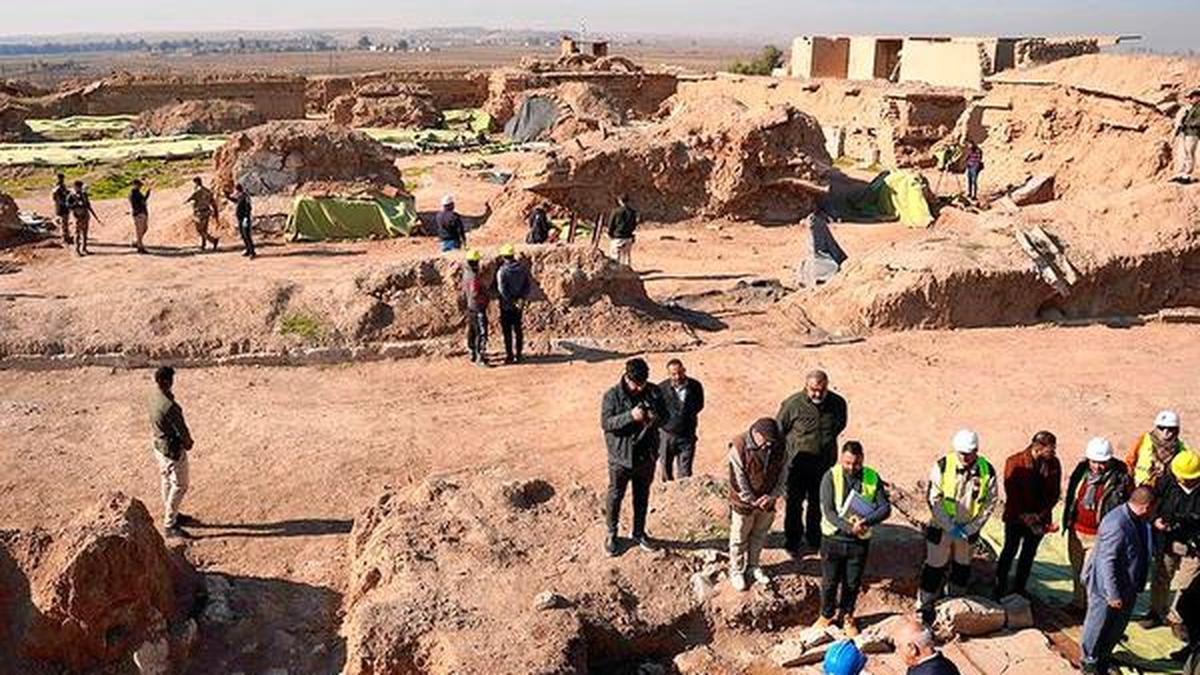
A decade after jihadists ransacked Iraq’s famed Nimrud site, archaeologists have been painstakingly putting together its ancient treasures, shattered into tens of thousands of tiny fragments.
Once the crown jewel of the ancient Assyrian empire, the archaeological site was ravaged by Islamic State (IS) fighters after they seized large areas of Iraq and neighbouring Syria in 2014.
The precious pre-Islamic artefacts destroyed by the jihadists are now in pieces, but the archaeologists working in Nimrud are undaunted by the colossal task they face.
“Every time we find a piece and bring it to its original place, it’s like a new discovery,” Abdel Ghani Ghadi, a 47-year-old expert working on the site, said.
More than 500 artefacts were found shattered at the site, located about 30 km from Mosul, the city in northern Iraq where IS established the capital of their self-declared “caliphate”.
Meticulous excavation work by Iraqi archaeologists has already yielded more than 35,000 fragments.
The archaeologists have been carefully reassembling bas-reliefs, sculptures and decorated slabs depicting mythical creatures, which had all graced the palace of Assyrian King Ashurnasirpal II nearly 3,000 years ago.


Russia claims control of Potapivka village in Ukraine's Sumy region amid ongoing military efforts to establish a buffer zone.

Iranian missile strikes on Israeli towns cause widespread damage and injuries, marking a significant escalation in the ongoing conflict.

As Gor makes first trip as U.S. Special envoy to South Asia, Delhi watches strategic signals closely
Sergio Gor's inaugural trip as U.S. Special Envoy to South Asia signals strategic U.S. engagement amid regional tensions.

Slovenians vote in a tight election between liberal and populist candidates, impacting the country's future domestic and foreign policies.

Netanyahu asserts U.S.-Israel alliance fights Iranian threats, emphasizing global security after missile strikes on Israeli and European targets.

Israeli settlers attack Palestinian villages in the West Bank, causing injuries and destruction amid ongoing settlement expansion.

Britain asserts no evidence of Iran planning missile strikes on Europe, despite Israeli claims of missile capabilities.

UNESCO reports over half of countries have banned phones in schools due to concerns about attention, cyberbullying, and social media impact.

Analysis reveals a U.S.-operated Patriot missile likely caused a pre-dawn explosion in Bahrain, injuring numerous civilians.

Sri Lanka raises fuel prices by 25% amid ongoing West Asia conflict, impacting petrol and diesel costs significantly.

Iran strikes near Israeli nuclear research center as Trump threatens attacks on Iranian power plants
Iran's missile strikes near Israel's nuclear site escalate tensions as Trump threatens retaliation against Iranian power plants.

Saudi Arabia intercepts one of three ballistic missiles targeting Riyadh amid ongoing regional tensions and threats from Iran.

Iran's death toll exceeds 1,500 amid escalating war, with heavy airstrikes and shifting U.S. and Israel strategies reported.