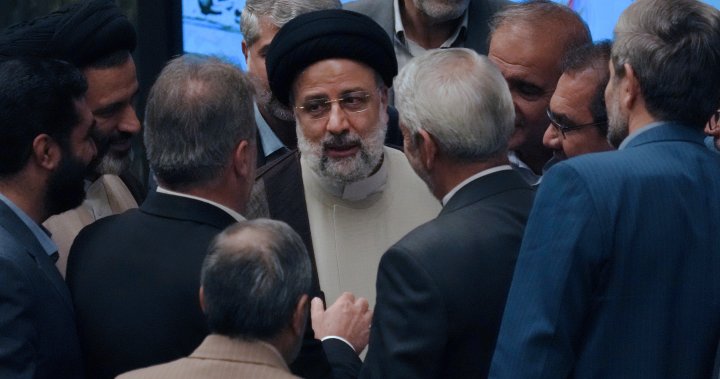
Iran’s president appeals for national unity as anti-government protests continue
Global News
Security forces have rounded up an untold number of demonstrators, as well as artists who have voiced support for the protests. Local officials report at least 1,500 arrests.
Iranian President Ebrahim Raisi on Tuesday appealed for national unity and tried to allay anger against the country’s rulers, even as the anti-government protests that have engulfed the country for weeks continued to spread to universities and high schools.
Raisi acknowledged that the Islamic Republic had “weaknesses and shortcomings,” but repeated the official line that the unrest sparked last month by the death of a woman in the custody of the country’s morality police was nothing short of a plot by Iran’s enemies.
“Today the country’s determination is aimed at cooperation to reduce people’s problems,” he told a parliament session. “Unity and national integrity are necessities that render our enemy hopeless.”
His claims echoed those of Iran’s supreme leader Ayatollah Ali Khamenei, who blamed the United States and Israel, the country’s adversaries, for inciting the unrest in his first remarks on the nationwide protests on Monday. It’s a familiar tactic for Iran’s leaders, who have been mistrustful of Western influence since the 1979 Islamic Revolution and commonly blame domestic problems on foreign enemies without offering evidence.
The protests, which emerged in response to the death of 22-year-old Mahsa Amini after her arrest for allegedly violating the Islamic Republic’s strict dress code, have embroiled dozens of cities across the country and evolved into the most widespread challenge to Iran’s leadership in years. A series of festering crises have helped fuel public rage, including the country’s political repression, ailing economy and global isolation.
The scope of the ongoing unrest, the most sustained in over a decade, still remains unclear as witnesses report spontaneous gatherings across the country featuring small acts of defiance – such as protesters shouting slogans from rooftops, cutting their hair and burning their state-mandated headscarves.
The hardline Kayhan daily on Tuesday tried to downplay the scale of the movement, saying that “anti-revolutionaries,” or those opposed to the Islamic Republic, “are in the absolute minority, possibly one per cent.”
But another hardline newspaper, the Jomhuri Eslami daily, cast doubt on government claims that foreign countries were to blame for the country’s turmoil.


Trump says U.S. is nearing its Middle East objectives as allies condemn Iran’s actions in the Strait of Hormuz and warn of global energy impacts.

NATO’s top commander, Gen. Alexus Grynkewich, confirmed earlier Friday that the alliance has pulled several hundred personnel out of Iraq and relocated them to Europe.

The Epstein files revealed consistent communication between the royal and Epstein, including after he was convicted of child sex trafficking offences in 2008.

Prime Minister Mark Carney endorsed a statement after it was released by allies Thursday, expressing willingness to contribute to efforts to reopen the Strait of Hormuz..

James 'Jimmy' Gracey was reported missing after he didn't return to the short-term rental where he was staying with friends during spring break.

The Mina Al-Ahmadi refinery in Kuwait, which can process some 730,000 barrels of oil per day, is one of the largest in the Middle East.

U.S. intelligence, military and law enforcement officials unanimously agreed that an intelligence assessment doubting a foreign role in the 'Havana syndrome' should be withdrawn.

The federal Conservatives accuse the government of being too secretive about the war and point out that Canada's allies are sharing such information openly at daily briefings.

Canada is amongst several nations who 'condemn in the strongest terms recent attacks by Iran on unarmed commercial vessels in the Gulf.'

Gas prices in Canada have been climbing sharply since the Iran war began, but how much higher they could go is unclear as consumers struggle with the higher cost of living.

The Oscar-winning actor has denied all allegations against him and maintains that the incidents raised in the lawsuits either did not happen or were consensual.

European leaders have deflected entreaties from U.S. President Donald Trump to send military assets to secure the Strait of Hormuz.

All six crew members of a KC-135 Air Force refueling aircraft were killed last week in a plane crash over friendly territory in western Iraq, supporting operations against Iran.