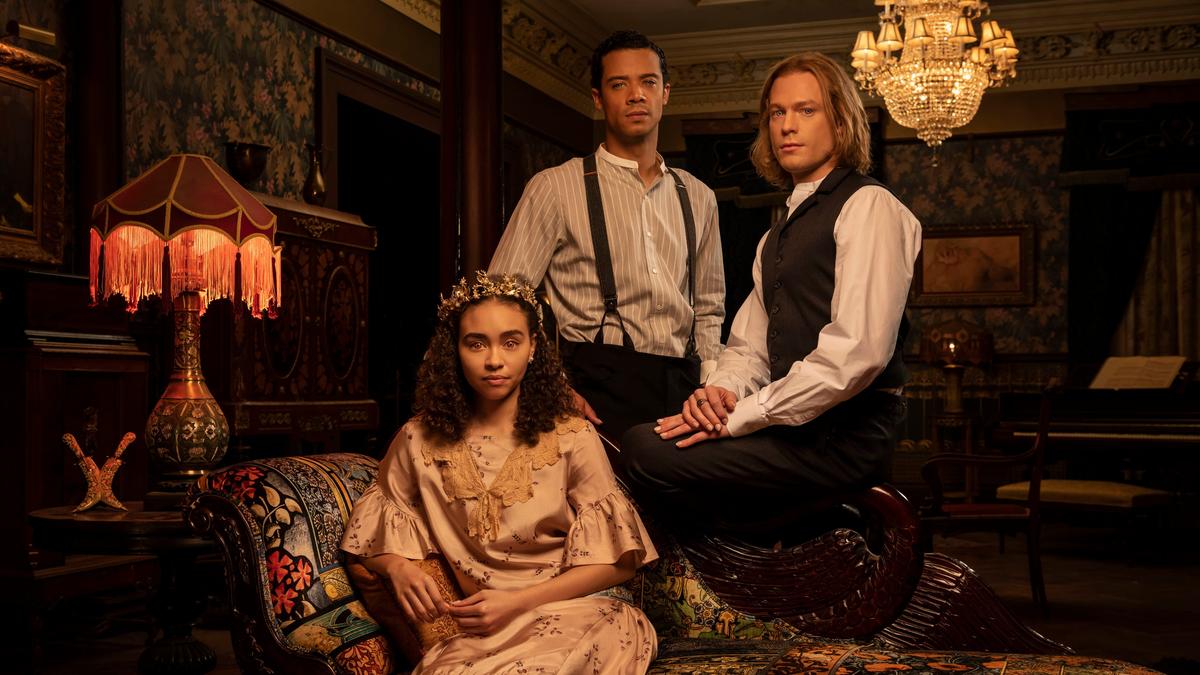
‘Interview with the Vampire’ Season 2 review: New blood and new vampire romances keep the audience thirsty for more
The Hindu
Anne Rice’s Interview with the Vampire is a canon text in how the audience’s perception of the blood-thirsty beast has changed over the years
Anne Rice’s Interview with the Vampire (IWTV), is a canon text in how the audience’s perception of the blood-thirsty beast has changed over the years. Leaving behind a fearful monster to embrace a seductive spectacle, Rice’s vampires were enthralling, entertaining, but most importantly they were queer (at least in subtext).
AMC’s latest iteration of Rice’s novel, introduced many changes to the novel’s settings and its characters. The show, set in early 20th century New Orleans instead of 18th century Louisiana, follows Louis de Pointe du Lac, a black vampire (switched from the character’s original background as a plantation owner). In its first season, the show incorporated these changes, not as token representations, but as ways to inform the inner lives of its vampire cast. The show’s recently-concluded second season, over eight episodes, delivers a perfect follow-up. With more bite to its script, feisty dalliances in the streets of Paris and San Francisco, and a new vampire theatre troupe, IWTV’s second season is a bloody feast to relish.
Picking up right where we left of, the second season gives the audience a minute to digest the new development – ‘Rashid’ is actually Armand (Assad Zaman), an ancient vampire and Louis’ (Jacob Anderson) longtime companion. As Armand settles next to Louis in a more publically equal role, journalist Daniel Molloy (Eric Bogosian) continues the interview with fresh scorn after having been lied to about Armand’s identity.
The follow-up season of IWTV hinges on its familiar characters settling down in new roles. We have a new dynamic between Louis and Armand to decipher, while Daniel takes a trip down the memory lane to San Francisco, when he first came across Louis. Meanwhile, the timeline in the interview, as being narrated by Louis, picks up in Europe with the second World War winding down. A heartbroken Louis, who almost-but-not-quite murdered Lestat, is wandering the European countryside with Claudia (Delainey Hayles) searching for other vampires. Where is Lestat in all this, you ask? In Louis’ head mostly, tormenting him. And despite having flashes of appearance, Sam Reid is as dramatic and captivating as ever.
The actual course of the interview between Louis and Daniel lasts just under two weeks, but spans three vastly different timelines. They recall his time in Paris in the 1940s, where he first meets Armand, and also explore their previous interview session in 1973. All of this takes place within the cold and sterile interiors of Louis’ Dubai apartment in the present, post-COVID time. IWTV’s ambitious move to juggle these three timelines together pays off well. It works almost like those plays that Armand puts up at his Théâtre des Vampires in Paris. A seamless rotation of horror and heartbreak, couched in amusement, that keeps the audience on its toes.
Like Armand and Daniel, Louis is also given a new dimension from which to look at his vampirism. Sans Lestat, who was his initiation into vampirism and queerness, Louis attempts to find a fresh start for himself in Paris. In a new social order, where the colour of his skin might is not the first thing people talk about, Louis feels more inclined to settle down. He takes up Armand and photography with equal ease. Claudia, who is now part of Armand’s coven, also enjoys her newfound family that matches her teenage impulse to ruthlessly hunt.
Delainey Hayles takes the mantle from Bailey Bass (who played Claudia in the first season), and infuses a new kind of anger in Claudia. It’s a different take on being resigned to a life of teenagehood, but suits a Claudia who is now decades into being a vampire. Despite being disappointed in him she still accompanies Louis, whom Jacob Anderson plays with an exquisite control.


Prasads Multiplex Hyderabad unveiled one of India’s largest HDR cinema auditoriums, the PCX HDR by Barco

From staged funerals to rented fatherhood, Brendan Fraser turns rented intimacy into something disarmingly real in Hikari’s poignant Tokyo fable

Meet Nivrritii Mahesh, a Bharatanatyam dancer who dances with Cochlear implants

In a surprising turn of events, Urvashi theatre, one of Bengaluru’s iconic single screens, has re-opened, with the much-talked-about Dhurandhar: The Revenge running to a full house in the theatre. After the expiry of the 45-year lease, it seemed like curtains would come down on the king-size theatre but for now, it’s good news for fans.

The thrilling ‘Peaky Blinders’ finale is a farewell tour tailored for Tommy Shelby, while passing the baton to a new generation

BTS's comeback concert in Seoul drew over 100,000 fans, featuring their new album "ARIRANG" and a global livestream.

Khalid Rahman is reuniting with Malayalam superstar Mammootty after Unda (2019). The Thallumaala director has teamed up with the veteran for Mattancherry Mafia.

Bollywood actor Akshay Kumar paid tribute to the martial arts grandmaster and Hollywood’s action star, Chuck Norris, who passed away on Thursday, March 19, 2026.

Renowned Odissi dancer Madhumita Raut, aged 59, dies of cardiac arrest, leaving behind a legacy of artistic achievements.

Chuck Norris, iconic martial arts master and actor, dies at 86, leaving behind a legendary legacy and internet memes.

South African naturalist Steve Boyes speaks on ghost elephants, ancestral tracking, and Werner Herzog’s documentary exploring Angola’s elusive highland giants

Actor-director Amol Palekar will receive META's Lifetime Achievement award for 2026 on March 25 in New Delhi.

India's artists unite against rising censorship, advocating for creative freedom and support for marginalized voices in the arts.