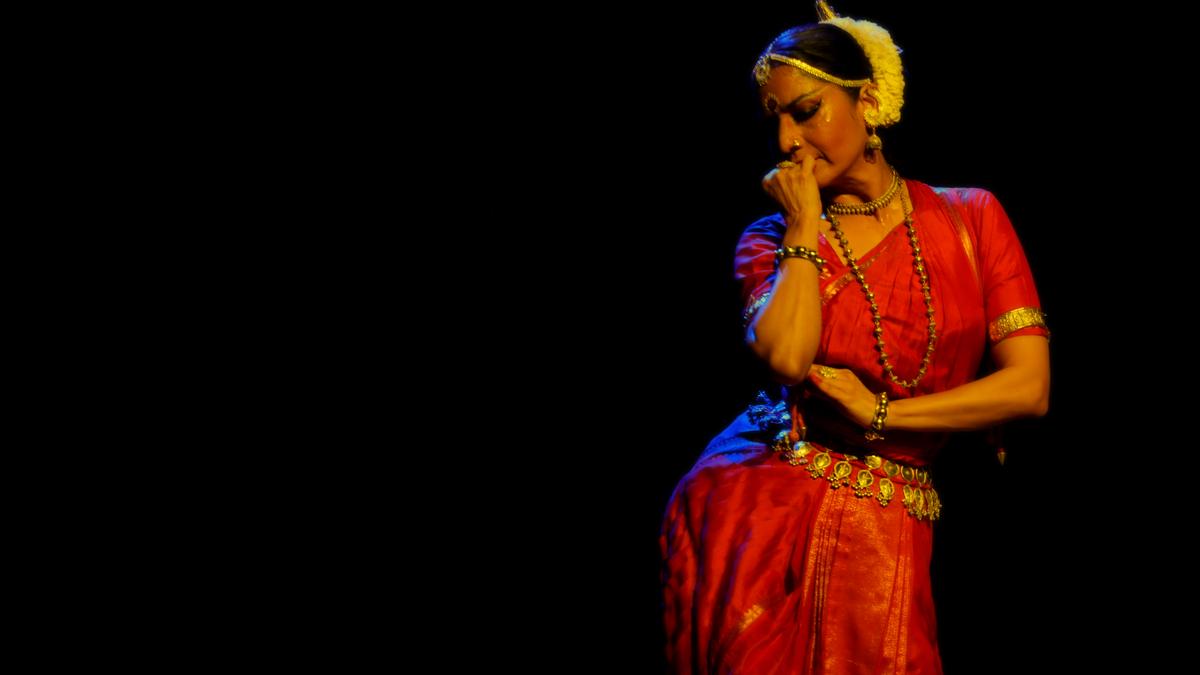
International Yoga Day: Odissi exponent Surupa Sen on how dance and yoga nourish the body and the mind
The Hindu
Discover the essence of balance and mindfulness through ancient practices of yoga and classical dance for a holistic experience.
“Run! Run faster and you will get there quicker!”, is all we hear and do in our lives. We are constantly surrounded by the demand to cope no matter how. On the other end of the spectrum, our ancient practices teach us to be still.
Yoga and classical dance are both indigenous traditions of India that seek the same goal — to be aware of the breath and let the praana guide every action. To engage both the body and the mind to act at once for a holistic experience. The ancient practices suggest that we pause to engage deeply with life, and compassionately with ourselves.
Yoga enables the mind-body balance that help us make better choices for living.
Dancers are complex movement artistes. They have to be contortionists, martial artists, poets, story tellers and sculptors all at once. They do not just bring an idea to life when they dance but create life itself in each moment. As a dancer, my body changes every moment to adhere to a complexly shifting mind. From the slightest quiver of a lip and the fleeting angle of the eye to the gentle tremble of a finger, all come together to express a single nuanced emotion.
.
For a dancer, the body is a living instrument. If my body must go to places that my mind seeks in its imagination, I must train to stretch its potential so that I may inhabit those boundless worlds. Thus when the body, mind and spirit come together, we have reached our goal.
Martha Graham, the great contemporary dancer and choreographer said, “I am a dancer. I believe we learn by practice. Whether it means to learn dance by practicing dancing or to learn to live by practicing living”.


In this week's Science for All newsletter, XX explains

Test your knowledge with the quiz on Science films at the Oscars through history

Set between the Siwalik hills and the plains, Butwal offers travellers a mix of regional cuisine, pilgrimage trails to Lumbini and the comfort of Hyatt’s new hospitality landmark

Explore 2026's wallpaper trends in India, highlighting botanicals and handmade designs that enhance modern homes with nature-inspired aesthetics.

Mercedes-Benz CLA 250+ with EQ Technology review: design, performance, range and features explained. Discover how the new electric CLA combines advanced AI, long range, fast charging and futuristic styling for the next generation of luxury EVs.

AI tool for sparrow conservation

BTS’s comeback with ‘Arirang’ marks a major global music event. When does the album release, and where can you watch their concert live stream? We have all the details

The 2026 U.S. cholesterol guidelines urge starting screening and treatment at 30 to prevent cardiovascular disease effectively.

Olam Festival 2026 in Thiruvananthapuram returns March 27-29 with 120+ vendors, music, art, and cultural zones.

A few storytellers in Thiruvananthapuram share their journeys, challenges, and evolving methods on World Storytelling Day, inspiring young minds.

76-year-old Kurian Jacob from Kerala triumphs with seven medals, including five golds, at the Open Masters Games in Abu Dhabi.

Explore the nature of the human mind as an emergent property of brain activity and complex neural interactions.

CERN's Large Hadron Collider discovers the Xi-cc-plus particle, enhancing understanding of quantum mechanics and baryon behavior.