International Whale Shark Day: Saving the gentle giants of the sea along the Indian coast
The Hindu
Conservation efforts to protect endangered whale sharks in India face challenges, requiring community engagement and stricter enforcement of laws.
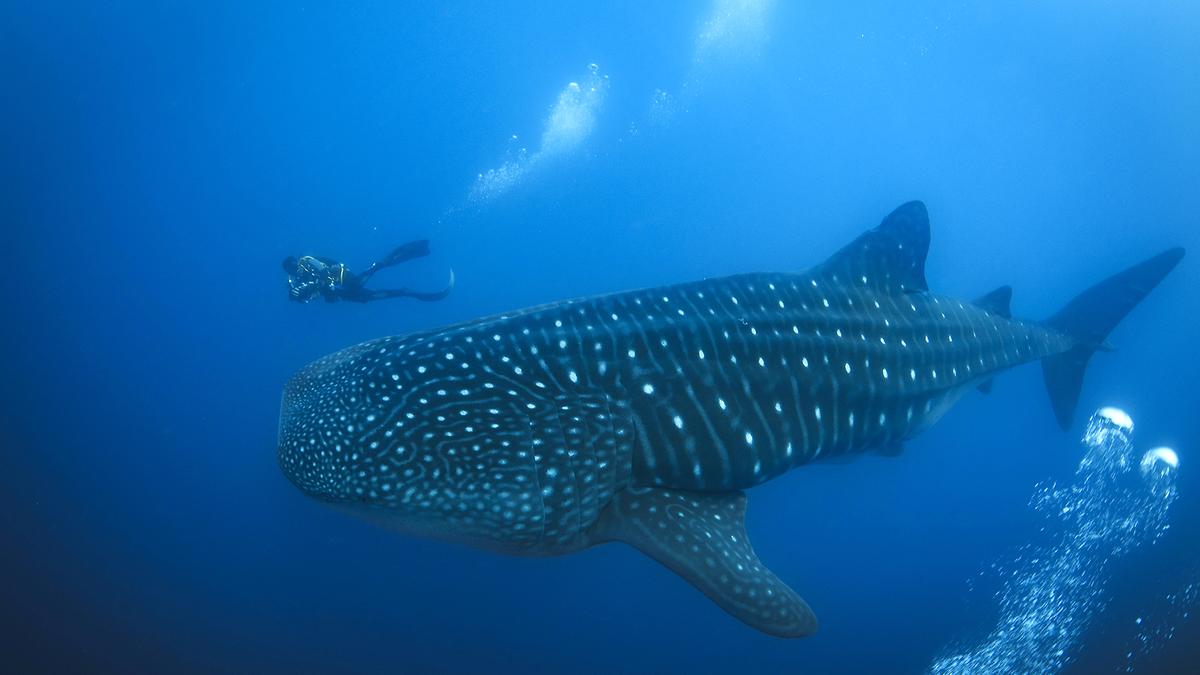
It was a sunny morning on July 25 at Gilakaladindi, a coastal village in the East Godavari district of Andhra Pradesh, when a group of fishermen found a massive fish caught in their nets. The catch was a whale shark. Few days later, a similar incident occurred at the same place.
The whale shark (Rhincodon typus) is the world’s largest known fish species. Not a whale but a species of shark, it is included in Schedule I of the Wildlife Protection Act of India, 1972, which renders the capture and killing of the fish a cognisable offence. “It’s akin to killing a tiger,” says P Sathiyaselvam, conservation biologist of Bombay Natural History Society (BNHS). Listed as endangered by the International Union for Conservation of Nature (IUCN), whale sharks have been hunted for years for its fin and liver for commercial trade, while oil from the fish was used for water-proofing wooden boats. International trading of its parts is banned under the Convention on International Trade in Endangered Species and the Wildlife Protection Act of India.
“Unregulated and unsustainable fishing practices to meet international demand for shark fins, liver oil, skin and meat, accidental entanglement in trawl and set nets, collision with boats as well as extensive coastal pollution have been attributed as major threats to the species,” adds Sathiyaselvam.
Since the mid-1980s, whale sharks became a regular fishery for their liver. In the 2000s, alarming incidences of slaughter of this species was reported from the Gujarat coast. This was captured in the award-winning film Shores of Silence: Whale Sharks in India by Mike Pandey, which eventually brought about major legislative changes to protect whale sharks worldwide.
At that time, the Wildlife Trust of India launched a massive campaign to bring about conservation awareness to fishers in Junagadh and, later, expanded it to Gir Somnath, Porbandar and Dwarka in Gujarat. The project had a considerable impact with workshops conducted in villages and street plays enacted to convey the consequences of hunting whale sharks. Since then, over 800 sharks have been released by the fishermen of Gujarat.
Despite conservation efforts, the whale sharks continue to face challenges primarily due to bycatch and accidental capture in fishing nets, illegal hunting and habitat degradation. A global study indicates that over the past 75 years, the world’s whale shark population has decreased by 50%.
On the East Coast, the Kakinada coast in Andhra Pradesh is one of the major landing zones for whale sharks. Fishermen here often encounter these gentle giants in their nets, leading to accidental deaths. The lack of awareness and the potential economic losses associated with releasing these sharks only exacerbate the issue. Whale sharks are at times encircled in purse seine nets. “This net is a major culprit in Visakhapatnam coast. Over the past couple of years, the reports of whale shark stranding and landing have also increased along the coast,” says Sri Chakra Pranav, a marine biologist and co-founder of the East Coast Conservation Team, a non-profit working on wildlife conservation on the East Coast of India.


Perundurai's industrial growth faces challenges of pollution, water scarcity, and healthcare, impacting residents ahead of the 2026 elections.

The Travancore Devaswom Board asserts that courts should respect community beliefs in its Supreme Court submission on Sabarimala's entry issue.

Karnataka cancels Deendayal Upadhyay event at KSOU due to protocol violations, citing inconsistency with university objectives.

Illegal pickle unit busted in Hyderabad, one arrested; unhygienic stock worth ₹3 lakh seized

Karnataka has entered a state of demographic transition where a large working-age population will no longer be enough to drive economic growth, and future gains will depend on how productively people are employed, the ‘State of Working India 2026’ report said.

Key demands in Sulur Assembly constituency include reviving the powerloom sector, addressing farmers' needs, and protecting River Noyyal.

Kodihalli urges Karnataka CM to allocate ₹10,000 crore revolving fund for seamless procurement of farm products under MSP scheme.

Kerala's political parties continue to marginalize women candidates, highlighting a troubling disconnect between gender demographics and representation.

The High Court of Karnataka on Tuesday ordered the issue of a notice to the State government on a PIL petition, which had complained about disturbances caused to people residing in the localities around the National Public School situated in Rajajinagar 5th block due to use of loudspeakers with high volume in the school and parking of school buses in residential areas.

China is extensively mapping ocean floors to enhance submarine warfare capabilities against the U.S. and allies across key oceans.

AIADMK's 2026 manifesto promises free rations, women's benefits, education reforms, and economic growth initiatives for Tamil Nadu.

The vehicle towing drive will soon resume in the city to ease traffic congestion. The Bengaluru Traffic Police (BTP), in coordination with the Greater Bengaluru Authority (GBA), is set to relaunch the vehicle towing drive across the city shortly to tackle traffic congestion and illegal parking.

Panic buying, not shortage, is leading to long queues at Hyderabad petrol pumps.