Inside the secret plan to relocate a wayward B.C. grizzly bear
CBC
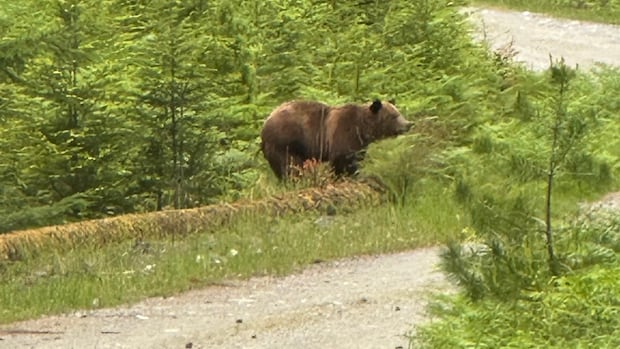
As people continue to mourn the loss of a wayward grizzly on an island off the B.C. coast, many are left wondering why the bear wasn't relocated to avoid what some say was its certain fate.
In fact, despite the province's repeated claims that the bear had already been moved twice and thus wasn't a good candidate for relocation, a secret plan to transport him to a remote location was in place.
"We had a very well thought-out plan and everybody on standby," said Erik Blaney, the shíshálh Nation's acting manager of lands and resources.
"He would have been living his best life up there."
That plan was laid to rest when conservation officers investigated a report that the grizzly had been shot and wounded, and then discovered its carcass earlier this week.
Some local residents were shocked to find out about the relocation plan, given conservation officers' previous claims it would be impossible. Others think the bear could still be alive if they had been given information about the plan.
But Blaney says social media and the misinformation that often comes with it made that impossible.
Blaney, a legislator with the Tla'amin Nation, says the plan that he had hatched nearly three weeks ago was eventually approved by the province, with some minor changes.
Details were kept under wraps and only shared with a handful of people. Some Texada Island residents — many of whom had asked for weeks for the bear to be relocated — are wondering why they weren't made aware of it.
"It's unfortunate that the community wasn't [informed]," said Texada Island resident Daniel Cammiade.
"[If we had] I think that it's quite possible that the bear would still be alive."
The five-year-old male grizzly was first spotted on Texada Island on May 25. Texada residents say the island is a predator-free community, and many were worried about the bear's presence.
While some called for peaceful coexistence with the bear, many others wanted it relocated for its safety and their own.
"It seems like things were left in the community's hands — a community that was not used to dealing with bears," Cammiade said.


About 125 people came out for a town hall meeting on health care in Charlottetown Monday night.

This is the second of two-part CBC News report on Taser use by Edmonton police. To read the previous story, click here.

A Merritt, B.C., father is urging parents to be on the lookout for ticks while the weather warms up, after his six-year-old son was partially paralyzed by a tick bite last week.

About that heartbreaking loss to the U.S. at the 2026 Olympic women's hockey final last month, Sarah Nurse says, “that was the most fun I’ve had in a hockey game in a very long time.”

The U.S. government on Monday said electric vehicle (EV) maker Tesla and South Korea's LG Energy Solution had signed a supply agreement to build a $4.3 billion lithium iron phosphate (LFP) prismatic battery cell manufacturing facility in Lansing, Mich., with an expected production launch in 2027.

In one small town in Alberta, the assistant principal says teachers almost never meet alone with parents anymore.

Tens of thousands of customers are without power and four parts of Highway 401 are closed Tuesday morning as blasts of blowing snow hit the Ottawa-Gatineau area.

Melody Macsemchuk says volunteers at Grace Place in Thunder Bay, Ont., serve between 300 and 350 meals a day.

Groups of volunteers continue to search alongside police for a man who went missing in late January near Owen Sound, Ont., covering land on foot, and using drones for a view of the conservation area where his car was found.

Jessica Hay says her daughter Charlie loves to be included in everything — and a new accessible shopping cart at her local grocery store in Cornwall makes it possible for Charlie to come along for the ride.

The N.W.T. cabinet says it will review whether or not the territory needs an independent child and youth advocate after a motion by Range Lake MLA Kieron Testart calling on it to establish such a position was carried in the legislative assembly.

From affordable housing in Alberta to high taxes in Quebec, there are many widely accepted claims about the cost of living in different parts of the country. But are these preconceptions accurate?

An Ontario Provincial Police (OPP) report examining the conduct of investigators from a high-profile murder trial into the death of a Toronto police officer where a judge accused responding officers of lying and collusion is expected to be unveiled Tuesday.