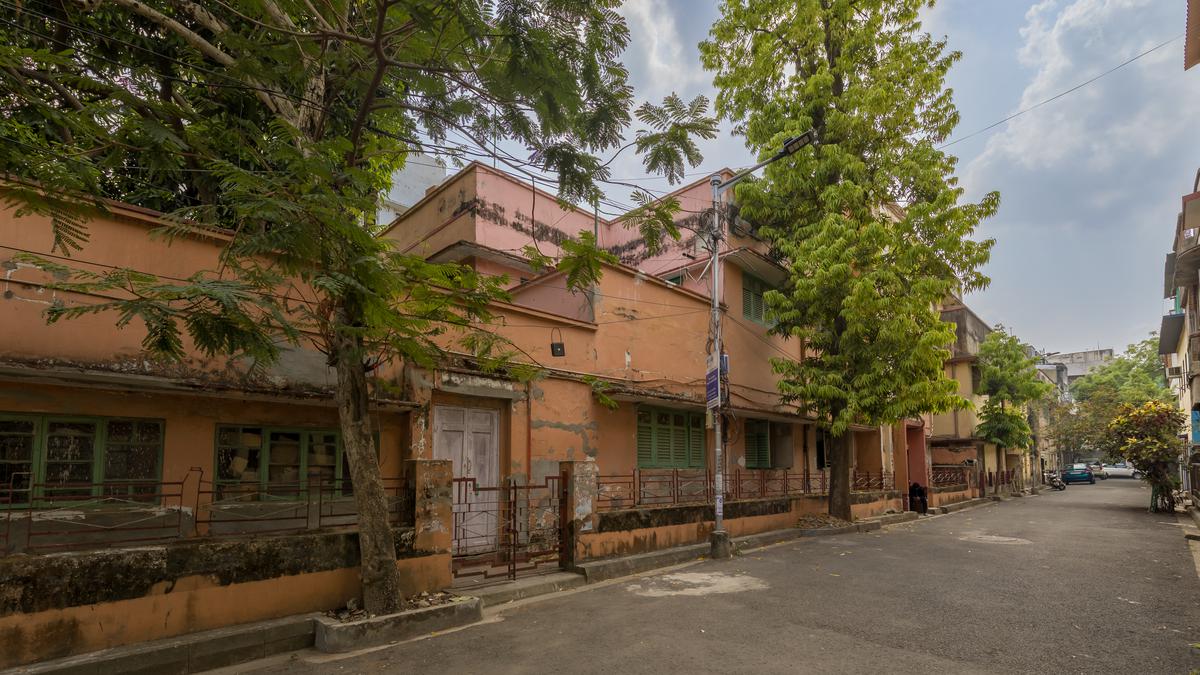
Inside the DAG x Jamini Roy house
The Hindu
While India has not had a private ‘single artist’ museum so far, CEO Ashish Anand explains why it is time for change
For years now, DAG (formerly Delhi Art Gallery) has been more than a gallery. Almost three decades old, with the largest collection of pre-modern and modern Indian art, it has had unusual collaborations — with the Archaeological Survey of India and the National Gallery of Modern Art at Dhrishyakala (Red Fort, Delhi) and with Ghare Baire (Old Currency Building, Kolkata), for instance.
The in-house publishing team makes modern art accessible. Earlier this year, at the launch of DAG’s new address in Janpath, the opening show — the second edition of Iconic Masterpieces of Indian Modern Art — came with a fine set of art books featuring essays by historians Yashodhara Dalmia, Tasneem Zakaria and critics from around the world. The two volumes, printed in six colours, took seven months to produce, revealed Kishore Singh, senior vice president at DAG, at the event. While collectors took turns complimenting Singh on his sharp jacket — “there is no question of sharing my tailor,” he jested — the stories flowed. About M.F. Husain and his translator Maria Jaroslav Jurkova’s unfinished love story and the priceless paintings ( Two Figures with Cactus was on display) he gifted her. Or about the ‘Company’ painting with a splendid horizon that 223 years later illustrates how Patna was becoming important for the opium trade.
“It was possibly by a miniaturist, disempowered from the Mughal court and finding agency with the East India Company,” he explained. “Across one bank you see the British buildings coming up and the emergence of Patna, while on the bank close to the viewer, all the activities are agrarian, where the opium petal cakes are processed and packed, to be loaded on to ships and moved on. It is the history of India, of globalisation, of exploitation, all coming together.”
Now you have DAG’s latest announcement, about acquiring the 75-year-old Jamini Roy house in Kolkata and its plans to open India’s first private single-artist museum in April next year. Located in Ballygunge Place, it is where the artist, inspired by the traditions of local folk artists and sculptors, lived till his passing away in 1972. “This is the single most important project undertaken by DAG,” confirms Ashish Anand, CEO and managing director of DAG, when we reach out to him. With the assistance of conservation architects and designers, the built-up area of over 7,000 sq. ft at Roy’s Kolkata house will be equipped with galleries, community spaces such as a resource centre and a library, as well as a museum shop and café.
We speak to Anand about this project that was also inspired by the Frida Kahlo museum in Mexico and the increasing participation of private players in art in India:
The fact that the artist had worked and lived here from 1949 to 1972. This is where he received dignitaries. There are so many memories here, so much history. Our belief is that while recreating some of the ambient atmosphere of the artist’s studio, we also need to keep in mind how the museum will lend itself to collaborative efforts. In the end, we intend to take Jamini Roy’s legacy forward.
Jamini Roy changed the course of art history in India. He trained in the western style, began his career at the height of the Bengal School movement, yet dared to turn his back on these to create a new form of art rooted in folk traditions. This is why DAG could not have done better than to begin its journey of building museums from scratch with the Jamini Roy House Artist Museum.


Khalid Rahman is reuniting with Malayalam superstar Mammootty after Unda (2019). The Thallumaala director has teamed up with the veteran for Mattancherry Mafia.

Bollywood actor Akshay Kumar paid tribute to the martial arts grandmaster and Hollywood’s action star, Chuck Norris, who passed away on Thursday, March 19, 2026.

Renowned Odissi dancer Madhumita Raut, aged 59, dies of cardiac arrest, leaving behind a legacy of artistic achievements.

Chuck Norris, iconic martial arts master and actor, dies at 86, leaving behind a legendary legacy and internet memes.

South African naturalist Steve Boyes speaks on ghost elephants, ancestral tracking, and Werner Herzog’s documentary exploring Angola’s elusive highland giants

Actor-director Amol Palekar will receive META's Lifetime Achievement award for 2026 on March 25 in New Delhi.

India's artists unite against rising censorship, advocating for creative freedom and support for marginalized voices in the arts.

Written and directed by Kunal, the film also stars Sparsh Shrivastava and Vanshika Dhir

This year, Bharatnatyam artistes will present the Tyagaraja Aradhane as a dance performance

This year, Bharatnatyam artistes will present the Tyagaraja Aradhane as a dance performance

The actor, along with director Sushant Shah, speak about their upcoming series ‘Chiraiya’, Divya’s process of working on the dialect, Sushant’s approach to telling a story about women, and more

An independent video, ‘Feel the Spark’ by Raleigh Rajan with vocals by Ciera Dumas that celebrates Tamil literary giants, garnered 1.4 million views in less than 36 hours.

In ‘Jack Ryan: Ghost War’, John Krasinski is back as the savvy CIA analyst, diving headfirst into a high-stakes mission that unravels a deadly conspiracy and pits him against a rogue black-ops unit