Inside one of the biggest security operations in America: Protecting thousands of world leaders
CNN
As diplomats gathered at the UN for speeches and sideline gossip this week, CNN and a select group of media gained access to high level security rooms.
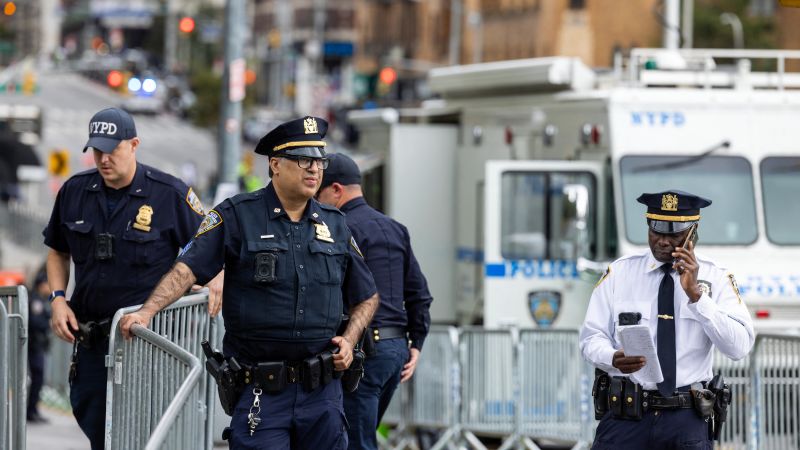
It’s one of the biggest security operations in America: Protecting thousands of world leaders and their entourages at the annual high level United Nations General Assembly meeting in New York. As diplomats gathered for speeches and sideline gossip this week, CNN and a select group of media gained access to two high level security rooms on UN grounds, maneuvering down a long series of non-descript corridors at the heart of the organization’s modernist headquarters. What is most impressive is seeing a huge wall of monitors in both. It was clear there are cameras everywhere – some well-hidden, scattered all over the UN grounds aimed at doors, the garage, UN hallways, and driveways. There are 1400 cameras in total, UN officials said. High shots from cameras looking at nearby corners outside the UN are always on. The UN security officials said its impossible to monitor all 1400 cameras at the same time but there are personnel checking out the scene. If a visitor – or more nefarious character – runs into problems using their credential to enter the complex, an alarm will sound in the security control rooms, with an automated voice warning that the individual has been “Rejected! Rejected! Rejected!” Remind me to fix my tie when I am walking through the UN grounds.


President Donald Trump has said ICE agents will head to US airports tomorrow amid a partial government shutdown. Follow for live updates

Cuba is working to restore the electricity supply after another island-wide blackout left more than 10 million people without power.

President Donald Trump said Sunday border czar Tom Homan will be in charge of deploying Immigration and Customs Enforcement agents to airports on Monday, with Homan telling CNN the agents will help with security at entrances and exits to ease the Transportation Security Administration’s workload.

Donald Trump wants us to believe that a deal with Cuba is close at hand. After this past week, I am not so sure.

President Donald Trump has said ICE agents will head to US airports tomorrow amid a partial government shutdown. Follow for live updates

President Donald Trump said Sunday border czar Tom Homan will be in charge of deploying Immigration and Customs Enforcement agents to airports on Monday, with Homan telling CNN the agents will assist with security at entrances and exits to ease TSA workload amid a partial government shutdown.

Janet Mills and her allies are counting on a gender gap to narrow Platner’s wide lead ahead of the June 9 primary to decide who will face incumbent Republican Sen. Susan Collins. They are betting that the unfiltered style that has brought Platner widespread attention as someone who could help Democrats reach young men will backfire with women.

Why do people “pledge allegiance” to a “state” that is no longer a state? And what spurs someone to not just attack innocent people, but to then make a statement of loyalty while doing so?

A Supreme Court case examining state deadlines for election ballots sent in the mail is just the tip of the spear in President Donald Trump’s war on mail-in voting.

As a shrinking number of Transportation Security Administration agents work to keep hourslong security lines moving despite not being paid, President Donald Trump stepped into the fray Saturday, announcing he will send Immigration and Customs Enforcement officers to airports by Monday if Congress doesn’t agree to a plan to end the partial government shutdown.

Donald Trump wants us to believe that a deal with Cuba is close at hand. After this past week, I am not so sure.

The search for missing 84-year-old Nancy Guthrie, mother of “Today” show host Savannah Guthrie, has stretched into another anguished week, with mounting pressure on investigators and a family grappling with uncertainty.

Cuba’s Ministry of Energy announced Saturday evening that entire island has suffered another electrical blackout, leaving more than 10 million people without power.