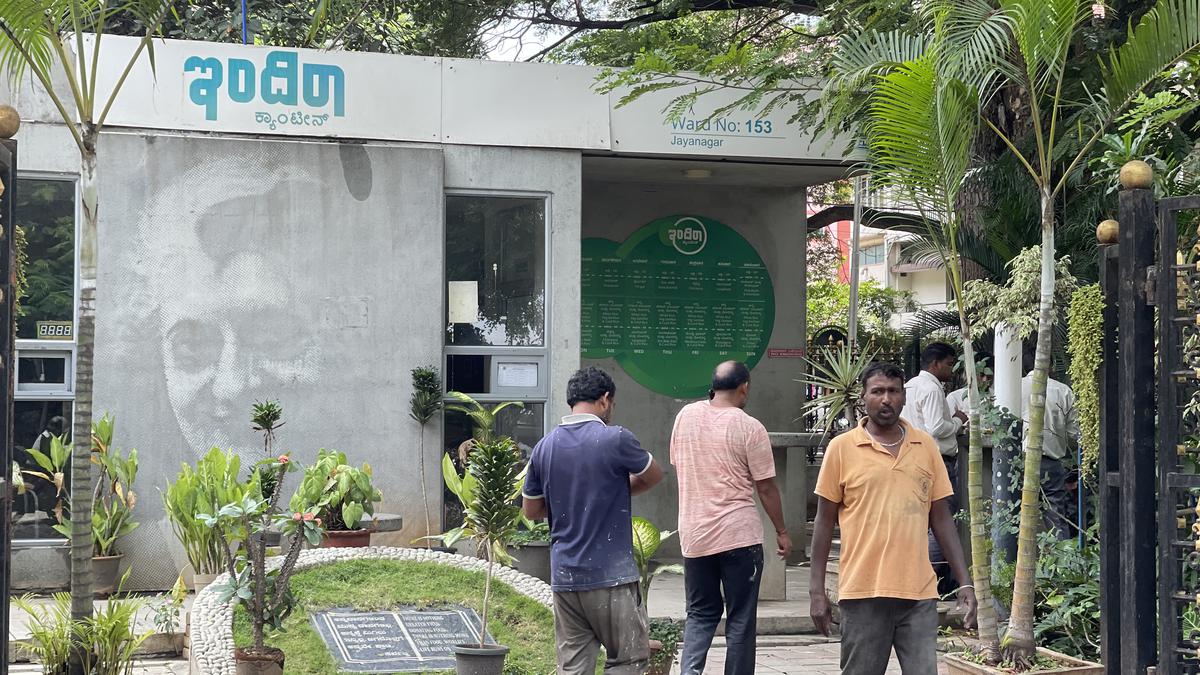
‘Indira Canteens must consider decentralised kitchens, more nutritious menu’ Premium
The Hindu
Amending the National Food Security Act to include State government-run canteens could save them from the apathy of changing governments, says Prof Reetika Khera, economist and professor at IIT-Delhi, who surveyed Indira Canteens as part of her research on government-run community kitchens.
Indira canteens, started in 2017 to supply food at subsidised prices, was one of the most popular schemes during Siddaramaiah’s first tenure as Karnataka chief minister. However, as the ruling parties changed in the following years, the canteens too fell into neglect. Reeling from severe fund shortage, the food quality at the canteens dropped. All the mobile canteens in Bengaluru shut shop due to lack of patronage. At a point, even the water supply was disconnected owing to nonpayment of bills.
With the Siddaramaiah government coming into power again in 2023, there was much anticipation around the revival of Indira canteens. However, any major initiative is yet to be see in that direction.
Reetika Khera, economist and professor at IIT-Delhi, surveyed Indira Canteens in December as part of her research on government-run community kitchens including Indira Canteens, Amma Unavagams in Tamil Nadu and Indira Rasois (now renamed to Annapoorna Rasoi) in Rajasthan. In an email interview with The Hindu, she shared her observations on Indira Canteens and the importance of such initiatives.


India's EU FTA is poised to attract more German companies, boosting bilateral trade and investment opportunities.

“Judicial time is a valuable public resource. Every frivolous or misconceived invocation of constitutional jurisdiction results in diversion of time from genuinely deserving litigants,” said the Madurai Bench of the Madras High Court while imposing a cost of ₹50,000 on a man from Theni district who filed a petition with an unusual prayer: permission to conduct daily protests till the ‘World War’ ends.

The Mangaluru city police on Wednesday, arrested Pavan Acharya, 22, of Moodubelle village in Kaup Taluk in Udupi district, on the charge of posting inflammatory content on the social media.

Bengaluru corporations will present five separate budgets on March 27-28, focusing on infrastructure and community funding.

A humorous exchange in the Legislative Assembly highlights CM Siddaramaiah's choice of a Mysore silk shawl over a towel.

Karnataka's fiscal deficit is under control, better than neighboring states, says Chief Minister Siddaramaiah amid revenue challenges.

Capt. S. Divakar takes charge as MD and CEO of Dredging Corporation of India, following board approval for his appointment.

Nara Bhuvaneswari inaugurates a job mela in Kuppam, promoting job creation and welfare initiatives for local youth and women.

Walajah residents protest by hoisting black flags, threatening to boycott elections over poor civic amenities and infrastructure issues.

The Railway Ministry has decided to regularise the services of Surat-Mangaluru Junction-Surat bi-weekly Special Express along with nine other special trains.

Training held for zonal election officers in Thoothukudi

Defence Minister highlights BRO's vital role in enhancing border infrastructure, national security, and socio-economic growth in India.

Andhra University celebrates its 91st and 92nd convocations, honoring graduates and distinguished personalities for their contributions and achievements.