Indigenous people more likely to have housing issues as population grows: StatCan
Global News
Almost one in six Indigenous people lived in a home in need of major repairs in 2021, a rate almost three times higher than for the non-Indigenous population.
Angela Klassen Janeczko calls out to a young woman sitting behind a building in downtown Winnipeg to see if she needs any water or food.
They know each other by name and Janeczko has seen the young Indigenous woman struggle with housing and addiction for more than year.
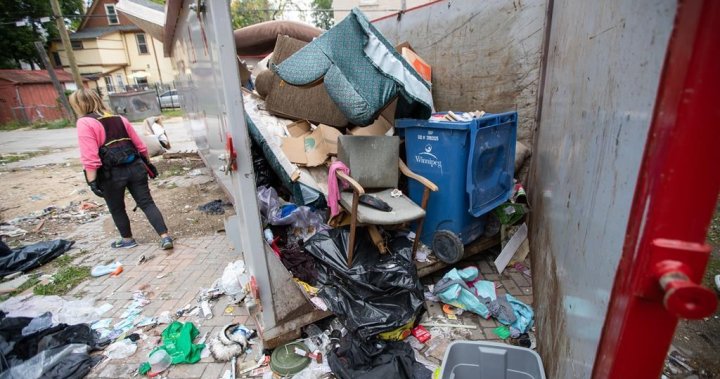
Janeczko works with the Bear Clan Patrol, a neighbourhood watch group in Winnipeg that walks through streets and alleys looking to help those most in need. She says they have seen rooming houses and apartment buildings become derelict. At the same time, rent has also gone up and nearby houses are selling for record amounts.
It is disproportionately affecting Indigenous people in the neighbourhood, she says, and many are ending up in tents tucked behind buildings, along the riverbank or in small community parks. The COVID-19 pandemic just exacerbated the problem, she adds.
“Treat people with humanity and respect,” Janeczko says, as she hands out some food to another person nearby.
Statistics Canada’s latest release of 2021 census data shows the Indigenous population is still growing, although the pace has slowed, and is much younger than the rest of Canada. However, the data says, they are also struggling with housing in a system that’s already stretched thin.
The census says there are 1.8 million Indigenous people in Canada, accounting for five per cent of the total population. The Indigenous population grew by 9.4 per cent from 2016 to 2021, almost twice the pace of the non-Indigenous population.
While the number of Indigenous people in insufficient housing decreased slightly, it is still much higher than the non-Indigenous population.


The bill, known as DRIPA, requires B.C. to take "all measures" to align the rights of Indigenous Peoples with existing provincial legislation.

Montreal Metropolitan Airport says its new terminal will open in a few months as it gets ready to welcome commercial flights.

Nominations have officially opened for drivers to rank Ontario's worst roads.

Dashcam video shows the wild scene as a vehicle crashed into two parked cars at a high speed on Shaunslieve Drive in Bedford.

City of Wetaskiwin officials have issued a statement on the decision to ban Mayor Joe Branco from city hall — but it does little to clarify the ongoing situation.

An Abbotsford woman who was sexually abused as a child is speaking out after suffering years of abuse at the hands of her stepfather, starting at the age of just 12 years old.

Technology Minister Nate Glubish says such images, known as deepfakes, can cause people serious harm and that changing the law should create a new layer of protection.

Renters in Quebec may soon have final say over whether they're allowed to keep pets in their homes following a legal ruling that no-pet clauses in leases violate Charter rights.

Alberta RCMP say they have located a Grey 2022 Ford F-150 involved in the fatal highway shooting of an Edmonton man earlier this month. The suspect remains at large.

Education Minister Paul Calandra, however, said he won't use the notwithstanding clause if he moves to eliminate trustees in Ontario.

U.S. President Donald Trump said on Sunday that he would order federal immigration agents to airports to assist TSA. Canadians landing the U.S. should be prepared.

Three overpasses in Saskatoon have been hit in the past three weeks, with charges announced against the driver in the first incident.

Auditor General Karen Hogan says there are critical weaknesses in the integrity controls for the International Student Program.