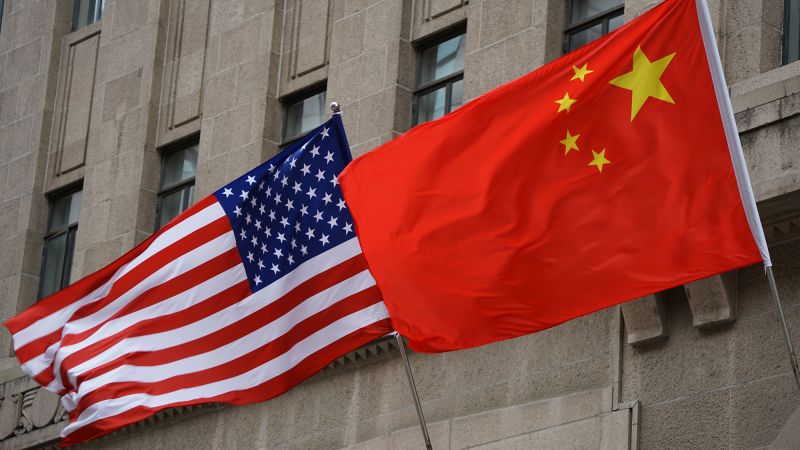
Indian international students in the US outnumber Chinese for the first time in 15 years
CNN
For more than a decade, Chinese students have flocked to the United States, drawn by the prestige of an overseas education and the glamor of the American Dream. But that’s changing now – and recent statistics suggest the allure may be wearing off.
For more than a decade, Chinese students have flocked to the United States, drawn by the prestige of an overseas education and the glamor of the American Dream. Education consultancies flourished across China, with parents paying big bucks for tutors and classes that promised to send their children abroad. But that’s changing now – and recent statistics suggest the allure may be wearing off. During the last academic year, students from India became the largest group of international students in American higher education – knocking China off the top seat for the first time since 2009, according to figures released Monday by the US State Department and the nonprofit Institute of International Education. China was still a major source, making up one fourth of all international students, compared to India’s 29%, the report found. But experts say the decline reflects significant shifts in both policy and public perception, with many Chinese students and families worrying about safety, racism and discrimination, and immigration difficulties – especially as more options open up in other countries, including in China itself. Meanwhile, India overtook China as the world’s most populous country last year, and more than 40% of Indians are under 25 – prompting hopes of a youthful new engine for the global economy just as China’s population begins to dwindle and age. There were more than 331,600 Indian students in the US last academic year, according to the State Department.


Newly confirmed Homeland Security Secretary Markwayne Mullin told senators during his confirmation hearing that he wanted to keep the department out of the headlines. That won’t be easy.

A trader made nearly $1 million since 2024 from dozens of well-timed Polymarket bets that correctly predicted US and Israeli military actions against Iran, according to an analysis shared with CNN.

Travelers have been dealing with worsening airport wait times as ICE agents deploy to more than a dozen airports. Follow for live news updates.

President Donald Trump voted in Tuesday’s state House special election by mail even as he suggested on Monday that “mail-in voting means mail-in cheating.”

CNN’s 5 Things AM brings you the news you need to know every morning.

The Supreme Court on Tuesday will consider the legality of a policy championed by President Donald Trump during his first term that prevented scores of migrants arriving at the southern border from starting the process of applying for asylum.

A young, well-liked facilities manager at the Kennedy Center has gone from being described as “in charge of HVAC and toilets” to head of the renowned arts institution.

Democrats in Florida are hoping to capitalize on the party’s recent special election overperformances and come out on top Tuesday in a special state House election for a Palm Beach district that includes President Donald Trump’s Mar-a-Lago residence.

The Supreme Court on Monday appeared ready to limit mail-in ballots, a move that would reinforce the justices’ pattern of shrinking voter protections and that has, at bottom, favored Republican interests and the Trump administration.

An Air Canada plane traveling from Montreal collided with an emergency vehicle on the runway at New York City’s LaGuardia Airport in the late hours of Sunday night, killing two pilots and injuring dozens of people.

Top Senate Republicans on Capitol Hill believe their party is unified behind a plan to reopen the Department of Homeland Security. Now, they need to sell the plan to Democrats.

Markwayne Mullin will serve as Donald Trump’s next Department of Homeland Security secretary, elevating the US senator to helm the agency at the center of the president’s controversial immigration enforcement effort and an ongoing shutdown.

President Donald Trump’s sudden turnabout and, according to him, rapidly advancing peace talks made for an abrupt shift in the administration’s approach to the Iran war.