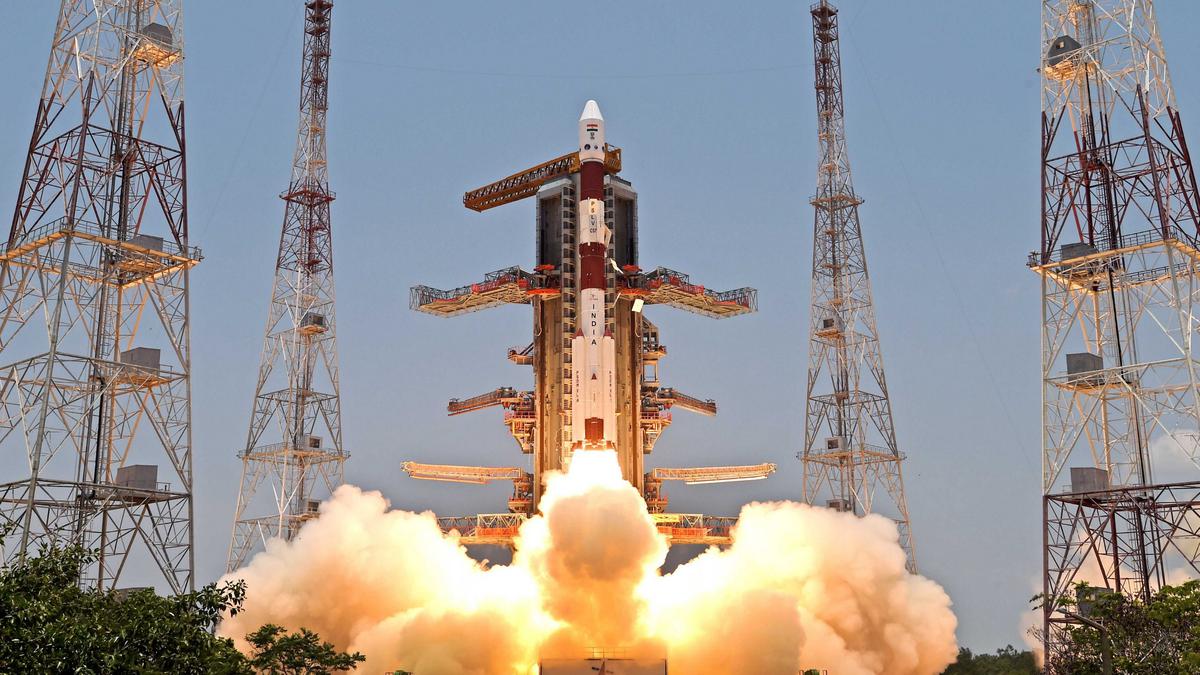
India space strategy: harness data, tiny satellites to capture market beyond SpaceX
The Hindu
India aims to carve a niche in commercial space by launching small satellites and providing cost-effective services.
India has a plan to carve out a beachhead in the battle for commercial space, officials say: crunching space data, building small satellites and launching them cheaply into orbit rather than challenging heavyweights such as SpaceX head-on.
In particular, it is taking aim at providing cost-effective services and hardware to sectors such as communications, agriculture and commodities, where high-quality data is a precious resource.
“The world has gone from satellites the size of a Boeing plane to the size of a laptop,” said AK Bhatt, director general of the Indian Space Association, an industry body.
“This is a sector that India can win, instead of challenging heavy launches where Elon Musk has dominance. The country already has an historical advantage in data mining and interpretation.”
Since February, India has opened its space sector to private players and created a Rs 10 billion venture fund to support space startups. It has also unveiled plans for crewed space exploration and a mission to Venus, but the focus is on developing commercial ventures.
In many ways it will be an uphill fight. Other countries such as Japan and China have advanced space industries, and designs on cheap launches. Spaceflight itself is difficult; the startup landscape globally is littered with failed boosters and satellite designs.
For India, “the tech is there and the ability is there... but space is tricky and very competitive, and while private companies have shown that they can create a niche for themselves, we need more proof of concept,” said Namrata Goswami, a space policy expert at Arizona State University.


Explore 2026's wallpaper trends in India, highlighting botanicals and handmade designs that enhance modern homes with nature-inspired aesthetics.

Mercedes-Benz CLA 250+ with EQ Technology review: design, performance, range and features explained. Discover how the new electric CLA combines advanced AI, long range, fast charging and futuristic styling for the next generation of luxury EVs.

AI tool for sparrow conservation

BTS’s comeback with ‘Arirang’ marks a major global music event. When does the album release, and where can you watch their concert live stream? We have all the details

The 2026 U.S. cholesterol guidelines urge starting screening and treatment at 30 to prevent cardiovascular disease effectively.

Olam Festival 2026 in Thiruvananthapuram returns March 27-29 with 120+ vendors, music, art, and cultural zones.

A few storytellers in Thiruvananthapuram share their journeys, challenges, and evolving methods on World Storytelling Day, inspiring young minds.

76-year-old Kurian Jacob from Kerala triumphs with seven medals, including five golds, at the Open Masters Games in Abu Dhabi.

Explore the nature of the human mind as an emergent property of brain activity and complex neural interactions.

CERN's Large Hadron Collider discovers the Xi-cc-plus particle, enhancing understanding of quantum mechanics and baryon behavior.

Vibha Batra’s latest book, Spotless (Hachette India) is a novel in verse for young adults

In its first edition, the Madras Art Salon spotlights the works of journalist and artist Narayan Lakshman at The Botanical Club, a social space in the British Deputy High Commission, Chennai

Cholesterol enhances melanoma cell invasion by making nuclei squishier, revealing a potential treatment target in cancer progression.