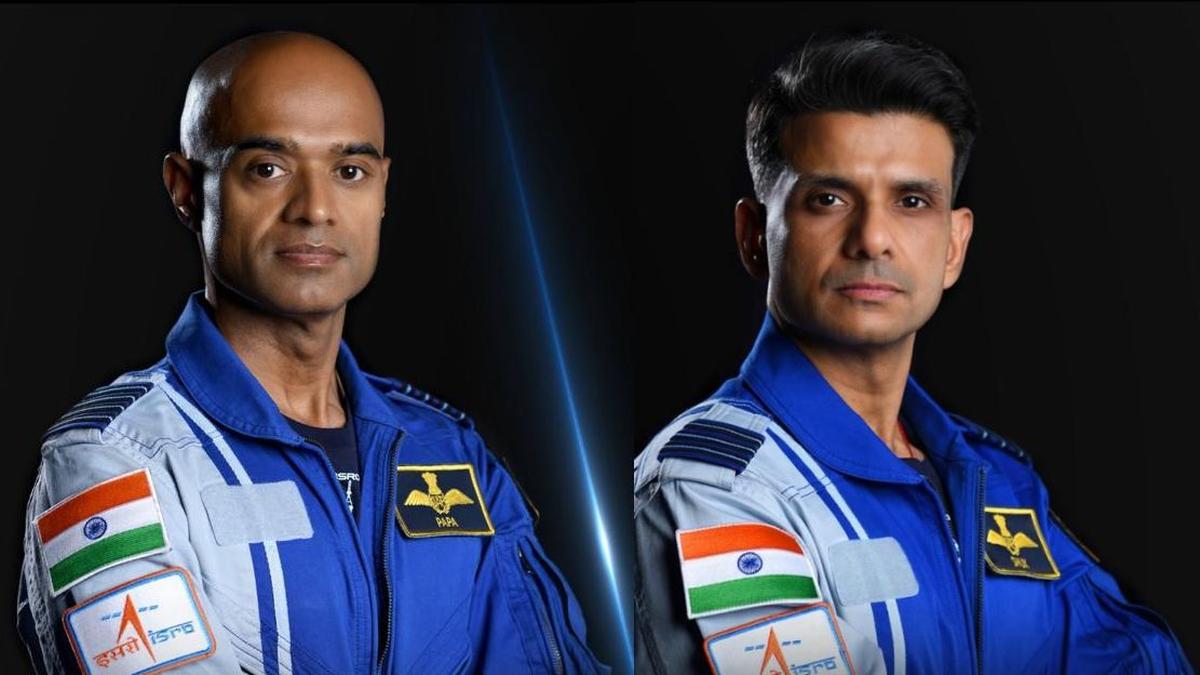
India selects two astronaut-designates for upcoming Axiom-4 mission to International Space Station
The Hindu
India has shortlisted Group Captain Shubhanshu Shukla and Group Captain Prasanth Balakrishnan Nair to go to the U.S. to train for the Axiom-4 mission to International Space Station
India has shortlisted two astronaut-designates for the upcoming Axiom-4 mission to the International Space Station. Indian astronauts Group Captain Shubhanshu Shukla and Group Captain Prasanth Balakrishnan Nair have been shortlisted to go to the U.S. to train for the upcoming Axiom-4 mission to the International Space Station (ISS).
A National Mission Assignment Board has recommended two Gaganyatris (astronauts) as prime and backup Mission Pilot for this mission. Group Captain Shukla will be the prime mission pilot and Group Captain Nair will be the back up.
The Axiom-4 mission is the fourth private astronaut mission to the International Space Station.
It can be recalled that the India-U.S. joint statement during the official state visit of Prime Minister Narendra Modi to the U.S. in June 2023 envisions a joint ISRO-NASA effort to the ISS.
“Towards the goal of mounting a joint ISRO-NASA effort, the Human Space Flight Centre (HSFC) of ISRO has entered into a Space Flight Agreement (SFA) with NASA-identified service provider M/s Axiom Space Inc., USA for its upcoming Axiom-4 mission to the ISS,” ISRO said,
ISRO added that the assigned crew members will be finally approved to fly to the International Space Station by the Multilateral Crew Operations Panel (MCOP).
“The recommended Gaganyatris will commence their training for the mission from 1st week of August 2024. During the mission, the Gaganyatri will undertake selected scientific research and technology demonstration experiments on board the ISS as well as engage in space outreach activities. The experiences gained during this mission will be beneficial for the Indian Human Space Program and it will also strengthen human space flight cooperation between ISRO and NASA,” ISRO said.


Discover the Minor Planet Centre, the key hub for tracking and verifying observations of small solar system bodies.

Discover the Minor Planet Centre, the key hub for tracking and verifying observations of small solar system bodies.

In this week's Science for All newsletter, XX explains

Test your knowledge with the quiz on Science films at the Oscars through history

Set between the Siwalik hills and the plains, Butwal offers travellers a mix of regional cuisine, pilgrimage trails to Lumbini and the comfort of Hyatt’s new hospitality landmark

Explore 2026's wallpaper trends in India, highlighting botanicals and handmade designs that enhance modern homes with nature-inspired aesthetics.

Mercedes-Benz CLA 250+ with EQ Technology review: design, performance, range and features explained. Discover how the new electric CLA combines advanced AI, long range, fast charging and futuristic styling for the next generation of luxury EVs.

AI tool for sparrow conservation

BTS’s comeback with ‘Arirang’ marks a major global music event. When does the album release, and where can you watch their concert live stream? We have all the details

The 2026 U.S. cholesterol guidelines urge starting screening and treatment at 30 to prevent cardiovascular disease effectively.

Olam Festival 2026 in Thiruvananthapuram returns March 27-29 with 120+ vendors, music, art, and cultural zones.

A few storytellers in Thiruvananthapuram share their journeys, challenges, and evolving methods on World Storytelling Day, inspiring young minds.

76-year-old Kurian Jacob from Kerala triumphs with seven medals, including five golds, at the Open Masters Games in Abu Dhabi.