India’s trade deficit widens to $8.65 billion in April, services to the rescue again
The Hindu
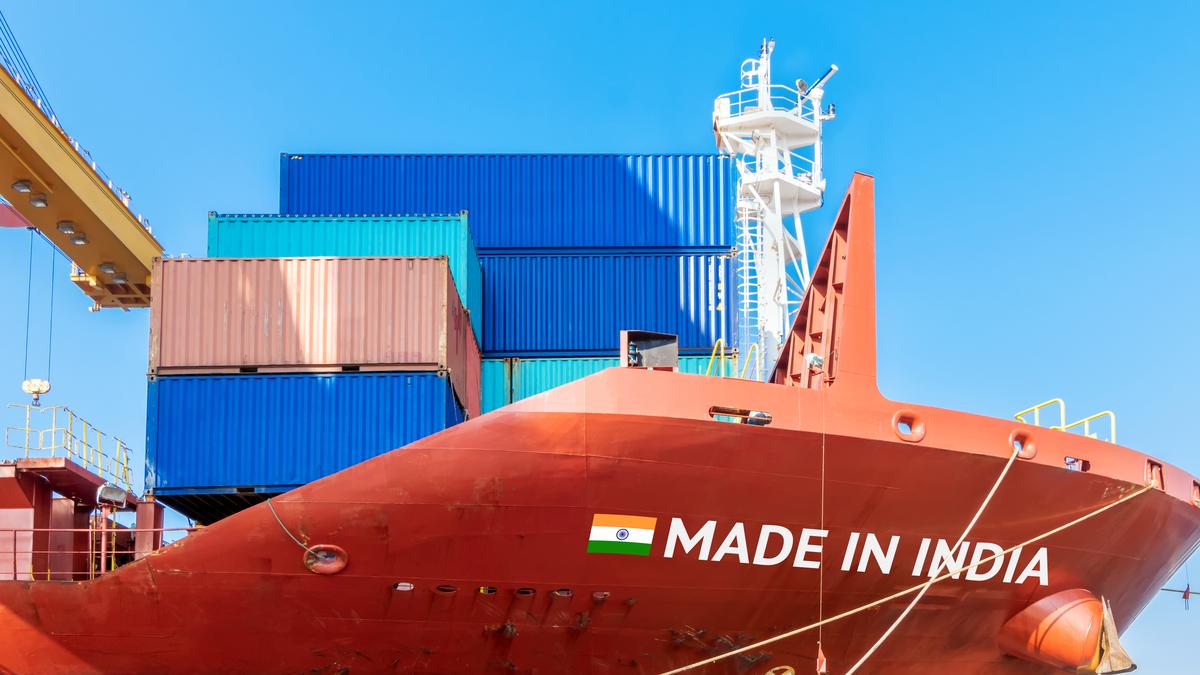
India's trade deficit widens in April 2025, with merchandise exports growing but imports growing faster.
India’s total trade deficit, counting both merchandise and services, widened to $8.65 billion in April, compared to $5.77 billion in April last year, according to the latest data from the Ministry of Commerce and Industry.
While briefing the media, Commerce Secretary Sunil Barthwal also mentioned that India’s total exports, including merchandise and services, stood at $824.9 billion in 2024-25, the highest-ever, up 6% from 2023-24.
Merchandise exports grew 9% to $38.49 billion in April 2025, while the imports of goods grew at a significantly faster 19.1% to $64.91 billion, as compared to the same month of last year.
The merchandise trade deficit, therefore, widened to $26.4 billion in April this year, as compared to $19.19 billion last year.
The services sector, however, witnessed the opposite trend, with exports widening their lead over imports. Services exports for April, an estimation because the final data from the Reserve Bank of India arrives with a month’s lag, grew 17% in April 2025 to $35.31 billion.
Services imports, on the other hand, grew just 4.6% to $17.54 billion in April, taking the services trade surplus to $17.77 billion.
Exports of tobacco (66.43%), coffee (47.85%), electronic goods (39.51%), mica, coal and other ores and minerals (34.43%), fruits and vegetables (30.72%), marine products (17.81%), and tea (15.93%), saw the highest growth in April 2025.


Mines Ministry to auction 19 critical mineral blocks on March 23, expanding strategic resources for clean energy and technology sectors.

Five top firms lose ₹1 lakh crore in market value, with HDFC Bank experiencing the largest decline of ₹56,124.48 crore.

HDFC Bank terminates three senior officials over client onboarding issues at its DIFC branch amid ethical concerns following chairman's resignation.

Air India CEO warns of potential flight cuts and reduced travel demand due to rising fuel costs amid ongoing Gulf conflict.

Options are widely used by retail traders to speculate on the value of the stock for immediate gains and such behaviour in large scale can distort the market

India achieves 1 billion tonne coal production for the second consecutive year, ensuring stable energy supply and economic growth.

Generic drugmakers in India launch affordable Semaglutide versions, targeting a $1 billion diabetes and weight loss market.

Indian and Asian refiners eye Iranian oil purchases as U.S. waives sanctions amid energy crisis linked to the Iran-Israel war.

Iran war impacts pesticide prices, warning of a 20-25% rise and increased risk of counterfeit products during the kharif season.

India's forex reserves fell by $7 billion to $709.76 billion, according to RBI data for the week ending March 13.

Natco Pharma will launch its Semaglutide injection (multi dose vials) in the domestic market on Saturday.

Flipkart announces a 105% bonus payout for 2025, rewarding employees for strong growth and performance metrics.

Core sector growth in India plummeted to 2.3% in February, amid declining domestic production and impending West Asia crisis impacts.