India’s contemporary vernacular homes blend tradition and sustainability
The Hindu
Discover the importance of vernacular architecture in sustainable design through innovative projects across India by expert architects.
Vernacular architecture is a style of building that champions the use of indigenous materials and traditional construction techniques while fostering climate responsiveness. “Vernacular building practices are crucial for sustainability and offer region-specific, passive solutions that effectively mitigate climate impacts while being cost-effective, and environmentally sustainable,” says Vaishali Mangalvedheker, partner, SJK Architects. The time-tested building styles and techniques of vernacular architecture have evolved over centuries and have been shaped by material, environment, and cultural influences.
“Climate change, resource depletion, and the loss of cultural heritage have necessitated the need for sustainable building practices and context-sensitive design, which has led to a rise, revival, and re-interpretation of vernacular architecture in contemporary constructions,” says Akshay Shrinagesh, principal architect, Archiopteryx. Here are five such buildings from across India:
This 3,500 sq.-ft. home in central Kerala reimagines the traditional nalukettu veedu, a house focused around a central courtyard. “There is a thoughtful integration of traditional architectural elements, which includes the central courtyard coupled with sustainable and contemporary design solutions, which create a harmonious living space that is both ethereal and forward-thinking,” say Guruprasad Rane and Manasi Puliyappatta, co-founders, Bhoomija Creations. Laterite is the primary building material which has been used extensively not only for its accessibility but for its excellent thermal performance. “It is left exposed, and this cools the indoor temperature. Its natural texture and rich tone contribute to the aesthetic character of the home,” says Rane.
Concrete slabs with a form-finished surface and polished cement plaster left in its raw form promote durability, sustainability and reduce the need for excessive finishing materials. “The steel truss roof’s construction includes an air gap between the layers, which acts as an insulator, preventing heat from penetrating the interiors while allowing for the movement of air. The sloped roof design aids in the collection of rainwater, a crucial aspect of sustainable design in Kerala’s monsoon climate,” says Puliyappatta.
Designed as a private, sun-dappled residence for a multi-generational family amidst a dense urban neighbourhood, the Light House spans a whopping 20, 000 square ft. Given the intense heat during summers, the architects designed a contemporary jaali façade that filters harsh sunlight. “An eight-foot-wide, linear central atrium topped with a skylight reinterprets the courtyards of vernacular homes and acts as a lively social core for a family that cherishes togetherness. Its proportions are derived from detailed studies of scale and the movement of the sun throughout the seasons,” says Mangalvedheker. The outermost layer of protruding jharokhas and balconies offers privacy in the dense neighbourhood. The sleek geometric patterns of the lattices are inspired by abstracted vernacular motifs, creating a dynamic interplay of light and shadow that transforms the interiors into a living canvas throughout the day. “The railings and brise-soleil of the central atrium, crafted from recycled Burma teak wood and executed on-site by local carpenters, showcase an innovative take on traditional craftsmanship,” she adds.
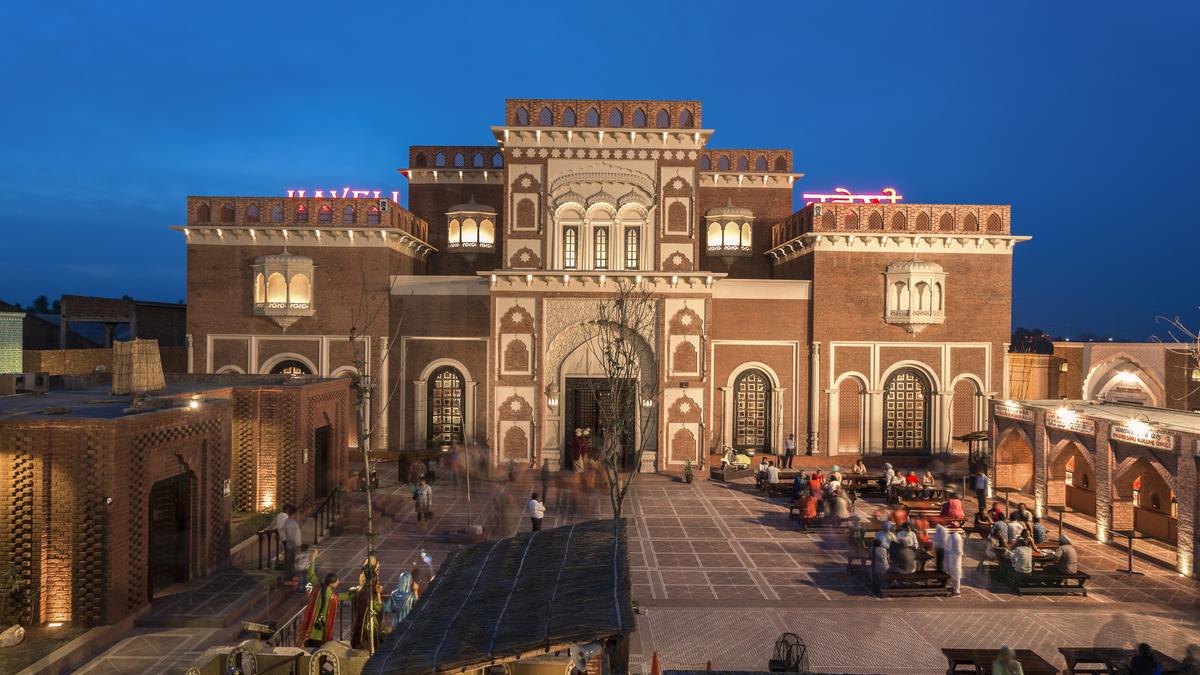
Haveli, a hospitality project spanning 1,07,500 sq. ft., is an ode to Punjab’s architectural heritage. “For centuries, Punjab’s architectural landscape has been shaped by a profound understanding of materials, climate and human interaction with space. The structures that defined the region — havelis, chowks, stepwells, and grand pavilions — were not just aesthetic marvels but functional, sustainable solutions to extreme weather conditions,” says Monika Choudhary, co-founder of Habitat Architects. Apart from the large open courtyards, the sandstone jaalis that line the façades and openings of the structure, as well as the vaulted ceilings and arched openings, enhance cross-ventilation. “Traditional building techniques like load-bearing stone masonry and timber joinery ensure longevity, natural insulation and earthquake resilience. Subterranean water storage, inspired by old Punjabi stepwells and percolation pits, helps replenish groundwater levels,” says Choudhary.
The People Tree House is a 7,000 sq.ft. residence that serves as a lesson in the use of local materials, energy conservation, water harvesting, and recycling. Locally sourced rubble for masonry walls, along with handcrafted, grit-washed walls, are an ode to traditional craftsmanship. “The load-bearing brick vaults are supported by metal beams embedded within concrete. Wherever visible, the metal detailing is kept honest with exposed nuts and bolts finished with duco paint. Besides minimising the use of concrete and steel in slabs, masonry infills provide insulation from the heat and cold,” says Shrinagesh. Locally sourced random rubble stone masonry forms the walls, lending structural integrity and natural cooling. “Earthen pots embedded in masonry further regulate indoor temperatures,” adds Shrinagesh.


Do you know what connects Edwin Hubble’s theory for an expanding universe and Albert Einstein’s cosmological constant? The “biggest blunder” of course! Can’t make head or tail? A.S.Ganesh fills you in with the universe…

Crowds flock to Auroville's Manju Virattu bull race, celebrating Pongal festivities with vibrant local culture and excitement.

NTR Collector highlights training 5,000 women entrepreneurs through RISE Centre, promoting economic self-reliance and skill development.

Massive crowds flocked to Visakhapatnam's attractions during "Mukkanuma," boosting tourism amid festive celebrations and illegal activities.

New Zealand's Glenn Phillips emphasizes focus over history as they prepare for the decisive ODI against India in Indore.

Chennai initiates a groundbreaking project for 24/7 piped water supply, transforming the city's water management strategy amid ongoing challenges.

Taiwan condemns Chinese drone's provocative flight over Pratas Islands, asserting it undermines regional peace and violates international norms.

Residents blockade road in Tiruvannamalai, demanding action against a stray leopard threatening safety and livestock in nearby villages.

Chief Minister M.K. Stalin awards gold rings and coins to bull tamers at a bustling Alanganallur jallikattu event.

Hyderabad's Indo-US healthcare meet fosters collaboration, featuring leaders from the American Medical Association and Indian medical professionals.

PM Modi criticizes the Opposition in Assam for exploiting issues, emphasizing development and restoring trust among the community.

SNIPPETS

Kathawate Mayur Ashok takes charge as Guntur Municipal Corporation Commissioner, prioritizing tax collection and urban development initiatives.