India’s cities are expanding – often into flood-prone areas | Explained Premium
The Hindu
Rapid urbanisation in India has led to an increase in settlements in flood-prone areas, leading to life and livelihood loss. To address this, cities must map flood-prone areas and install storm-water drains, while also making housing more resilient and protecting low-income housing.
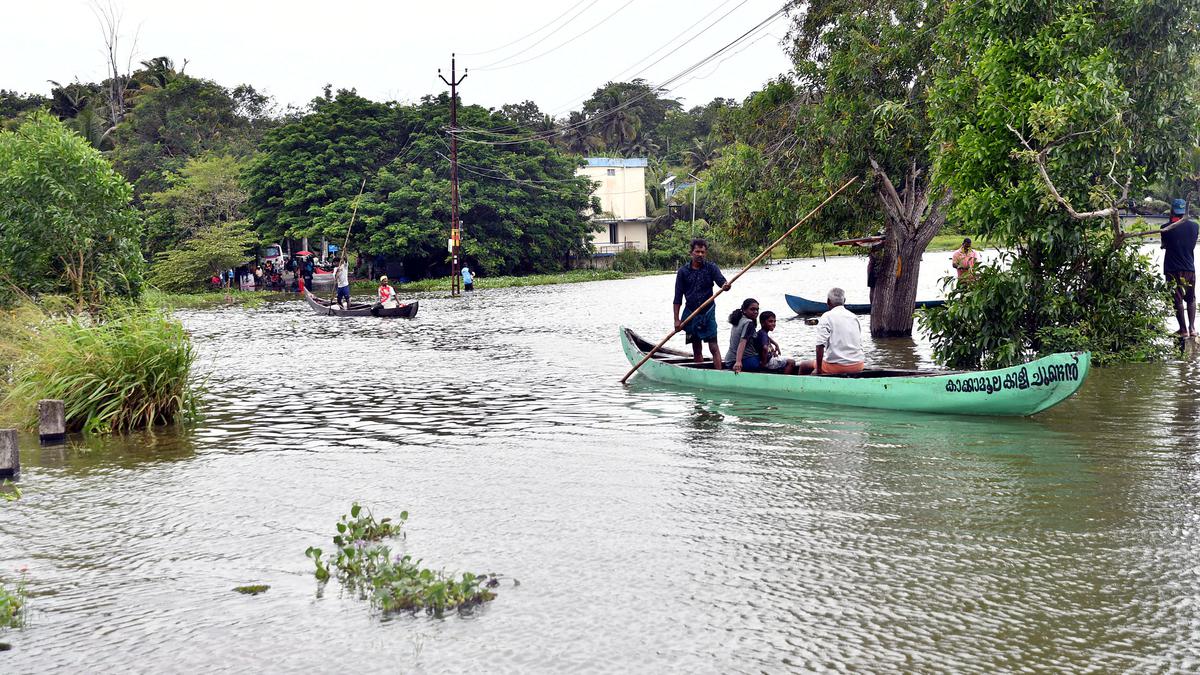
Earlier this year, as the summer monsoons struck the country, Bengaluru, Gurugram, and Mumbai were quickly under several feet of stagnating water. Similar scenes played out in settled areas in many parts of the country, with officials evacuating several thousand people in anticipation of floods.
India’s urban areas have been flooding more and more often. These urban floods lead to life and livelihood loss, and can push governments into economic crises. In July this year, a State Bank of India report estimated the economic loss due to the 2023 North India floods and Cyclone Biparjoy in Gujarat together to be Rs 10,000-15,000 crore.
Now, a new study, published in Nature journal on October 4, and led by the World Bank, has found that these risks have been exacerbated by the rapid and continuous expansion of cities into areas at high risk of flooding. According to its authors, since 1985, human settlements in flood-prone areas have more than doubled in the last four decades.
Urban settlement experts said the findings reiterate the risk of unsustainable urbanisation in India while highlighting the urgent need to account for flood-related risks in how urban expansion is planned and executed.
The study used satellite data to determine global flood patterns and compared it against high-resolution global maps of expanding urban settlements. The researchers found that worldwide, East Asia had the highest rate of settlement expansion in flood-prone areas versus those that are flood-safe. Sub-Saharan Africa and North America on the other hand had the least expansion into flood-prone areas.
The study also found that middle-income countries have more urban settlement in flood-prone zones than that in low- and high-income countries. In the World Bank’s estimate, India is a low-middle-income country (or LMIC).
On the upside, India isn’t among the 20 countries whose settlements are most exposed to flood hazards. Its neighbours Bangladesh, Bhutan, China, and Myanmar are. But the study found India to be the third highest contributor to global settlements, after China and the U.S., and also third – after China and Vietnam – among countries with new settlements expanding into flood-prone areas (all in 1985-2015).


Set between the Siwalik hills and the plains, Butwal offers travellers a mix of regional cuisine, pilgrimage trails to Lumbini and the comfort of Hyatt’s new hospitality landmark

Explore 2026's wallpaper trends in India, highlighting botanicals and handmade designs that enhance modern homes with nature-inspired aesthetics.

Mercedes-Benz CLA 250+ with EQ Technology review: design, performance, range and features explained. Discover how the new electric CLA combines advanced AI, long range, fast charging and futuristic styling for the next generation of luxury EVs.

AI tool for sparrow conservation

BTS’s comeback with ‘Arirang’ marks a major global music event. When does the album release, and where can you watch their concert live stream? We have all the details

The 2026 U.S. cholesterol guidelines urge starting screening and treatment at 30 to prevent cardiovascular disease effectively.

Olam Festival 2026 in Thiruvananthapuram returns March 27-29 with 120+ vendors, music, art, and cultural zones.

A few storytellers in Thiruvananthapuram share their journeys, challenges, and evolving methods on World Storytelling Day, inspiring young minds.

76-year-old Kurian Jacob from Kerala triumphs with seven medals, including five golds, at the Open Masters Games in Abu Dhabi.

Explore the nature of the human mind as an emergent property of brain activity and complex neural interactions.

CERN's Large Hadron Collider discovers the Xi-cc-plus particle, enhancing understanding of quantum mechanics and baryon behavior.

Vibha Batra’s latest book, Spotless (Hachette India) is a novel in verse for young adults

In its first edition, the Madras Art Salon spotlights the works of journalist and artist Narayan Lakshman at The Botanical Club, a social space in the British Deputy High Commission, Chennai