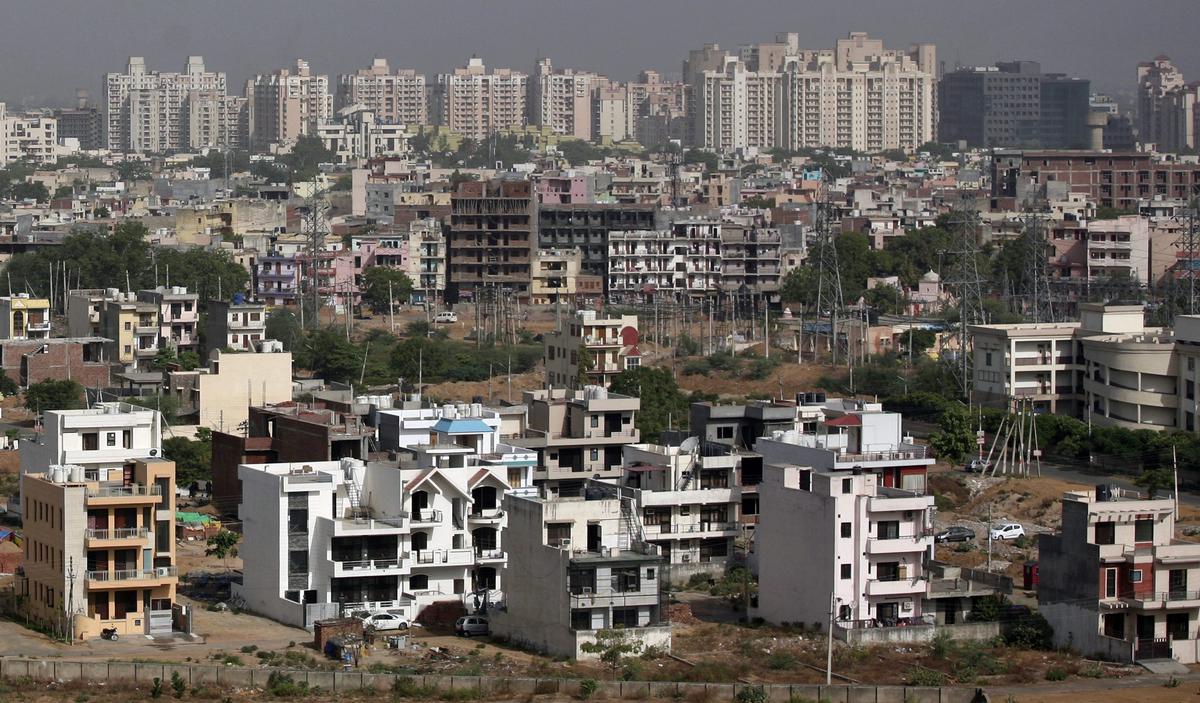
India has to invest $55 billion p.a. in urban infra to meet needs of growing population: WB report
The Hindu
Report flags marked decline in PPP over the last decade, slow implementation of Centre’s flagship Urban Missions by cities on the ground
A new World Bank report estimates that India will need to invest $840 billion over the next 15 years— that is an average investment of $55 billion per annum— into urban infrastructure to effectively meet the needs of its fast-growing urban population.
This is at a time when Public Private Partnership (PPP) transactions for urban infrastructure in India have registered a marked decline in the last decade both in monetary value and transaction volume and amid “slow implementation performance” by States and Urban Local Bodies (ULBs) on several of the Centre’s flagship Urban Missions such as Smart Cities and the Pradhan Mantri Awas Yojana (PMAY).
Titled “Financing India’s Infrastructure Needs: Constraints to Commercial Financing and Prospects for Policy Action”, the report underlines an urgent need to leverage more private and commercial investments to meet emerging financial gaps.
While policy decisions to keep tariffs and service charges below levels required for cost recovery and financial sustainability are contributing to low revenue were also flagged by the report, there has also, the report noted, been slow implementation performance by states and Urban Local Bodies (ULBs) on several of the Centre’s flagship Urban Missions— such as the Smart Cities Mission (SCM) and the Pradhan Mantri Awas Yojana (PMAY) for instance— due to constraints on implementation capacity at the city level.
ULBs across India, according to the report, have so far executed only about one-fifth of the cumulative cost or outlay of approved projects under SCM and AMRUT over the last six financial years.
The total cost of projects approved under these missions is $27 billion and $10 billion for SCM and AMRUT respectively which ULBs have been able to execute only to the extent of 22% (SCM) and 18% (AMRUT), respectively, the report noted.
Under most of these programs, only the first release of funds has been made upfront by the Centre since the subsequent release of funds to states/ULBs is contingent on the implementation progress of the missions at the project level which “has clearly lagged.”


Union Minister Kiren Rijiju meets Tamil Nadu Bishops and pastors to discuss minority welfare and counter anti-BJP narratives.

Japan may consider minesweeping in the Strait of Hormuz post-ceasefire, says Foreign Minister Motegi, amid ongoing regional tensions.

Delhi University job fair guidelines excluding School of Open Learning students spark protests over equity and access to opportunities.

Rwanda's Fanny Utagushimaninde, at 15, becomes the youngest player to score a T20 international century.

Assembly polls 2026: Follow updates from The Hindu on the upcoming elections in five States, on March 22, 2026

Currently, only the services in the 32 series stop at the section of the road adjacent to the Broadway terminus, temporarily closed on account of reconstruction work. Small traders association tells R. Ragu that ensuring the services now accommodated at the temporary terminus at Island Grounds stop at NSC Bose road would benefit visitors to the markets in Parrys

The Hindu photo feature on Aragam which is now known as book village. Photos and text by Imran Nissar

The silent reading movement in the Mylapore-Mandaveli-RA Puram area showed up first at Nageswara Rao Park around two years ago, with modest ambitions, when Balaji launched it along with other reading enthusiasts from the region. This initiative has now moved parks, and seems to set to get entrenched in one. Due to renovation work at Nageswara Park, the reading session became irregular. With the Nageswara Rao park work gaining more surface area, it had to be shifted elsewhere. And it seems set to continue with a newly discovered green patch in RK Nagar in the Sundays to follow.

Explore Tamil Nadu's upcoming four-cornered election contest, featuring key players DMK, AIADMK, TVK, and Naam Tamizhar Katchi.

Trump plans to deploy ICE officers for airport security unless Democrats fund the Department of Homeland Security amid ongoing shutdown.

Cuba experiences its second nationwide blackout in a week, exacerbated by an ongoing U.S. oil blockade and energy crisis.

Kamal Haasan urges Tamil media to avoid the term "censorship" in films, advocating for artistic freedom and recognition of certification.

Pottalurani residents boycott elections again, demanding closure of fish waste processing units impacting health and environment.