India has similar geologic history to parts of South Africa, Australia: Study
The Hindu
India hosts well-preserved volcanic and sedimentary rocks as old as 3.5 billion years, and has similar geologic history to parts of South Africa and Australia
India hosts remarkably well-preserved volcanic and sedimentary rocks as old as 3.5 billion years, and has similar geologic history to parts of South Africa and Australia, a study has found.
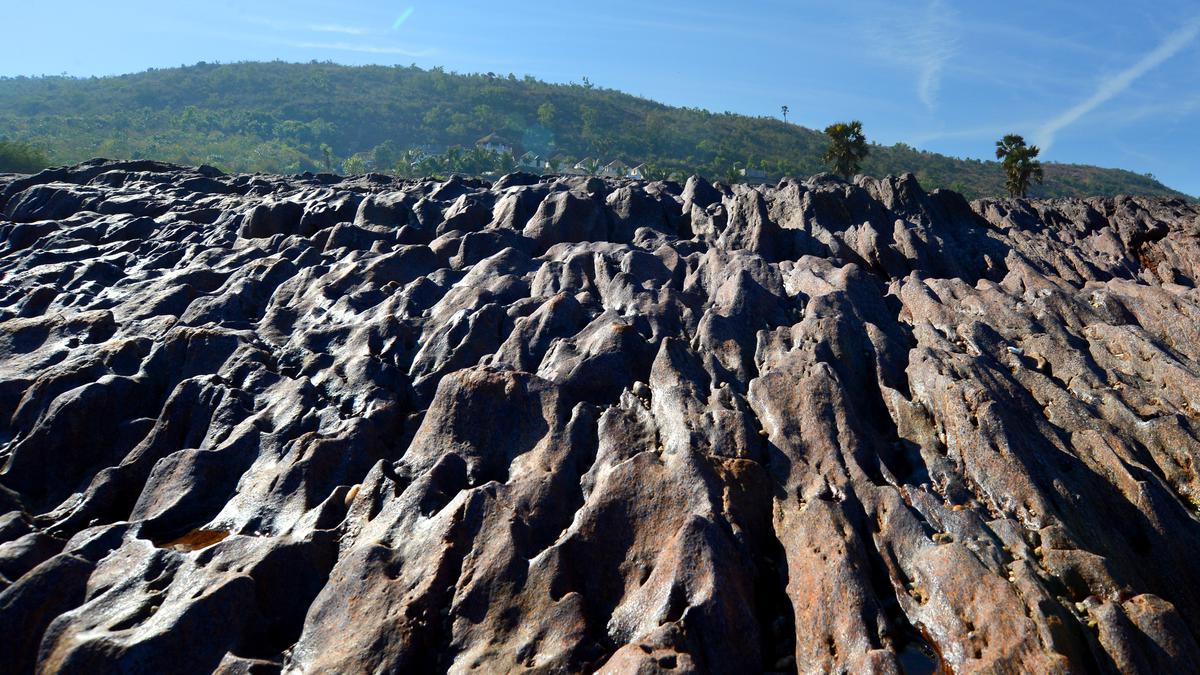
Researchers from the Wits University, the University of Johannesburg (UJ), both in South Africa, and the Chinese Academy of Sciences, examined volcanic and sedimentary rocks from the Daitari greenstone belt in the Singhbhum Craton in east India that were formed approximately 3.5 billion years ago.
Cratons are pieces of ancient continents that formed several billions of years ago. Their study provides a window into how processes within and on the surface of Earth operated in the past.
The team conducted detailed field-based studies and precise Uranium-Lead (U-Pb) radiometric-age dating to evaluate the geology of the ancient greenstone rocks.
Also Read | Writ in stone: Do you know India’s geoheritage sites of Jhamarkotra and Zawar?
The study, published in the journal Precambrian Research, established key geological timelines that illustrate the tectonic evolution of the Daitari greenstones.
"The Daitari greenstone belt shares a similar geologic make-up when compared to the greenstones exposed in the Barberton and Nondweni areas of South Africa and those from the Pilbara Craton of north-western Australia," said Jaganmoy Jodder of the Wits University.


Discover the Minor Planet Centre, the key hub for tracking and verifying observations of small solar system bodies.

In this week's Science for All newsletter, XX explains

Test your knowledge with the quiz on Science films at the Oscars through history

Set between the Siwalik hills and the plains, Butwal offers travellers a mix of regional cuisine, pilgrimage trails to Lumbini and the comfort of Hyatt’s new hospitality landmark

Explore 2026's wallpaper trends in India, highlighting botanicals and handmade designs that enhance modern homes with nature-inspired aesthetics.

Mercedes-Benz CLA 250+ with EQ Technology review: design, performance, range and features explained. Discover how the new electric CLA combines advanced AI, long range, fast charging and futuristic styling for the next generation of luxury EVs.

AI tool for sparrow conservation

BTS’s comeback with ‘Arirang’ marks a major global music event. When does the album release, and where can you watch their concert live stream? We have all the details

The 2026 U.S. cholesterol guidelines urge starting screening and treatment at 30 to prevent cardiovascular disease effectively.

Olam Festival 2026 in Thiruvananthapuram returns March 27-29 with 120+ vendors, music, art, and cultural zones.

A few storytellers in Thiruvananthapuram share their journeys, challenges, and evolving methods on World Storytelling Day, inspiring young minds.

76-year-old Kurian Jacob from Kerala triumphs with seven medals, including five golds, at the Open Masters Games in Abu Dhabi.

Explore the nature of the human mind as an emergent property of brain activity and complex neural interactions.