In the name of a nation: The Bengali migrant worker and Indian citizenship Premium
The Hindu
Migrant workers face detention and deportation amid citizenship crackdown in India, sparking political tensions and economic challenges.
On July 21, 2025, Ms. Banerjee addressed her party’s annual Martyrs’ Day rally. This is a commemoration of the day 13 people were killed in 1993, when police fired on the Youth Congress, then led by Ms. Banerjee. Before lakhs of supporters in Kolkata she claimed that the BJP government at the Centre “was unleashing terror on the Bengali language” and announced that a “language movement” would continue until the Assembly polls, due in 2026.
From the stage of the mega Trinamool event, the party chairperson read excerpts from what she called a secret notification issued by the Union Government in May 2025, and sent only to BJP-ruled States, which stated that if someone was suspected of being Bangladeshi, they should be detained for a month and sent to detention or holding camps.
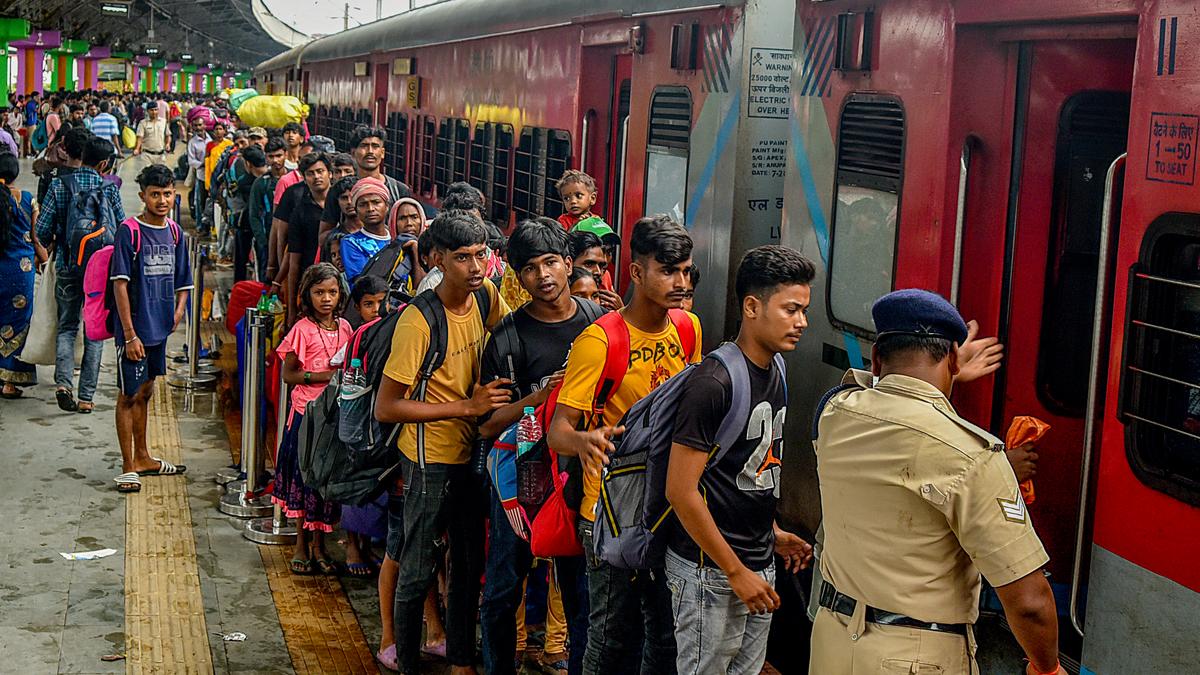
Amidst thousands of migrants returning and the disruption of work, the debate on Bengali language and identity continues to rage. On August 3, 2025, the Delhi Police issued a letter referring to the Bengali language as Bangladeshi, which the Trinamool took up as an insult to the “Bengali-speaking people of India”.
The very next day, while justifying the action of Delhi Police, BJP IT cell chief Amit Malviya said, “There is, in fact, no language called Bengali.”
The West Bengal BJP leadership said that the drive is to identify Bangladeshi infiltrators and not migrants of the State. Leader of Opposition Suvendu Adhikari and newly appointed State BJP president Samik Bhattacharya speak of “sanitising the voter list and removing lakhs of Bangladeshi voters”. They insist on a Special Intensive Revision (SIR) of the voter list on the lines of what is happening in Bihar.
The flight of industries and unemployment remain major challenges in West Bengal. The National Statistical Office’s (NSO) Annual Survey on Unincorporated Sector Enterprises (ASUSE) made public in 2024 pointed out that West Bengal lost 3 million jobs in unincorporated enterprises from 2015-16 to 2022-23.
In 2024, the Union Finance Minister had said that the share of industrial production in West Bengal had declined from 24% at the time of independence to 3.5% in 2021.


Upskilling vital to thrive in tech era, says HCL GM

Minister Geetha Jeevan emphasizes urgent action to include persons with disabilities in the electoral process and welfare schemes.

BJP National Working President Nitin Nabin to visit Patna on December 23 for a grand welcome and celebrations.

Bus stop on narrow stretch of road hampers free flow of traffic on Melur Road

Students should become guiding lights of future society: Samariya

Centre accuses Opposition of obstructing Parliament debate on air pollution, criticizing their conduct during the Winter Session.

Sons orchestrate snake bite murder of father to claim ₹3 crore insurance; six arrested in a shocking conspiracy.

The leadership tussle in the Congress government escalated on Friday, the last day of the legislature session here, with Chief Minister Siddaramaiah asserting that he would complete the full term and there was no agreement to restrict him to two-and-half years.

Love playing in front of Indian fans: Assaubayeva

Kerala's Chief Minister vows to defend the International Film Festival against government censorship and promote freedom of expression.

Temporary nurses start wait-in protest on TVMCH premises seeking regularisation of service

Hyderabad police chief urges RBI to enhance measures against mule accounts fueling cyber fraud and improve financial crime prevention.

Bangladesh is witnessing renewed political tension after the killing of Sharif Osman Hadi, a young leader who emerged during the July–August 2024 uprising that led to the removal of Sheikh Hasina. Hadi later headed the radical group Inquilab Mancha and was campaigning ahead of the 2026 parliamentary election when he was shot in Dhaka. His death has triggered protests, diplomatic friction with India, and concerns over rising political violence as Bangladesh heads towards elections under an interim government.