In pictures: As busy as a bee
The Hindu
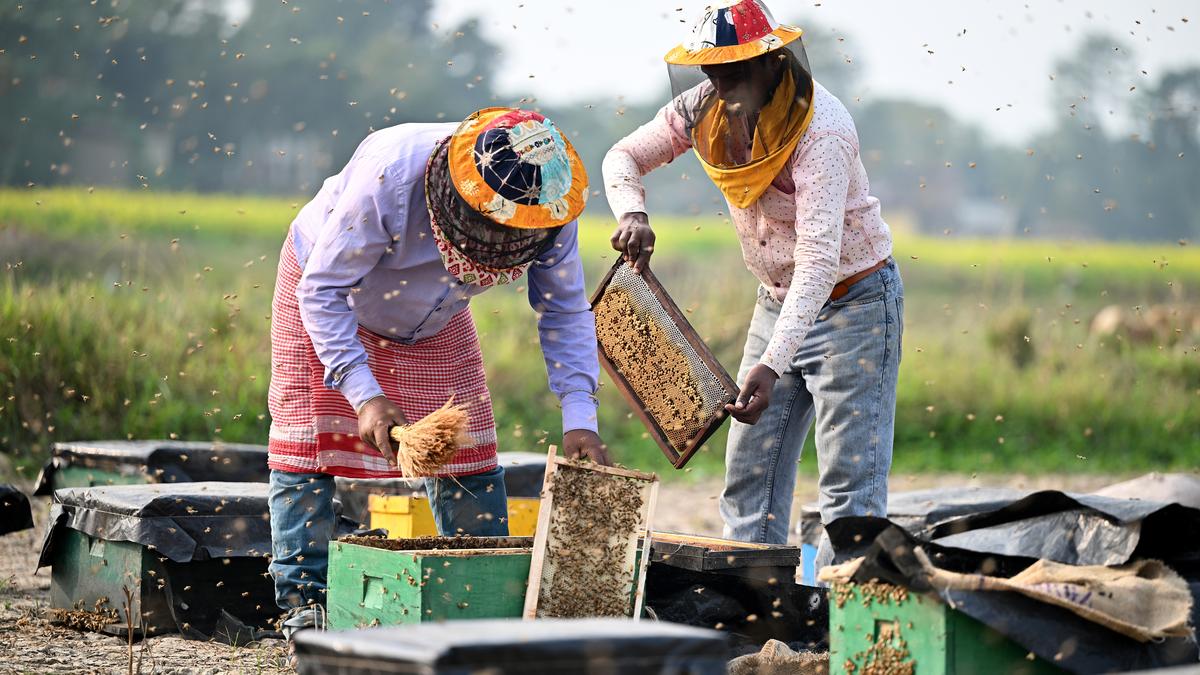
There is a growing industry of migratory beekeeping in Assam where beekeepers move from one location to another, across the State, in search of blooming flowers for nectar
Mustard flowers cannot self-pollinate and need the help of insects to carry pollen between flowers. This is where the bees come in.
Rearing Apis mellifera, the most common of the honeybee species around the world, requires a team of at least four or five persons to ensure the smooth operation of the honey production process — scouting, camping, and production. Therefore, a farmer needs to maintain at least 200 bee boxes for the work to be financially viable.
There is a growing industry of migratory beekeeping in Assam where beekeepers move from one location to another, across the State, in search of blooming flowers for nectar. Assam’s extensive mustard cultivation and low competition attracts an increasing number of farmers to the State each year.
Mustard blossoms early in Assam, prompting beekeepers to shift there. The journey is not set to a specific route and can vary based on the availability of flowers. The migration process involves scouting potential sites for suitable flowers and accommodation. Once the promising locations are identified, beekeepers conduct inspections and engage with the local residents to assess flower availability and the feasibility of housing the apian colonies.
Production of crops such as mustard, coconut, areca nut, lychee and mango is increasing in the village due to the presence of bees. The role of honeybees and other insects is not limited to agriculture, food security, and nutrition. Without them, wild plants and the ecosystems that make the planet habitable would collapse.
Even farmers who do not keep bees have benefited as the bees’ activities have increased the fertility of the region’s crops and fruit trees.


The 'Sri Sita Rama Kalyana Mahotsavam' festival begins with a turmeric grinding ceremony in Vontimitta on March 25.

VMRDA fast-tracks roads to Bhogapuram airport, creating a smarter shortcut for northern Vizag residents and boosting local growth.

MVI held in ACB trap, aide on the run in Khammam bribery case

Experts highlight urgent need for increased awareness of colorectal cancer signs, as many remain unaware of early warning signals.

Assam candidate Sewli Mohilary declares 37 bank accounts and 32 vehicles, with assets totalling ₹54.04 crore.

The All India Major Ports Volleyball & Beach Volleyball Tournaments 2025–26 at the New Mangalore Port Authority (NMPA) Sports Complex Premises and Panambur Beach were inaugurated on Tuesday, by NMPA Deputy Chairperson S. Shanthi.

EVMs, VVPATs moved to Assembly constituencies after first randomization

B.Y. Raghavendra, MP, urges artisans and youth to utilise the PM Vishwakarma Scheme for a self-reliant future in Shivamogga.

Two arrested for dangerous bike stunts near Secretariat, Lumbini Park

Dakshina Kannada Member of Parliament Captain Brijesh Chowta on Tuesday, urged the Union Finance Ministry to give go ahead for the merger of Konkan Railway Corporation Ltd., (KRCL) with the Indian Railways.

Protesters rally against plans to convert Ooty Race Course into an eco-park, citing environmental and legal concerns.

Join the Chaitra Drama Festival in Belagavi, celebrating World Theatre Day with performances and awards from March 27-29.

Commodore Ben H. Berson, Command Education Officer, Southern Naval Command, Kochi, on Tuesday, said students should come forward to choose the armed forces as a career.