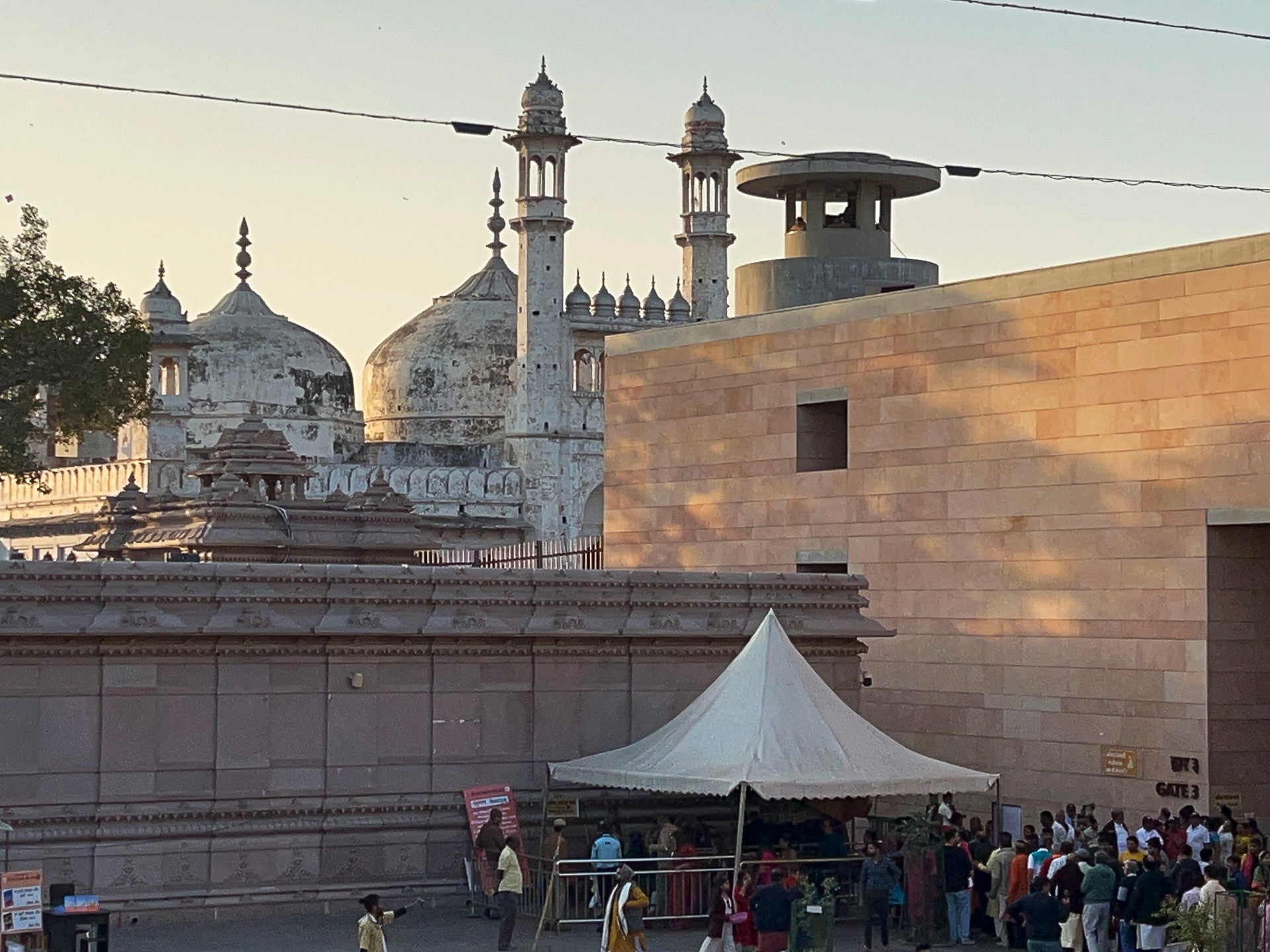
In Modi’s constituency Varanasi, India’s next temple-mosque spat explodes
Al Jazeera
A high court will hear the Mughal-era mosque’s case on February 6 after a local court allowed Hindu prayers inside.
Varanasi/Bengaluru, India – A festive atmosphere engulfed Varanasi, one of Hinduism’s holiest cities situated on the banks of the river Ganga.
It was the week Prime Minister Narendra Modi had inaugurated the new temple to the Hindu deity Ram where the 16th century Babri Masjid once stood in the city of Ayodhya, 200km (124 miles) to the north.
In Varanasi, the streets and boats on the river were decked up with saffron flags bearing illustrations of Ram. Outside Varanasi’s famous and historic Kashi Vishwanath temple, the smell of burning camphor and the sound of Indian classical music drifted through the air as pilgrims flocked in large numbers to the temple to offer their prayers.
But next door, towards the west of the temple, the carnival-like spirit was replaced with a strict and sombre atmosphere, with barricades and police officers greeting crowds.
The officers were guarding the Gyanvapi Mosque – which is widely believed to have been built on the ruins of a 16th-century Kashi Vishwanath temple demolished by Mughal emperor Aurangzeb in 1669.


Senior Iranian officials deny that Iran held talks with the US


Air Force says plane was carrying 114 passengers and 11 crew members, and authorities are investigating the cause of the crash.

“If we trust him, we lose.”

The prime minister admits defeat in the high-stakes vote on a justice reform package but vows to keep her seat.


Germany calls the allegations ‘very serious’, as Hungary’s Prime Minister Viktor Orban orders probe into alleged ‘wiretapping’.

Iran parliament speaker says US president using idea of talks to ‘escape quagmire in which US and Israel are trapped’.