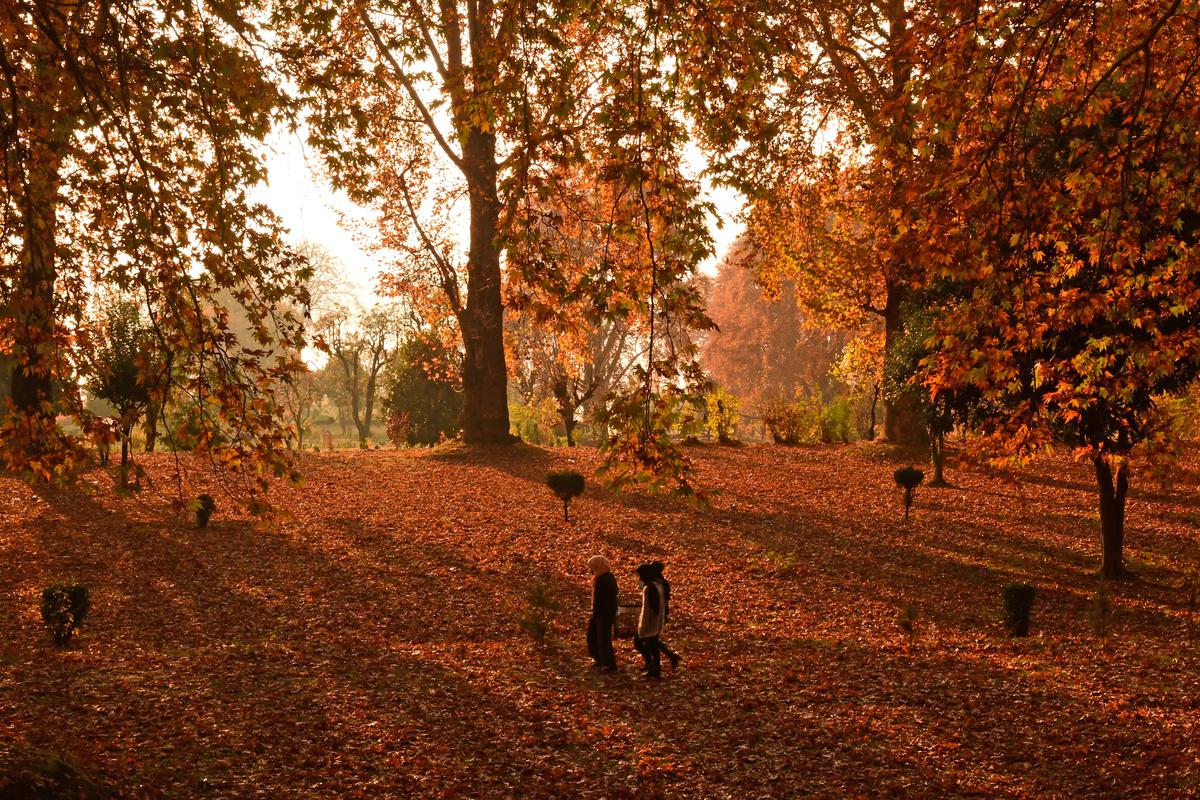
In Frames | Chinars work the autumn magic
The Hindu
Tourists to Kashmir can bask in the glowing yellows, oranges and reds that envelop the landscape during the season
Autumn in Kashmir from mid-September till the end of November is a riot of the warmest colours that envelope the whole landscape before the silent white of winter takes over. The autumnal colours bestow a magical look to the Valley.
The tree that is at the core of the colour extravaganza in the Valley is locally known as Harud (Chinar in Hindi and Bouen in Kashmiri). Platanus orientalis has been a part of Kashmir’s landscape for several centuries now, going back to the Mughal era.
True to its name Chinar, which in Persian means flame, fire or a blaze, the tree drapes itself in colours from green to gold, to reddish orange, before the leaves cascade to the ground in late autumn, bequeathing a carpet of golden-brown to gardens, footpaths and streets across the Kashmir Valley.
Additionally, the distinct yellow of poplar trees planted almost everywhere in Kashmir soothes the souls of the local community and visitors. A large number of tourists visit in October just to witness the Valley wearing this mellow sheen.
The fallen leaves are sometimes burnt to make coal, which is used in traditional kangris (fire pots) that keep people warm in the bone-numbing winter.


BJP's Ramchander Rao assures fuel security in India amid global turmoil, emphasizing stable LPG prices and strategic reserves.

Congress announces candidates for Kerala Assembly elections 2026, selecting Mohammad Shiyas for Kochi and denying Eldhose Kunnappilly a ticket.

What does it take to design gloves, masks and uniform that factor in the various challenges faced by workers on the waste beat? Indore, Bengaluru and Pune have an answer

Explore the behind-the-scenes of political strategy with "Inside the War Room," a must-read for aspiring politicians and managers.

Villivakkam faces civic challenges despite infrastructure improvements, with residents demanding better healthcare, transport, and green spaces ahead of elections.

District Collector launches e-dip lottery for Settipalle land plots, benefiting 2,111 beneficiaries with planned infrastructure development.

Chengalpattu's horticulture farm launches herbal tea, Idhazh, made from sun-dried hibiscus and organic herbs.

Hyderabad is set to become a global film hub, says CM Revanth Reddy at TGFA 2025, highlighting its cinematic potential.

Sivananda Damodara Pai appointed head of RMC Chennai, known for advancing seasonal rainfall and temperature forecasting models.

Madurai Collector chairs meeting with Election Observers

CBI interrogates Anil Ambani in a ₹2,929-crore cheating case involving alleged loan fund irregularities from State Bank of India.

Tamil Nadu's 2026 election features intense competition among established parties and a new disruptor, promising unique voter choices.

Explore the contrasting management styles of England and India cricket teams, highlighting player support and development challenges faced by Liam Livingstone and Sanju Samson.