In 2025, look to the Himalayas
The Hindu
A recent festival in Delhi, showcasing the cultures and conservation activities of a 100-plus Himalayan communities, could kickstart more conversations and collaborations for the region
A large Ladakhi house typically has two kitchens. Yarkhang, the summer kitchen, is a basic functional unit located on a higher floor, while the winter kitchen, chansa, is marked by its lateral sprawl, brass and copper cookware, and a thap (hearth) around which family, guests and visitors gather. It is the fluid potential of the kitchen — transcending its role as a mere space for cooking, into a central aspect of Ladakhi culture “that brings together traditions and ceremonies, mirroring the seasonal rhythms of the land” — that resonates with multidisciplinary artist Tsering Motup Siddho. And the fact that this culture is changing rapidly.
At the recent inaugural edition of ‘Journeying Across the Himalayas’, a festival presented by motorcycle manufacturing company Royal Enfield, and dedicated to the cultures of 50-plus Himalayan communities (the larger social mission covers 100 communities) Siddho explored the chansa’s transformation because of migration, lifestyle and other factors, in his installation The Indus that Flows from my Kitchen: through paintings, photographs, and a video recording of the metalworkers of Chilling, a village in Ladakh, who make utensils.
“The ‘other’ comes into play in how we understand the self,” says the 32-year-old artist. “Ironically, tourists helped us Ladakhis understand our own unique traditions. Just as living away from home opened my eyes to the transformation [for instance, plastic replacing brass] and the need to preserve our cultural heritage.” As people interacted with his installation at the Travancore Palace, they shared similar stories. “A Sikkimese designer told me how he could see the same changes in his place too. This is why sharing stories is important — it makes us think, reflect and find connections.”
Himalayan states and Union Territories — Meghalaya, Manipur, Arunachal Pradesh, Sikkim, Tripura, Assam, Nagaland, Mizoram, Ladakh, Jammu and Kashmir, Himachal Pradesh and Uttarakhand — cover about 18% of the country’s area. Its cultures, cuisines, and communities, however, don’t always make it to the mainstream. Now, a new guard of artists, environmentalists, chefs, designers and tastemakers are helping change the narrative. By protecting, promoting and sharing their traditions and landscapes.
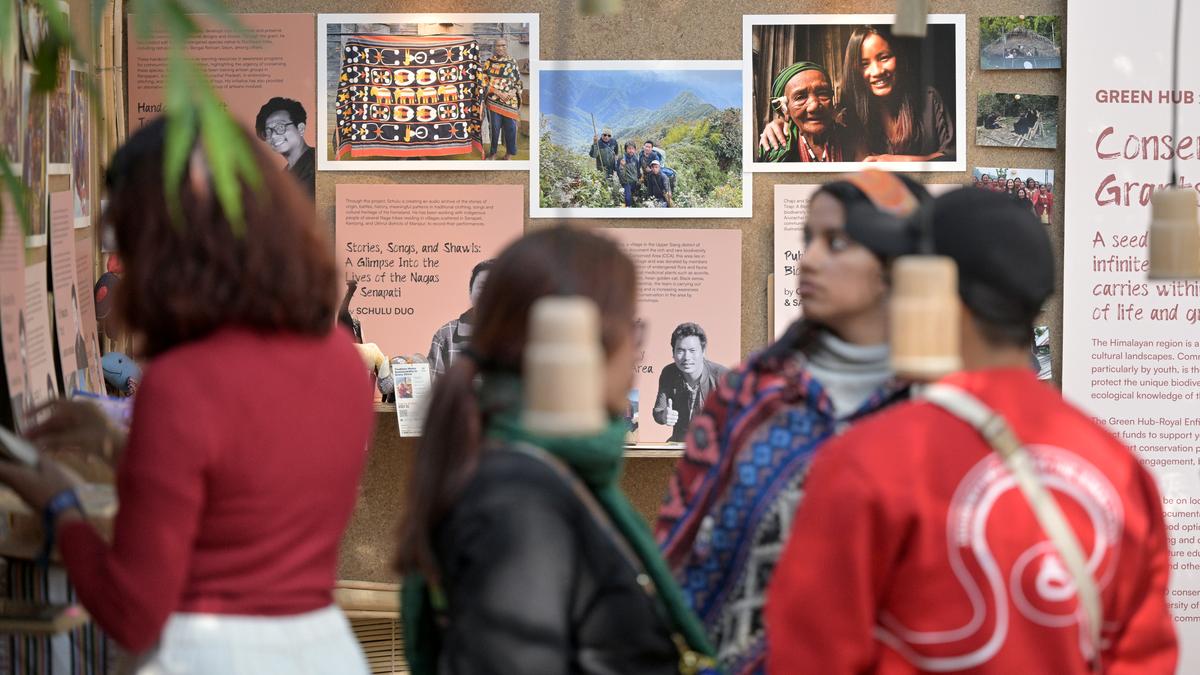
As visitors from across the country engaged with some of these cultural, entrepreneurial and conservation efforts at the Delhi festival, it was also a reminder about why we need to pay more attention to these communities and their stories in the new year.
And the stories are plenty.
Morangam Khaling, known professionally as Mo Naga, is an ethnographer and tattoo artist who is pioneering neo-Naga designs. Based in Manipur, he belongs to one of the smallest Naga tribes, Uipo, with a population of less than 2,000. For the past decade he’s been documenting native tattooing practices, and in the last year alone, he travelled over 2,500 km across the Northeast to collect specimens for a tattoo garden he’s planting in Manipur — to preserve the dying species of plants and herbs used in traditional tattooing.


Telangana MP urges Centre to expedite ₹1,270 crore dues transfer from Andhra Pradesh for financial fairness and development.

A Karnataka man was detained with ₹62.5 lakh in cash during election checks on NH 544, claiming it was from a property sale.

Telangana Government issued 16 notifications to fill 31,798 vacancies, with 67,763 total recruitments since Congress took power.

Supreme Court directs Tarun Butolia's family to seek safety assessment from Delhi Police after fatal Uttam Nagar clash.

CM Stalin asserts unity in the DMK-led alliance, dismissing division attempts and emphasizing collaborative efforts for the upcoming elections.

Rahul Gandhi to skip Kerala rally due to Sonia Gandhi’s ill health; Kharge to attend Kozhikode event
Rahul Gandhi will miss the Kerala rally due to Sonia Gandhi's health; Congress president Kharge to attend instead.

Thunderstorms with lightning and gusty winds forecasted for 20 Telangana districts on March 26

TGSRTC reduces Metro AC and Deluxe bus fares by 30% in Hyderabad to encourage public transport amid the fuel crisis.

Supreme Court criticises Haryana Police for mishandling a four-year-old rape case, mandates swift action and oversight with a Special Investigation Team.

On World Theatre Day 2026, artists in Hyderabad call for affordable venues as rising costs and infrastructure gaps challenge the city’s theatre ecosystem.

Madhapur police seize 31 illegally transported commercial gas cylinders, ensuring public safety and compliance with regulatory norms.

Punjab AAP MLA Harmeet Singh Pathanmajra arrested in Gwalior after evading police in a rape case for over six months.

Bose Krishnamachari resigned from the Kochi Biennale Foundation amid sexual harassment allegations, confirmed by the foundation's chairperson.