IIT Mandi, DBT-inStem Bengaluru scientists find how dengue mosquito eggs are so hardy
The Hindu
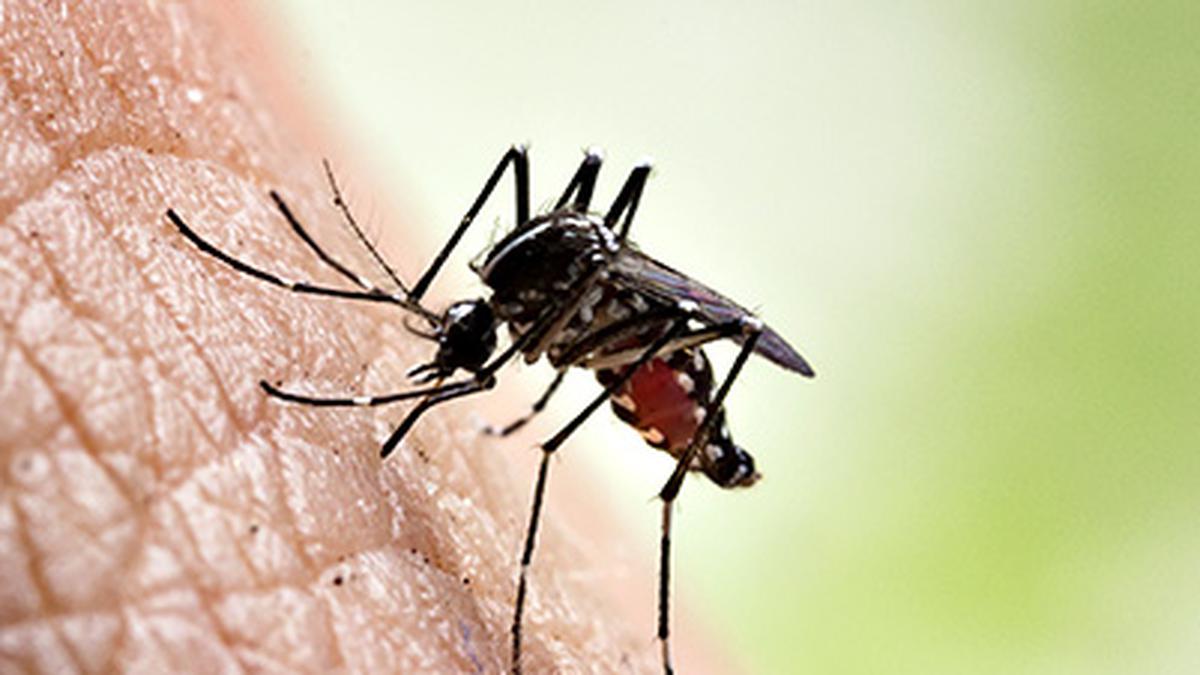
Researchers from the Indian Institute of Technology (IIT) Mandi and the Institute for Stem Cell Science and Regenerative Medicine (inStem) in Bengaluru have discovered the biochemical processes that enable the eggs of the dengue causing mosquito to survive harsh conditions and rejuvenate when favourable conditions return.
Researchers from the Indian Institute of Technology (IIT) Mandi and the Institute for Stem Cell Science and Regenerative Medicine (inStem) in Bengaluru have discovered the biochemical processes that enable the eggs of the dengue causing mosquito to survive harsh conditions and rejuvenate when favourable conditions return.
The research could potentially aid the battle against mosquito-borne diseases by enabling more effective vector-control measures.
The details of the research have been published in the journal PLOS Biology. The paper was co-authored by Baskar Bakthavachalu, assistant professor, School of Biosciences and Bioengineering, IIT Mandi, along with Anjana Prasad, Sreesa Sreedharan, and Sunil Laxman from DBT-inStem.
Karnataka has been facing a dengue outbreak, with 11,576 cases this year as of October. Bengaluru recorded the highest number of cases in the State, with 6,093 cases over the same period.
Mosquitoes, viral vectors for various diseases, deposit their eggs in water, where they hatch. The eggs of dengue and zika-carrying Aedes mosquitoes can endure extended periods without water, akin to plant seeds patiently waiting for germination in the absence of moisture.
Despite the knowledge of this phenomenon, the molecular reasons behind the desiccation tolerance and post-rehydration survival remained a mystery until now.
The collaborative team reared Aedes aegypti mosquitoes, studying their eggs through a series of innovative experiments. By subjecting the eggs to dehydration and subsequent rehydration, they discovered that the developing larvae undergo specific metabolic changes required for survival.


76-year-old Kurian Jacob from Kerala triumphs with seven medals, including five golds, at the Open Masters Games in Abu Dhabi.

Explore the nature of the human mind as an emergent property of brain activity and complex neural interactions.

CERN's Large Hadron Collider discovers the Xi-cc-plus particle, enhancing understanding of quantum mechanics and baryon behavior.

Vibha Batra’s latest book, Spotless (Hachette India) is a novel in verse for young adults

In its first edition, the Madras Art Salon spotlights the works of journalist and artist Narayan Lakshman at The Botanical Club, a social space in the British Deputy High Commission, Chennai

Cholesterol enhances melanoma cell invasion by making nuclei squishier, revealing a potential treatment target in cancer progression.

The designers reinterpret the Swedish artist’s symbolic forms and colour energy through contemporary resortwear silhouettes

Discover the inspiring legacy of Bibha Chowdhuri, a pioneering woman in physics and a trailblazer in STEM history.

Discover the inspiring legacy of Bibha Chowdhuri, a pioneering woman in physics and a trailblazer in STEM history.

Ashdeen’s Spring 2026 collection features saris inspired by the designer’s Parsi gara archive

Red ochre burials, ritual markings and myths across cultures show that red repeatedly marks liminal thresholds such as puberty, sacrifice and death; anthropologists argue that the colour functions as a technology of collective ritual and value, binding communities through shared symbolic acts

India approves 23 institutions for quantum labs under the National Quantum Mission, aiming to advance quantum technology and research.

India approves 23 institutions for quantum labs under the National Quantum Mission, aiming to advance quantum technology and research.