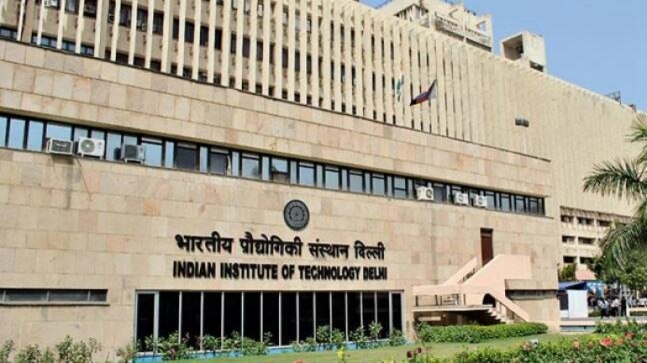
IIT Delhi work on SARS-CoV-2 Evolution turns successful
India Today
The research has been published in a journal, Molecular Biology, and Evolution, and is titled "The Slowing Rate of CpG Depletion in SARS-CoV-2 Genomes is Consistent with Adaptations to the Human Host".
Researchers at the Indian Institute of Technology (IIT), Delhi have revealed the mechanisms driving the evolution of SARS-CoV-2 in humans which can help in better understanding of Covid-19's pathogenesis, immune evasion and emergence of variants of concern. According to the seven-member research team, CpG (a cytosine followed by a guanine) numbers in virus genomes have been linked to host-switching, the efficiency of virus replication, immune evasion and the ability of a virus to cause disease.
The researchers found that the rate of CpG depletion from SARS-CoV-2 genomes rapidly decreases after the first few months of evolution in humans. The research has been published in a journal, Molecular Biology, and Evolution, and is titled "The Slowing Rate of CpG Depletion in SARS-CoV-2 Genomes is Consistent with Adaptations to the Human Host".
"Zinc-finger antiviral protein (ZAP) is a host protein that can bind to CpG-rich regions in SARS-CoV-2, the causative agent of the Covid-19 pandemic, and recruits other host proteins to degrade the viral RNA. Several viruses including HIV-1, Influenza A virus and SARS-CoV-2 prefer to reduce their CpG content (by losing CpGs) to minimise the host immune response, thus allowing better virus replication and survival," Vivekanandan Perumal from the Kusuma School of Biological Sciences, IIT Delhi told PTI.
"The team analysed over 1.4 million full-length SARS-CoV-2 sequences from across the world. They found that the rate of CpG depletion from SARS-CoV-2 genomes rapidly decreases after the first few months of evolution in humans.
"Furthermore, most SARS-CoV-2 variants of concern had lower CpG content. This work highlights the existence of selection pressures apart from ZAP that may lead to CpG depletion in SARS-CoV-2 genomes," he added.
SARS-CoV-2 has a uracil-rich (uracil is one of the four building blocks of RNA) genome. The researchers have identified how uracils adjacent to CpGs contribute to the accelerated loss of CpGs from SARS-CoV-2 genomes.


Rajkummar Rao and Wamiqa Gabbi's 'Bhool Chuk Maaf' will premiere on Prime Video on June 6, just two weeks after its theatrical release. Originally planned for a direct OTT debut, the film hit cinemas on May 23.

Fresh spy shots suggest the Mahindra Thar 3-door is set for another update, with design cues inspired by the Mahindra Thar Roxx and a more premium positioning in sight.

Samsung has been teasing its upcoming A-series devices since last week, without officially revealing their names. While speculation has largely pointed to the Galaxy A37 and A57, a lengthy video recently surfaced ahead of any official confirmation, revealing the key specs and pricing of the devices.

Sony will hand over most of its TV manufacturing to TCL in a deal likely worth Rs 8,300 crore, but the Bravia brand will live on. Consumers can expect familiar quality, even if the production behind the scenes changes. Here is everything you need to know.

Noble's first 100 days with the Neuralink N1 implant provide valuable insights into the future of mind-controlled devices. Neuralink is owned by Elon Musk.

The Oppo Find X9 Ultra is launching globally in April. It is Oppo's first Ultra-branded phone to launch outside of China.

The Bihar School Examination Board declared the Class 12 results for 2026 with the overall pass percentage announced today. A look at the Board's performance over the last five years shows how student success has evolved.

Nearly 200 AI safety activists protested in San Francisco, urging major AI companies to pause frontier AI development over growing existential risks and safety concerns.

Students who appeared for the Bihar School Examination Board Class 12 exams can now access their results through multiple platforms, including the India Today Board Results page for smoother and quicker access. With heavy traffic expected on official websites, this alternative option ensures students can check their scores without delays or technical glitches.

After fight with US Military, Anthropic starts searching for policy expert on weapons and explosives
Anthropic, the AI startup that found itself at odds with the Pentagon over unrestricted AI use, is now looking for an expert in chemical weapons and explosives. However, the company is not planning to build such weapons, but instead wants to formulate its policy in regard to weapons.

The Bihar School Examination Board will announce the Class 12 results at 1:30 pm today. It said the scores would come through the official portals, with the pass percentage, toppers and compartment schedule shared at the same time.

American astrophysicist Neil deGrasse Tyson believes that artificial intelligence has a lot of positives for humanity. However, the AI that could perhaps reach superintelligence and surpass humans may be nothing short of lethal for humanity, something he urges must not be developed.