IGNCA on the importance of conservation
The Hindu
The IGNCA and its group of conservationists restore artefacts to their hoary past, using science and creativity
From an Army Mess preserving the war trophy of a flag captured in a long-forgotten battle to maintaining a 5,000-year-old Harappan bronze dancing girl in the National Museum, Delhi, conservation comes in many forms. And, among the pioneering institutions involved in conservation in the country is the Indira Gandhi National Centre for The Arts (IGNCA).
The IGNCA focusses on several aspects of conservation — including research, training and re-organisation of museum spaces. It also recently held an exhibition ‘Conserving Values, Restoring Significance.’
The exhibition aimed to showcase the unique conservation work undertaken by the IGNCA, and educate the public about the importance of conservation. Sanjay Dhar, Consultant, Conservation Division, said they wanted to let people know what the department did, and how relevant and important the work was in one’s everyday life.
One wonders why museums have not focussed more on this area. Sources say there are only three full-time conservators at the National Museum, Delhi, to handle three lakh objects. In fact, India only has about 200 trained conservators.
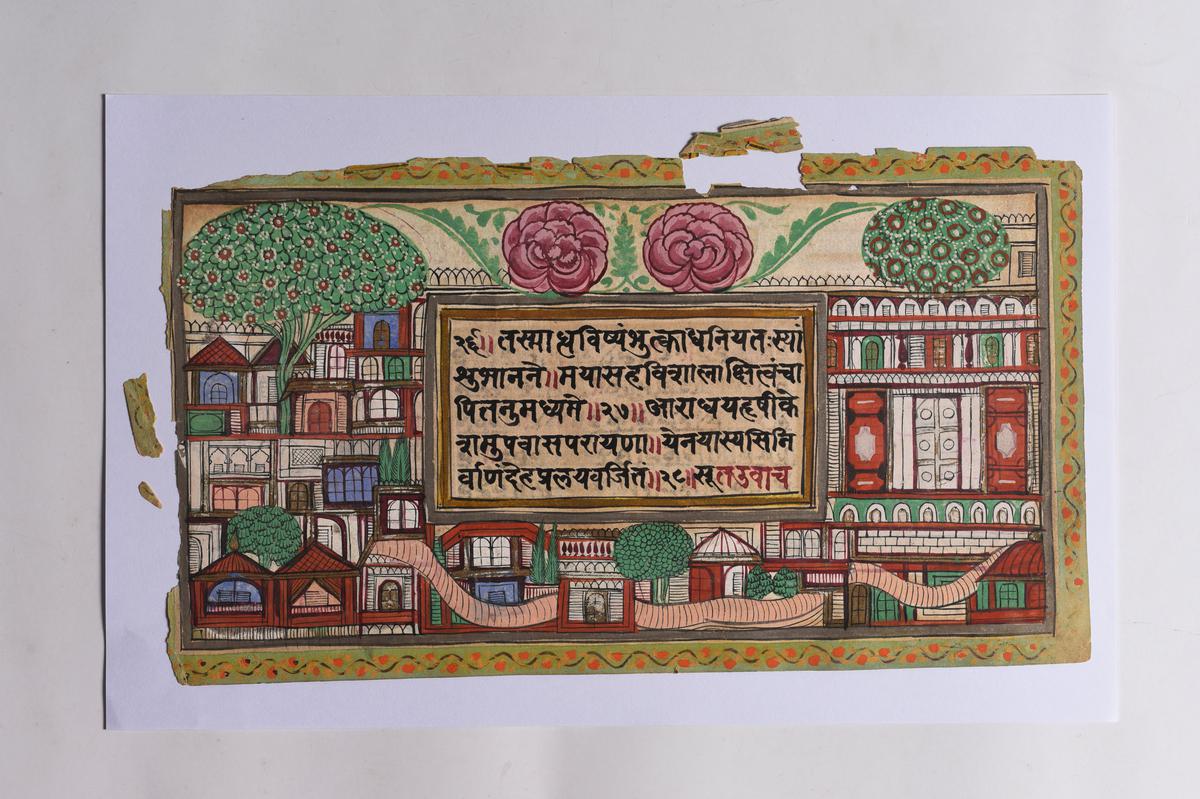
The sheer diversity of the products restored at IGNCA over two decades, and the projects it has dealt with is impressive - the conservation lab was established in 2001. Each conservator works with sculptures, paintings, rock art and textile paintings, including ‘thangkas’, to manuscripts, wood, instruments and bronzes. The IGNCA conservation team has established laboratories in Thailand and Vietnam to help restore manuscripts, and assisted a museum in Guwahati re-organise its collection. The National Crafts Museum in Delhi is an ongoing project too.
Achal Pandya, head of the department, Conservation, shared that, initially, the laboratory was set up only to conserve the collections at IGNCA. Gradually, request calls from the Delhi Police, Supreme Court of India (for documents and mosaics) and the Rashtrapati Bhavan saw it expand its activities. The space in the new IGNCA campus will be approximately 10,000 sq ft, says Pandya.
Reorganisation of museum storage is a satisfying aspect of conservation, says Pandya. Unless one is aware of the contents, it is impossible to clean them, far less showcase them, he says. He spoke of a challenging project in a museum in Guwahati, where 15 of his staff worked for 15 days to reorganise the contents. The Craft Museum, Delhi, is an ongoing project too — initially, only 5,000 objects were relocated; now, 30,000 objects will be dealt with.


South African naturalist Steve Boyes speaks on ghost elephants, ancestral tracking, and Werner Herzog’s documentary exploring Angola’s elusive highland giants

Actor-director Amol Palekar will receive META's Lifetime Achievement award for 2026 on March 25 in New Delhi.

India's artists unite against rising censorship, advocating for creative freedom and support for marginalized voices in the arts.

Written and directed by Kunal, the film also stars Sparsh Shrivastava and Vanshika Dhir

This year, Bharatnatyam artistes will present the Tyagaraja Aradhane as a dance performance

This year, Bharatnatyam artistes will present the Tyagaraja Aradhane as a dance performance

The actor, along with director Sushant Shah, speak about their upcoming series ‘Chiraiya’, Divya’s process of working on the dialect, Sushant’s approach to telling a story about women, and more

An independent video, ‘Feel the Spark’ by Raleigh Rajan with vocals by Ciera Dumas that celebrates Tamil literary giants, garnered 1.4 million views in less than 36 hours.

In ‘Jack Ryan: Ghost War’, John Krasinski is back as the savvy CIA analyst, diving headfirst into a high-stakes mission that unravels a deadly conspiracy and pits him against a rogue black-ops unit

Shriram Bharatiya Kala Kendra’s Shankarlal festival showcased rare ragas, radiant artistry, and inclusive performances, from Pt Madhup Mudgal’s serene morning ragas to Ramana Balachandran’s Saraswati veena.

Explore "Threads that Bind: The Kantha Project," an exhibition in Delhi reimagining kantha as a medium of repair and renewal.

Sean Penn skips the Oscars to meet Ukraine's Zelenskyy, who praises him as a "true friend" amid the war.

The teaser of Tamil star Suriya’s much-awaited film with director Venky Atluri, titled Vishwanath and Sons, was unveiled by the makers on Monday