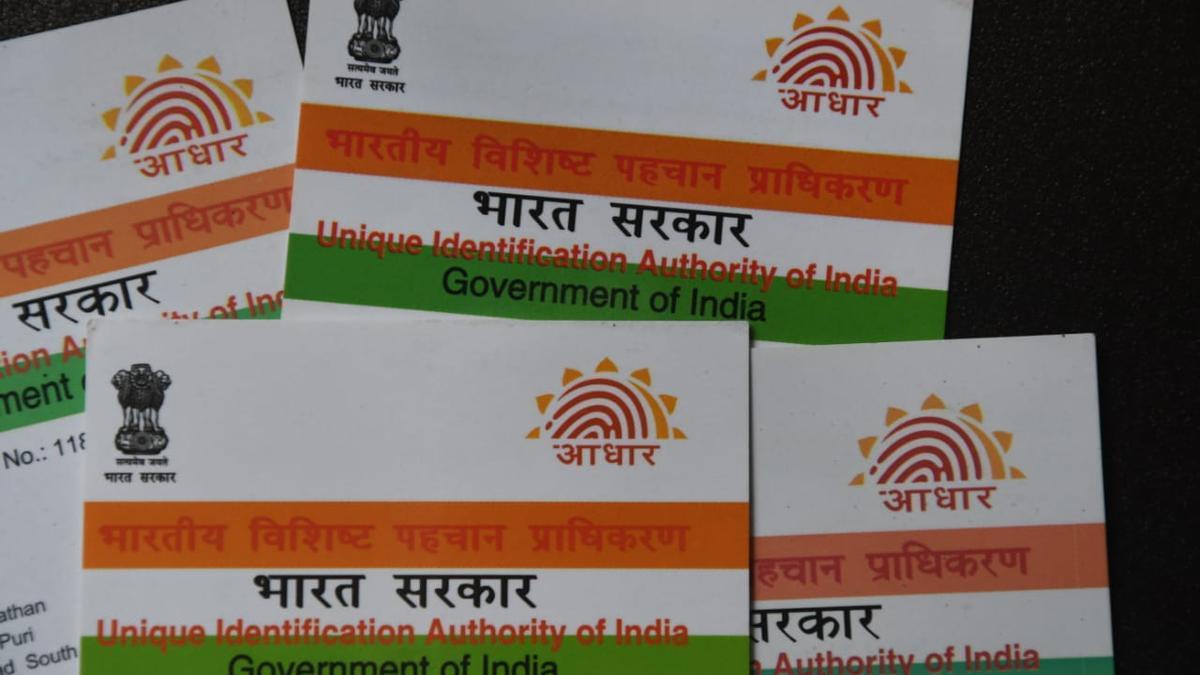
If Aadhaar can be forged, same goes for passport: SC to plea to reconsider Aadhaar as 12th document
The Hindu
Supreme Court defends Aadhaar's validity as an identity document amid concerns over forgery, comparing it to passports.
The Supreme Court on Wednesday (January 28, 2026) objected to an argument that Aadhaar must be dropped from the documents electors are allowed to use for the purpose of identity verification during the Special Intensive Revision (SIR) exercise on the ground that they are easily forged and sourced through private agencies.
“Do you know that a passport is also outsourced to a private agency under the auspices of the Government of India? These private service centres [through which Aadhaar enrolments and updates may be done] operate under the statutory authorities or the government itself. Aadhaar is a public document. Any document can be forged. Even a passport can be forged, while issuing Aadhaar, the private centre is performing a public duty,” Justice Joymalya Bagchi, a member of the Division Bench headed by Chief Justice of India Surya Kant, addressed senior advocate Vijay Hamsaria.
The passport was one among the original 11 documents the Election Commission of India had allowed in its order declaring the SIR exercise on June 24 last year.
Mr. Hansaria, representing petitioner-advocate Ashwini Kumar Upadhyay, said the court must consider its September 8, 2025, order to include Aadhaar as the 12th ‘indicative’ document for verification and a proof of identity. The order was passed during the Bihar SIR exercise.
He submitted that around 5.72 lakh privately-run common service centres carry out Aadhaar enrolments and updates, and that any person with a Class 10 qualification, basic computer knowledge and a biometric machine could operate such a centre.
Mr. Hansaria referred to the Aadhaar (Targeted Delivery of Financial and Other Subsidies, Benefits and Services) Act of 2016 to point out that the document was not meant to verify citizenship or identity, but only as a document to boost “good governance, efficient, transparent, and targeted delivery of subsidies, benefits and services”. He argued that Section 2(v) of the 2016 Act defined ‘resident’ as any individual, including a foreigner, who has been in India for a minimum 182 days preceding the date of application for Aadhaar.


Discover how to turn creative passion into a sustainable business by mastering finance, IP, and strategic growth.

Arjun Krish and Ria Dinesh win Best Telefilm at Kerala State Television Awards for their impactful short film, F for Freedom.

redBus data reveals a significant 76% rise in solo women travelers from Karnataka since 2019, highlighting increasing independence in travel.

Air India and AI Express will operate 44 flights to West Asia amid Dubai airport restrictions on foreign carriers.

Maharashtra Assembly passes the Freedom of Religion Bill, imposing strict penalties for unlawful conversions, ensuring protection for vulnerable individuals.

Trump claims he can do “anything” with Cuba amid U.S.-Cuba talks, escalating tensions over political intervention and economic crises.

Amrutanjan owes ₹9.74 crore in rental arrears for Mylapore Kapaleeswarar Temple land, despite lacking a landlord-tenant relationship.

BJP intensifies campaign in Palakkad for the 2026 Assembly elections, targeting UDF amid scandal surrounding MLA Mamkootathil.

Jeevan Reddy leads a rally for maize farmers in Jagtial amid speculation of leaving Congress for BRS.

BJP and AINRC likely to maintain 2021 seat-sharing formula for Puducherry's 2026 Assembly elections, confirms party president.

BJP reveals 144 candidates for Bengal Assembly polls, featuring Suvendu Adhikari contesting against Mamata Banerjee in Bhabanipur.

Anna University partners with Ramco Systems to create an advanced ERP lab for enhanced industrial engineering education.

NDA announces candidates for 12 Kozhikode seats in Kerala Assembly polls 2026 as UDF and LDF ramp up campaigning.