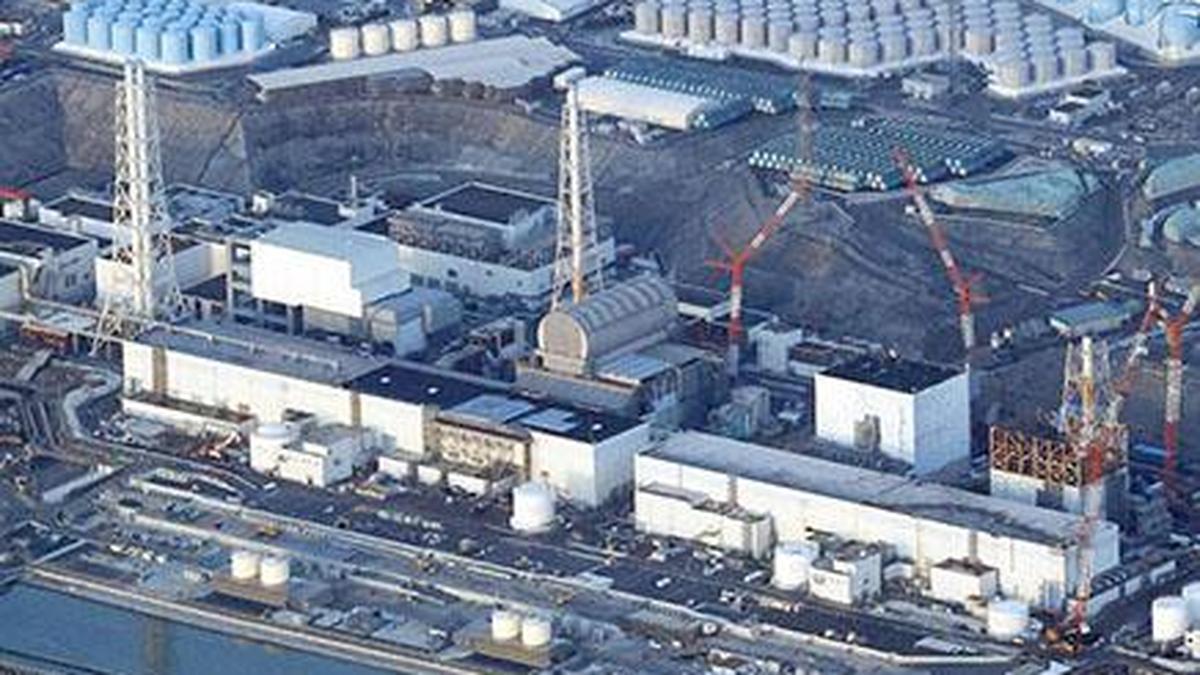
IAEA team gathers marine samples near Fukushima as treated radioactive water is released into sea
The Hindu
A member of the International Atomic Energy Agency (IAEA) team visiting Fukushima for its first marine sampling since the Fukushima Daiichi nuclear power plant started releasing treated radioactive wastewater into the sea said on October 18 he does not expect any rise in radiation levels in the fish caught in the regional seas.
A member of the International Atomic Energy Agency (IAEA) team visiting Fukushima for its first marine sampling since the Fukushima Daiichi nuclear power plant started releasing treated radioactive wastewater into the sea said on October 18 he does not expect any rise in radiation levels in the fish caught in the regional seas.
The IAEA team watched flounder and other popular kinds of fish being caught off the coast earlier on Thursday and brought on boats to the Hisanohama port in southern Fukushima for an auction.
“I can say that we don't expect to see any change starting in the fish," said Paul McGinnity, an IAEA marine radiology scientist.
“A small rise in the levels of tritium, which cannot be removed from the Fukushima Daiichi wastewater by the plant’s treatment system called ALPS, is possible in locations close to the discharge points, but the levels of radioactivity are expected to be similar to those measured before the discharge last year,” he said.
Fukushima Daiichi started releasing wastewater into the sea on August 24. The release, which is expected to continue for decades, has been strongly opposed by fishing groups and neighbouring countries including South Korea, where hundreds of people have protested.
China immediately banned all imports of Japanese seafood the day the release began, badly hurting Japanese seafood producers, processors and exporters, and Russia recently joined China in the trade restrictions.


Saudi Arabia expels Iranian military staff amid escalating tensions and ongoing missile attacks during the U.S.-Israeli war on Iran.

Russia claims control of Potapivka village in Ukraine's Sumy region amid ongoing military efforts to establish a buffer zone.

Iranian missile strikes on Israeli towns cause widespread damage and injuries, marking a significant escalation in the ongoing conflict.

As Gor makes first trip as U.S. Special envoy to South Asia, Delhi watches strategic signals closely
Sergio Gor's inaugural trip as U.S. Special Envoy to South Asia signals strategic U.S. engagement amid regional tensions.

Slovenians vote in a tight election between liberal and populist candidates, impacting the country's future domestic and foreign policies.

Netanyahu asserts U.S.-Israel alliance fights Iranian threats, emphasizing global security after missile strikes on Israeli and European targets.

Israeli settlers attack Palestinian villages in the West Bank, causing injuries and destruction amid ongoing settlement expansion.

Britain asserts no evidence of Iran planning missile strikes on Europe, despite Israeli claims of missile capabilities.

UNESCO reports over half of countries have banned phones in schools due to concerns about attention, cyberbullying, and social media impact.

Analysis reveals a U.S.-operated Patriot missile likely caused a pre-dawn explosion in Bahrain, injuring numerous civilians.

Sri Lanka raises fuel prices by 25% amid ongoing West Asia conflict, impacting petrol and diesel costs significantly.

Iran strikes near Israeli nuclear research center as Trump threatens attacks on Iranian power plants
Iran's missile strikes near Israel's nuclear site escalate tensions as Trump threatens retaliation against Iranian power plants.

Saudi Arabia intercepts one of three ballistic missiles targeting Riyadh amid ongoing regional tensions and threats from Iran.