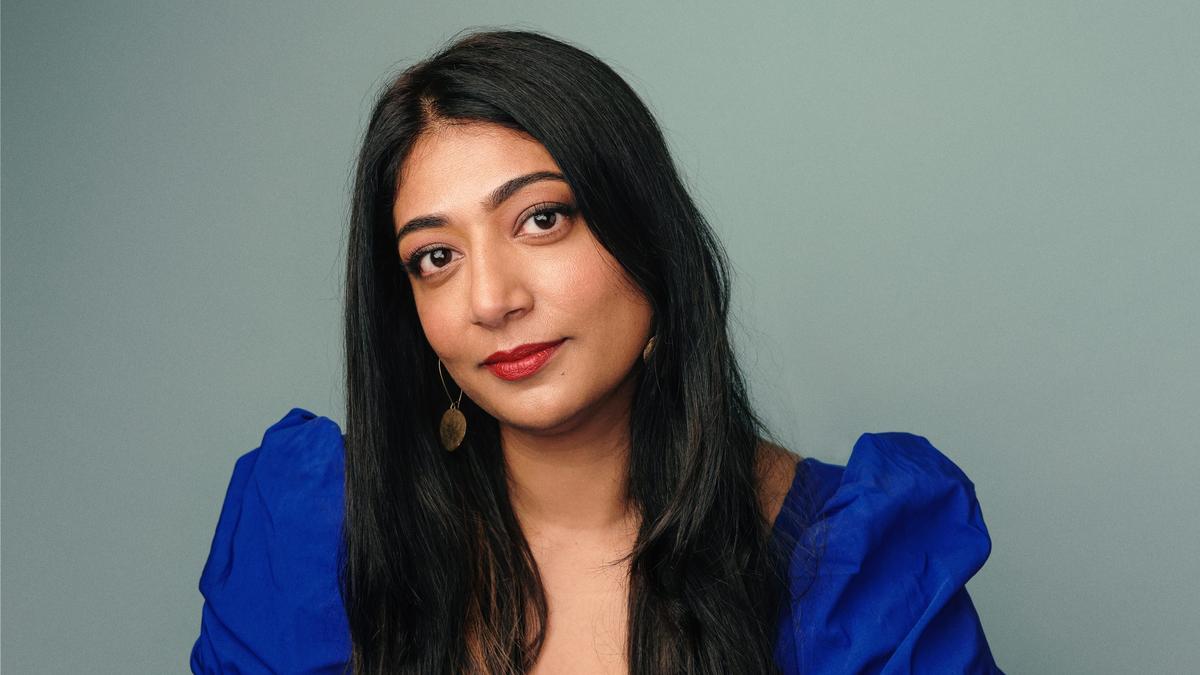
‘I was determined to write something funny’: Nussaibah Younis, author of Fundamentally, shortlisted for Women’s Prize for Fiction
The Hindu
Nussaibah Younis pens a satirical novel on aid work, racism, and queerness, shortlisted for the Women's Prize for Fiction.
For a decade, Nussaibah Younis was a peacebuilding professional in Iraq. When she was asked to design a programme to deradicalise Islamic State (IS) brides, it triggered a memory from her teenage years. When she was 17, she went to a summer camp taught by the “articulate and charming” Sheikh Anwar al-Awlaki, who later joined al-Qaeda and was killed in a drone strike in 2011 in Yemen. It made her realise how easily she could have been on the other side.
Leveraging her academic and personal experiences as a British-Iraqi Muslim, Younis has penned a supremely funny novel, Fundamentally (published by Weidenfeld & Nicolson), a satire on international aid bodies trying to play saviour in the face of crises. The book has been shortlisted for the 2025 Women’s Prize for Fiction, the winner of which will be announced on June 12. Younis takes on racism, workplace politics, religious belief, and queerness in this confident debut work. Edited excerpts from an interview:
A: I wanted to write a story that would connect with a broad readership rather than be a dry academic tome. My goal was to write something with sparky characters, witty repartee, and an intense and compelling plot. A page-turner.
Fiction also puts readers in an empathetic position — they can listen to the thoughts of the protagonist, imagine themselves in her position, wonder what they would do given the same circumstances. Because the topic of IS brides is so divisive, and is often reduced to incendiary headlines in newspapers, it felt critical to me to create as much nuance as possible, which felt more achievable through fiction.
I also love to write about how the personal informs the political. Often the humour, the eroticism, and the dysfunction of real, human interactions are difficult to include in an academic work without undermining one’s authority as an expert. I believe writing fiction to be more honest; it gives space for characters to be entirely human.
A: I loved studying Virginia Woolf as a part of my English literature degree at Oxford University. She was the first author I read who was considered a serious writer and a respected part of the British literary canon. She wrote accessible and enjoyable prose that combined details of the domestic life of women with insights and critiques of the broader social and political dynamics of the society in which she lived. It felt like an important counterweight to the male-dominated literary establishment. Woolf gave me the courage to see a woman’s inner life as worthy of inclusion in literary work.
I enjoyed the wit, humour, and scathing self-deprecation of many of Philip Roth’s characters, but often felt troubled by the latent misogyny that ran through much of his work. I wanted to write in a similar style but with a respect for the humanity of the women at the centre.


A.P. Health Minister encourages youth to join blood donation camps to support patients in need during National Youth Day celebrations.

Six years post-amendment, India’s Arbitration Council remains unformed, hindering institutional arbitration and international dispute resolution efforts.

Mohan Bhagwat emphasizes RSS's gradual evolution, celebrating its centenary while highlighting the enduring legacy of founder Dr. Hedgewar.

Coimbatore Corporation reclaims ₹118 crore in encroached land, recovering 40,628 sq. meters over two years across five zones.

Farmers in Ramanathapuram face challenges in palm sprout harvest as Pongal celebrations approach, impacting traditional practices and incomes.

NSE CEO Ashishkumar Chauhan visits Tirumala temple to seek blessings ahead of anticipated IPO approval announcement.

Mehbooba Mufti criticizes NSA Ajit Doval's "revenge for history" remark, calling it a dangerous incitement against minorities.

Trump warns Cuba to negotiate quickly or lose Venezuelan oil and financial support following U.S. military actions in Venezuela.

Indian Army officer Major Swathi Shantha Kumar from Bengaluru wins the UN Secretary General’s Award 2025 for enhancing gender parity.

Explore how medical sociology reveals the social factors influencing health and illness beyond biological causes, shaping well-being.

Devotees witness Ashtami Chapparam in Madurai

WRD initiates ₹77.30-crore project to build and repair check dams in Tirupattur, enhancing flood control and irrigation.

Chennai Traffic Police hosts Super Bike Rally with over 600 participants to promote road safety awareness during January's Road Safety Month.