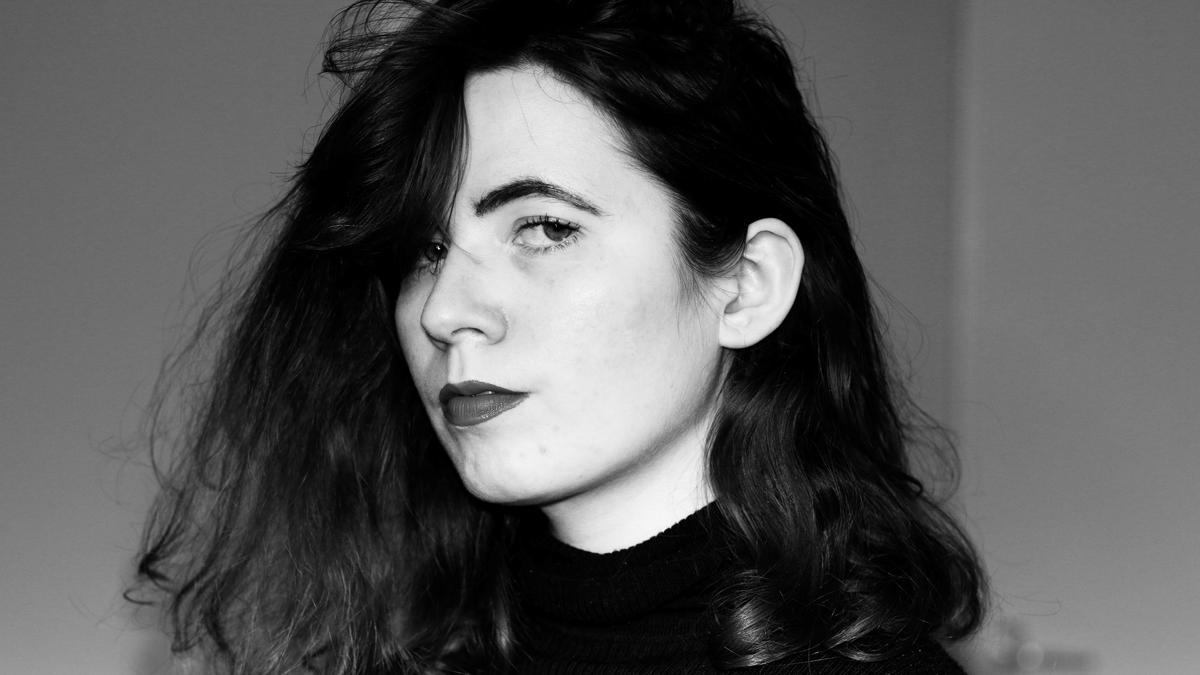
‘I try not to stay away from tropes because they do exist’: queer author Naoise Dolan
The Hindu
Naoise Dolan, acclaimed Irish novelist, explores modern relationships in her novels, including The Happy Couple and Exciting Times.
Irish novelist Naoise Dolan is often hailed as a master chronicler of modern-day relationships. Her debut novel Exciting Times was longlisted for the Women’s Prize for Fiction 2021. And her latest, The Happy Couple — a perspective-driven story about two queer individuals who decide to go in for a heterosexual union — was on the longlist of the 2024 Polari Book Prize, an award that celebrates LGBTQIA+ writers’ works published in the U.K. In an email conversation, Dolan shares why her fiction resonates with the current generation and what sort of queer representation appeals to her. Edited excerpts:
A: I can’t think of any good novel that isn’t ultimately about relationships of some kind. Even when we write about one person grappling with some abstract non-human element, like war or addiction, we end up anthropomorphising the situation. We frame it as a friend or enemy, attribute it motives and inner thoughts. Even the most seemingly isolated character will forge a relationship with someone or the other. So, relationships are a given. As to why they’re modern, it’s simply that I didn’t see a compelling reason to set either novel in the past. My default assumption is that I should write about the present, though that’s not to say I’d rule out something historical if I saw good grounds to do it. (Indeed, I’m doing it right now with my next novel.)
A: It just happened as the story progressed. I never want to teach my reader any lesson, or use my fiction as a direct funnel for my political views. It’s more that the milieu of the novel is itself very familiar with these ideas and terms, so it would’ve been unnecessarily coy to pretend these people don’t use words like ‘heteronormative’ or think about the associated concepts. But thinking doesn’t necessarily translate into doing. In their life choices, these people are — for the most part — lazy. I didn’t want to critique that, necessarily, just observe it. But when you observe something in enough detail, sometimes it ends up critiquing itself.
A: I try not to stay away from tropes because most of these people do actually exist, and I don’t want to imply they’re somehow dirty. Is it a problem when straight people write a novel where one gay character speaks effeminately and is obsessed with Drag Race? Yes, obviously it is. But do gay men like that exist? Yes, including several of my closest friends. Those men deserve to see themselves in books, not be dismissed as an embarrassment to the community. Is it a stereotype that lesbians are obsessed with cats? For sure, but half the women I’ve dated own one, and the other half curse their landlord that they can’t. So, I try to think of representation not restrictively but expansively. Instead of shying away from writing a character who does something that gay people are stereotyped as doing, I just ensure there are enough other queer characters so that the entire community isn’t being represented by this one person.
A: I’m editing my third novel. It’s about the rise and fall of an Irish family. It starts in the 1950s, charts the extremely mad Celtic Tiger era in the 1990s and early 2000s, and goes up to the present day. It has been fun working with a more expansive time scale.
The interviewer is a Delhi-based queer writer and cultural critic. Instagram/X: @writerly_life


Perundurai's industrial growth faces challenges of pollution, water scarcity, and healthcare, impacting residents ahead of the 2026 elections.

The Travancore Devaswom Board asserts that courts should respect community beliefs in its Supreme Court submission on Sabarimala's entry issue.

Karnataka cancels Deendayal Upadhyay event at KSOU due to protocol violations, citing inconsistency with university objectives.

Illegal pickle unit busted in Hyderabad, one arrested; unhygienic stock worth ₹3 lakh seized

Karnataka has entered a state of demographic transition where a large working-age population will no longer be enough to drive economic growth, and future gains will depend on how productively people are employed, the ‘State of Working India 2026’ report said.

Key demands in Sulur Assembly constituency include reviving the powerloom sector, addressing farmers' needs, and protecting River Noyyal.

Kodihalli urges Karnataka CM to allocate ₹10,000 crore revolving fund for seamless procurement of farm products under MSP scheme.

Kerala's political parties continue to marginalize women candidates, highlighting a troubling disconnect between gender demographics and representation.

The High Court of Karnataka on Tuesday ordered the issue of a notice to the State government on a PIL petition, which had complained about disturbances caused to people residing in the localities around the National Public School situated in Rajajinagar 5th block due to use of loudspeakers with high volume in the school and parking of school buses in residential areas.

China is extensively mapping ocean floors to enhance submarine warfare capabilities against the U.S. and allies across key oceans.

AIADMK's 2026 manifesto promises free rations, women's benefits, education reforms, and economic growth initiatives for Tamil Nadu.

The vehicle towing drive will soon resume in the city to ease traffic congestion. The Bengaluru Traffic Police (BTP), in coordination with the Greater Bengaluru Authority (GBA), is set to relaunch the vehicle towing drive across the city shortly to tackle traffic congestion and illegal parking.

Panic buying, not shortage, is leading to long queues at Hyderabad petrol pumps.