How Trump quietly made the historic decision to launch strikes in Iran
CNN
By the time President Donald Trump was milling about his golf club in New Jersey on Friday evening, the planes were about to be in the air.
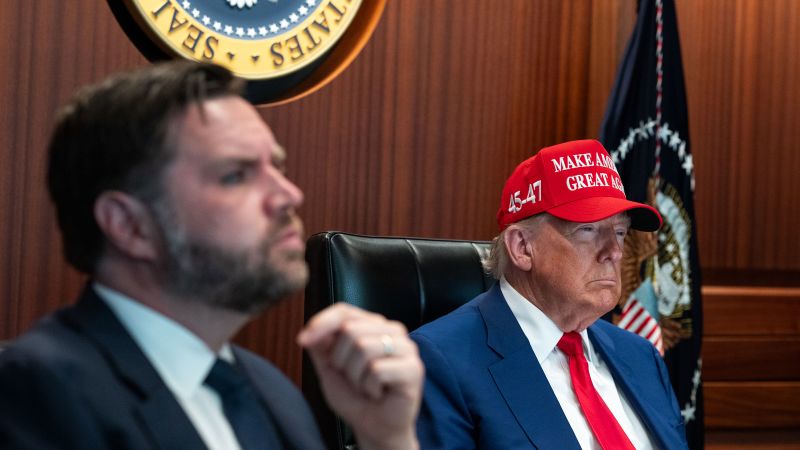
By the time President Donald Trump was milling about his golf club in New Jersey on Friday evening, the planes were about to be in the air. To onlookers at the club, Trump showed little anxiety about his decision to authorize airstrikes on three Iranian nuclear facilities that could have profound ramifications both on US national security and his own presidential legacy. The B-2 stealth bombers carrying 30,000-pound bunker busters were preparing to take off at midnight from their base in Missouri, destined for Fordow, Natanz and Isfahan. Another set of planes was heading west, a deliberate attempt at misdirection as Trump demanded complete secrecy for his momentous decision. As Trump escorted around Sam Altman, the chief executive of OpenAI, to an event for new members being held in one of the clubhouse’s dining rooms, he was loose and — at least in public — in an easygoing mood, people who saw him said. “I hope he’s right about the AI,” Trump joked at one point, gesturing to his guest. Twenty-four hours later, Trump was in the basement Situation Room at the White House, wearing a red “Make America Great Again” hat as he watched the strikes he had approved days earlier, codenamed “Operation Midnight Hammer,” play out in real time on the facility’s wall of monitors.


TV host and comedian Bill Maher has been chosen to receive the prestigious Mark Twain Prize for American Humor, two sources close to the Kennedy Center told CNN.

Conventional wisdom has set in that President Donald Trump’s base is sticking with him on the Iran war, but he has alienated significant portions of his voters — and risks alienating more.

US officials are furiously trying to avert a potential monthslong closure of the Strait of Hormuz, privately acknowledging that reopening the key waterway is a problem without a clear solution and dependent at least in part on what lengths President Donald Trump is willing to go to force the Iranian regime’s hand, multiple administration and intelligence officials tell CNN.

The chief executive of Live Nation testified Thursday that it was “disgusting” that a top ticketing employee talked about “robbing fans blind” in internal messages.

Supreme Court revives First Amendment lawsuit from street preacher who called concertgoers ‘sissies’
The Supreme Court on Friday revived a First Amendment lawsuit from a street preacher who used a loudspeaker to call people “whores,” “Jezebels” and “sissies” as they tried to enter an amphitheater to attend concerts in a suburban Mississippi community.

As millions of Americans braced for a series of brutal storms this winter, the senior official in charge of the federal government’s disaster response had been on the job only a few weeks — and had previously claimed on podcasts that he once teleported to a Waffle House.

Air travelers across the US continue to face travel headaches as Transportation Security Administration workers go without full pay. Find the latest live updates here.

Veterans’ advocates are raising concerns that a new agreement between the departments of Veterans Affairs and Justice could take away veterans’ autonomy over their health care decisions and deter them from seeking care, particularly those facing homelessness.

Admirers of Cesar Chavez and public officials are scrambling to respond to claims about the man who has been honored with holidays, statues and school names in communities around the country.

The co-founder of Super Micro Computer and two others were charged with diverting $2.5 billion worth of servers with Nvidia’s artificial intelligence chips to China, in violation of US laws barring exports to that country without a license.

The Treasury Department will begin to manage federal student loans in default, taking on a key function of the Education Department as the Trump administration further pushes to dismantle it.

The Justice Department on Thursday seized several websites it says were used by Iran as part of “psychological operations” targeting perceived advisories and spreading terrorist propaganda.

Sen. Thom Tillis on Thursday blasted talk of ending the Senate filibuster to pass the “SAVE America Act” as a “foolish and lazy idea” and warned his party that pushing the president’s priority through the so-called talking filibuster would hand control to Democrats.