How the US-Mexico border brought trouble to the Tohono O’odham Nation
CNN
The border has become impossible to ignore amid record numbers of migrants crossing into the US from Mexico and a bitter political storm over what to do with them.
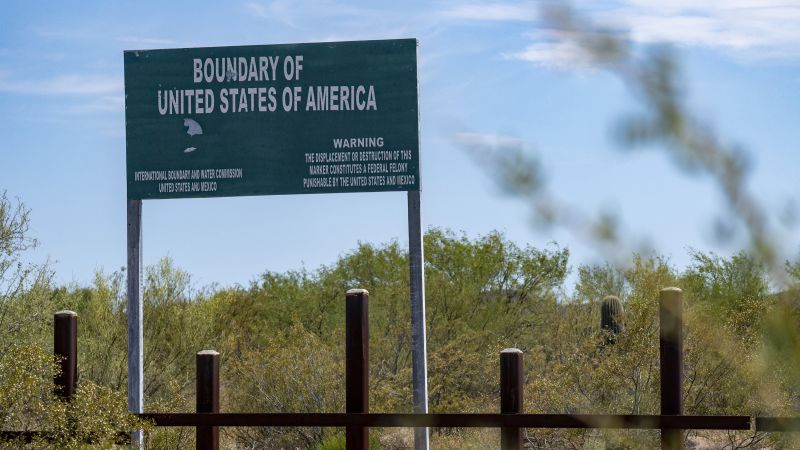
The thermometer hit 111 Fahrenheit as we rolled up to a battered tent deep in the Tohono O’odham Nation reservation in Arizona. Under its shade lay around a dozen dazed looking families, many with small children. A stressed-looking mother of two paced back and forth. They had walked for five hours to get here, and had been waiting all day. But they looked at us – and the tribal dignitaries on whose land they were trespassing – with only mild curiosity. They were asylum seekers, looking for the green uniforms of US Border Patrol so that they could turn themselves in. Chairman Verlon Jose, leader of the Tohono O’odham Nation, considered addressing them, and then turned away. “This is nothing that the nation can solve,” he said. “Whatever I say to them is not even going to be relevant, other than our prayers for their journey.” The Tohono O’odham, or “people of the desert,” have lived in the Sonoran desert for thousands of years, their ancestral homelands stretching from what is now Pima County, Arizona, all the way to Mexico’s Sea of Cortez. The US-Mexico border now slices across those lands, a 62-mile line of low metal fencing weaves between ancient saguaro cacti and that marks the southern limit of the Nation’s federal Indian reservation – and the edge of the United States. The Tohono O’odham do not recognize this border; enrolled members speak their own language, live on both sides and travel back and forth. But it has become impossible to ignore amid record numbers of migrants crossing into the US from Mexico and a bitter political storm over what to do with them.


An Air Canada plane was damaged after colliding with a vehicle on a runway at New York’s LaGuardia Airport Monday, according to video from the scene and air traffic control audio.

A statue of Christopher Columbus has been erected outside of an ornate federal office building on the White House grounds — the latest sign of the Trump administration’s efforts to reshape cultural and historical representations across the nation’s capital.

Kentucky Gov. Andy Beshear, speaking in JD Vance’s home state of Ohio on Saturday, tore into the vice president, questioning his Appalachian roots and telling voters they “deserve better.”

President Donald Trump has said ICE agents will head to US airports tomorrow amid a partial government shutdown. Follow for live updates

Cuba is working to restore the electricity supply after another island-wide blackout left more than 10 million people without power.

President Donald Trump said Sunday border czar Tom Homan will be in charge of deploying Immigration and Customs Enforcement agents to airports on Monday, with Homan telling CNN the agents will help with security at entrances and exits to ease the Transportation Security Administration’s workload.

Donald Trump wants us to believe that a deal with Cuba is close at hand. After this past week, I am not so sure.

President Donald Trump has said ICE agents will head to US airports tomorrow amid a partial government shutdown. Follow for live updates

President Donald Trump said Sunday border czar Tom Homan will be in charge of deploying Immigration and Customs Enforcement agents to airports on Monday, with Homan telling CNN the agents will assist with security at entrances and exits to ease TSA workload amid a partial government shutdown.

Janet Mills and her allies are counting on a gender gap to narrow Platner’s wide lead ahead of the June 9 primary to decide who will face incumbent Republican Sen. Susan Collins. They are betting that the unfiltered style that has brought Platner widespread attention as someone who could help Democrats reach young men will backfire with women.

Why do people “pledge allegiance” to a “state” that is no longer a state? And what spurs someone to not just attack innocent people, but to then make a statement of loyalty while doing so?

A Supreme Court case examining state deadlines for election ballots sent in the mail is just the tip of the spear in President Donald Trump’s war on mail-in voting.

As a shrinking number of Transportation Security Administration agents work to keep hourslong security lines moving despite not being paid, President Donald Trump stepped into the fray Saturday, announcing he will send Immigration and Customs Enforcement officers to airports by Monday if Congress doesn’t agree to a plan to end the partial government shutdown.