How the modern Supreme Court might view the 14th Amendment and birthright citizenship
CNN
In the few days since he returned to the White House, President Donald Trump’s sweeping executive orders and mass pardons have shattered political and legal norms. But one order is in a category of its own.
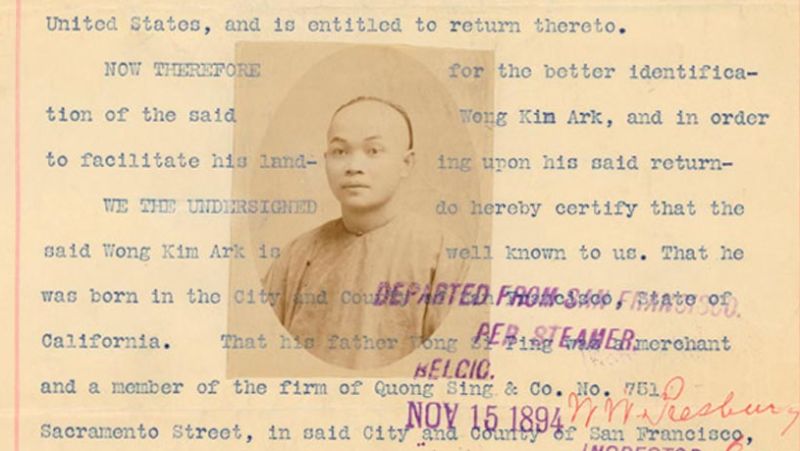
In the few days since he returned to the White House, President Donald Trump’s sweeping executive orders and mass pardons have shattered political and legal norms. But one order is in a category of its own. His decree proposing to end the constitutional promise of birthright citizenship contradicts the plain words of the 14th Amendment and would reverse an 1898 Supreme Court milestone. That case, brought by the son of Chinese nationals, has long guaranteed citizenship for anyone born in the United States, unless the parents fall under such narrow exceptions as foreign diplomats or soldiers of invading armies. The Trump directive recalls the era of Dred Scott v. Sandford, the infamous 1857 decision that said Black people could not be citizens. That case, which helped precipitate the Civil War, was reversed by ratification of the 14th Amendment in 1868. Perhaps to counteract comparisons with a reviled decision that rested on notions of White supremacy, the executive order referred to Dred Scott at the outset, calling it a “shameful decision.” But then the directive recast the 14th Amendment to befit Trump’s anti-immigrant mission and to exclude children born to undocumented parents. Immigrant-rights advocates, civil libertarians and 24 Democratic-led states and cites immediately filed a series of lawsuits, with a first hearing scheduled for Thursday in Seattle. The challenges set the stage for a court confrontation over a central tenet of American identity and assurances woven into life here for more than a century. The litigation is likely to reach the Supreme Court, where Dred Scott has long been regarded as a great “self-inflicted wound.” But a new conservative supermajority has given Trump supporters hope that it might eventually reverse yet another precedent.


President Donald Trump has said ICE agents will head to US airports tomorrow amid a partial government shutdown. Follow for live updates

Cuba is working to restore the electricity supply after another island-wide blackout left more than 10 million people without power.

President Donald Trump said Sunday border czar Tom Homan will be in charge of deploying Immigration and Customs Enforcement agents to airports on Monday, with Homan telling CNN the agents will help with security at entrances and exits to ease the Transportation Security Administration’s workload.

Donald Trump wants us to believe that a deal with Cuba is close at hand. After this past week, I am not so sure.

President Donald Trump has said ICE agents will head to US airports tomorrow amid a partial government shutdown. Follow for live updates

President Donald Trump said Sunday border czar Tom Homan will be in charge of deploying Immigration and Customs Enforcement agents to airports on Monday, with Homan telling CNN the agents will assist with security at entrances and exits to ease TSA workload amid a partial government shutdown.

Janet Mills and her allies are counting on a gender gap to narrow Platner’s wide lead ahead of the June 9 primary to decide who will face incumbent Republican Sen. Susan Collins. They are betting that the unfiltered style that has brought Platner widespread attention as someone who could help Democrats reach young men will backfire with women.

Why do people “pledge allegiance” to a “state” that is no longer a state? And what spurs someone to not just attack innocent people, but to then make a statement of loyalty while doing so?

A Supreme Court case examining state deadlines for election ballots sent in the mail is just the tip of the spear in President Donald Trump’s war on mail-in voting.

As a shrinking number of Transportation Security Administration agents work to keep hourslong security lines moving despite not being paid, President Donald Trump stepped into the fray Saturday, announcing he will send Immigration and Customs Enforcement officers to airports by Monday if Congress doesn’t agree to a plan to end the partial government shutdown.

Donald Trump wants us to believe that a deal with Cuba is close at hand. After this past week, I am not so sure.

The search for missing 84-year-old Nancy Guthrie, mother of “Today” show host Savannah Guthrie, has stretched into another anguished week, with mounting pressure on investigators and a family grappling with uncertainty.

Cuba’s Ministry of Energy announced Saturday evening that entire island has suffered another electrical blackout, leaving more than 10 million people without power.