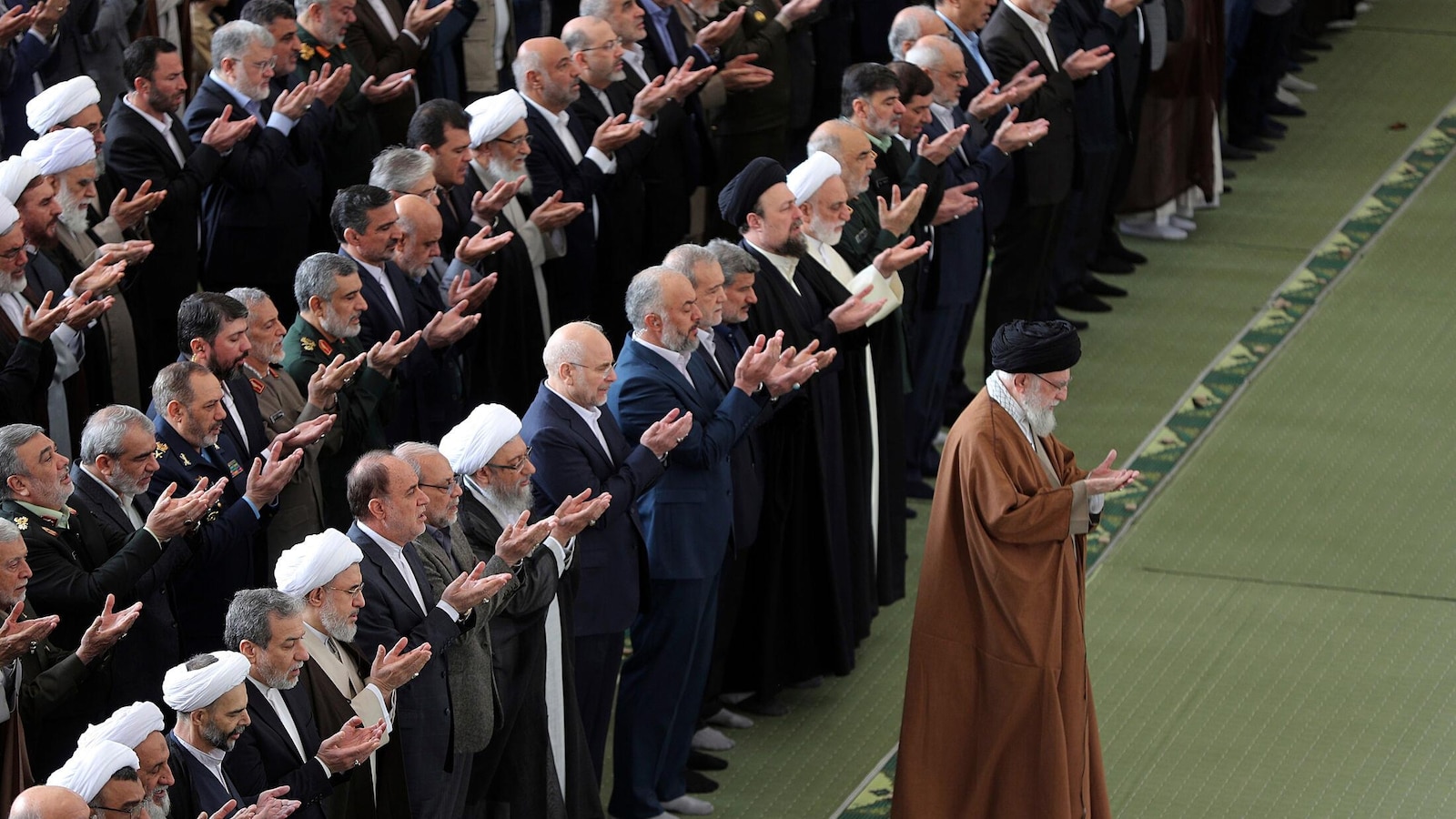
How succession works in Iran and who will be the country's next supreme leader?
ABC News
In Iran the supreme leader is the heart of a complex power-sharing theocracy and has final say over all matters of state
DUBAI, United Arab Emirates -- The death of Iran's Supreme Leader Ayatollah Ali Khamenei raises paramount questions about the country's future. And while a clerical panel is tasked with replacing him, succession is a complex matter in Iran's theocracy:
Here is what to know:
An 88-member panel called the Assembly of Experts appoints the supreme leader. The panel can remove one as well, although that has never happened.
The panel consists entirely of Shiite clerics who are popularly elected every eight years and whose candidacies are approved by the Guardian Council, Iran's constitutional watchdog. That body is known for disqualifying candidates in various elections in Iran and the Assembly of Experts is no different. The Guardian Council barred former Iranian President Hassan Rouhani, a relative moderate whose administration struck the 2015 nuclear deal with world powers, from election for the Assembly of Experts in March 2024.
Iranian law says the Assembly of Experts “must, as soon as possible” pick a new supreme leader. But until then, a leadership council can step in and “temporarily assume all the duties of leadership.”


Former Brazilian President Jair Bolsonaro’s kidney function has improved but he will remain in an intensive care unit because of pneumonia

Pope Leo XIV has urged a ceasefire in the Middle East and called on leaders in the Iran war to reopen talks

Ukrainian President Volodymyr Zelenskyy says he is ready for the next trilateral peace talks with the U.S. and Russia, but the meeting depends on Washington and Moscow

Yemen’s Iran-backed Houthi rebels are staying on the sidelines as the Iran war expands

Taiwan is seeing a surge of Chinese military planes near the island after a sharp drop in flights over the past two weeks had sparked discussions among observers

French voters are heading to the polls to choose new municipal teams in an early test for political parties before next year’s presidential elections

Kazakhs are voting Sunday in a referendum on a new constitution that analysts say could allow President Kassym-Jomart Tokayev to extend his hold on power beyond his current term

North Korea says leader Kim Jong Un has observed a live-fire test of multiple rocket launch systems to examine the country’s war deterrence

Thousands of people have protested in Italy against wars in the Middle East and proposed judicial reforms by Italian Prime Minister Giorgia Meloni

The United States flag has been raised over its embassy in Caracas for the first time since 2019

A hospital in the capital, Brasilia, says former Brazilian President Jair Bolsonaro's kidney function has worsened at the intensive care unit to which he was transferred hours earlier

Pope Leo XIV is moving into the newly renovated papal apartment in the Apostolic Palace

A group of residents of a city in central Cuba have taken to the streets and partially destroyed the local headquarters of the ruling communist party