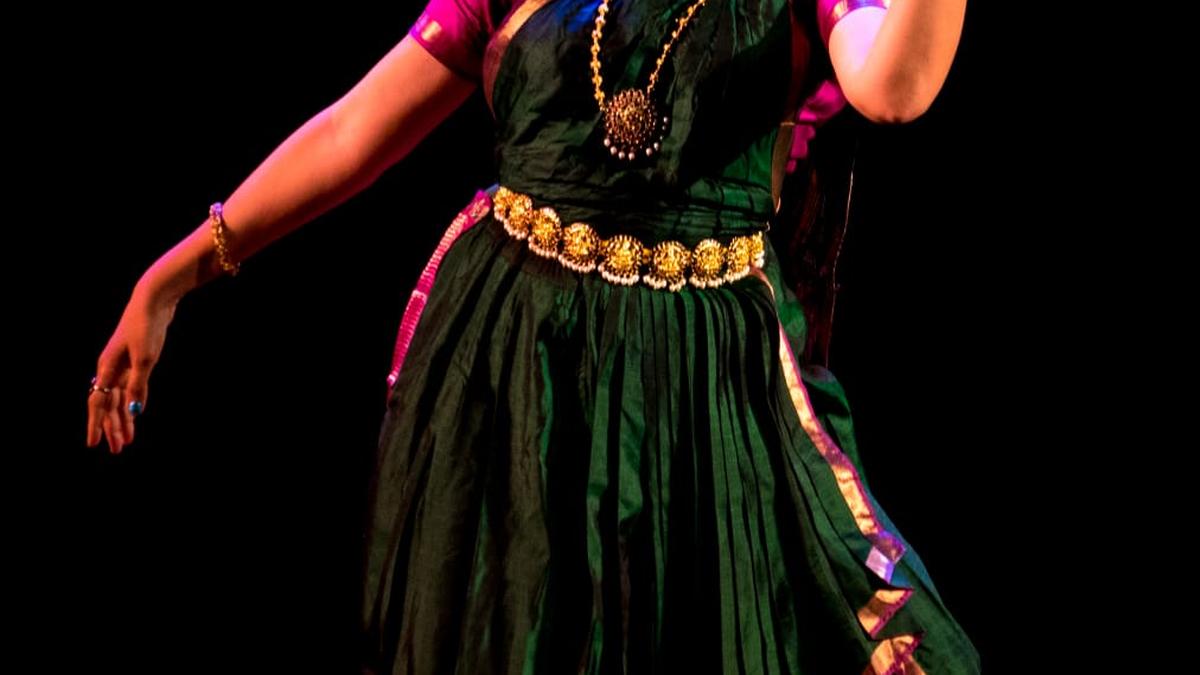
How perfect eye movements and expressions can elevate a dance performance
The Hindu
A dance recital themed on eyes
The famous Sanskrit shloka ‘Yato hasto tato drishtih, Yato drishtih tato manah/ Yato manstato bhao, yato bhavo tatah rasah’ from the treatise Abhinaya Darpana means, ‘Where the hands go, the eyes should follow, Where the eyes go, the mind should follow, Where the mind goes, the emotion or rasa is generated.’
‘Nayanam’, the solo Bharatanatyam recital by Apeksha Niranjan presented at the Stein auditorium of the Habitat Centre in Delhi recently, conveyed the essence of this shloka as she expressed various bhavas through her eyes.
A disciple of senior Bharatanatyam dancer and teacher Sucheta Chapekar and Alka Lajmi, Apeksha, who is also a Marathi actor, is the founder-director of Nrityanjali Performing Arts. Her expressive face, seamless movements and sculpturesque stances lent to the appeal of her performance.
The core of ‘Nayanam’, her theme-based recital, was that the entire Bharatanatyam margam is based on ‘nayan’ (eyes), right from the opening Alarippu that invoked the trinayan Shambho (Shiva with three eyes), jagat janani Meenakshi (the goddess with fish-like eyes), and kamal nayan (one whose eyes are like the lotus) Padmanabha. This was set to Misra Chapu tala and was choreographed by Apeksha herself.
‘Krishna Kauthuvam next, based on the Marathi song ‘Mi Krishna pahila’ was about the beauty of Krishna and his lovely eyes admired by the gopis. This was choreographed by her guru Sucheta Chapekar.
‘Varnam’, the central piece of the recital, was based here on Soundarya Lahari ‘Shive shringara radhra ’, where Apeksha emoted various emotions reflecting in the eyes of Parvati, like the Shringar bhava when she looks at Shiva, ‘Sarosha gangayah’ anger when she sees Ganga sitting in Shiva’s matted locks, fear when she is scared of the snakes around Shiva’s neck and finally praying for Karuna or compassion in the eyes of Devi, who is like a mother, ‘Dehi mayi janani drishtih sakaruna’. Choreographed by Apeksha, it was composed by Smita Mahajan in raga Bihag with jatis by Venkatesha. The main raga Bihag changed as a Ragamalika of different ragas such as Malkauns, Kalawati and Hindol according to the changing emotions.
Erasing geographical and cultural borders, Apeksha, who earlier had incorporated Gregorian chants (sung in Roman Catholic churches in Europe) into her Bharatnatyam recital, included Polish folk music that evening in her performance. The song from Lubiena was sung on a lilting rhythmic gait, similar to Dadra taal of Hindustani music. Composed by Odmienciese Kapela group of Polish folk musicians, the song was about the ritual of stealing the bridegroom’s shoes like it happens in North Indian weddings.


South African naturalist Steve Boyes speaks on ghost elephants, ancestral tracking, and Werner Herzog’s documentary exploring Angola’s elusive highland giants

Actor-director Amol Palekar will receive META's Lifetime Achievement award for 2026 on March 25 in New Delhi.

India's artists unite against rising censorship, advocating for creative freedom and support for marginalized voices in the arts.

Written and directed by Kunal, the film also stars Sparsh Shrivastava and Vanshika Dhir

This year, Bharatnatyam artistes will present the Tyagaraja Aradhane as a dance performance

This year, Bharatnatyam artistes will present the Tyagaraja Aradhane as a dance performance

The actor, along with director Sushant Shah, speak about their upcoming series ‘Chiraiya’, Divya’s process of working on the dialect, Sushant’s approach to telling a story about women, and more

An independent video, ‘Feel the Spark’ by Raleigh Rajan with vocals by Ciera Dumas that celebrates Tamil literary giants, garnered 1.4 million views in less than 36 hours.

In ‘Jack Ryan: Ghost War’, John Krasinski is back as the savvy CIA analyst, diving headfirst into a high-stakes mission that unravels a deadly conspiracy and pits him against a rogue black-ops unit

Shriram Bharatiya Kala Kendra’s Shankarlal festival showcased rare ragas, radiant artistry, and inclusive performances, from Pt Madhup Mudgal’s serene morning ragas to Ramana Balachandran’s Saraswati veena.

Explore "Threads that Bind: The Kantha Project," an exhibition in Delhi reimagining kantha as a medium of repair and renewal.

Sean Penn skips the Oscars to meet Ukraine's Zelenskyy, who praises him as a "true friend" amid the war.

The teaser of Tamil star Suriya’s much-awaited film with director Venky Atluri, titled Vishwanath and Sons, was unveiled by the makers on Monday