How ordinary people of Tamil Nadu participated in the making of the Constitution Premium
The Hindu
Explore how ordinary Tamilians contributed to India's Constitution, advocating for rights and representation for marginalised communities.
Tamil Nadu’s contributions to the making of the Constitution were not only through prominent personalities but also commoners.
The contributions were not only in terms of positive conception of rights but also in the negative sense. A memorable feature of the contributions from the State pertained to the safeguards for vulnerable sections of society such as Scheduled Castes (SC) and religious minorities.
It all began with the Minorities Sub-Committee of the Advisory Committee for the Constituent Assembly (CA) issuing in March 1947 a six-point questionnaire to elicit the opinion of individuals and institutions on the question of the protection of the minorities in the Constitution, according to a report of The Hindu on March 9, 1947. Headed by a Christian leader from Bengal, H.C. Mukherjee, the panel included Jagjivan Ram, C. Rajagopalachari (CR), Maulana Abul Kalam Azad, B.R. Ambedkar, S.P. Mookherjee, Rajkumari Amrit Kaur, M. Rutnaswami, K.M. Munshi and Govind Ballabh Pant.
It was left to V.I. Munuswami Pillai, who was Agriculture Minister in the Council of Ministers headed by CR in the Madras Presidency during July 1937-October 1939, and his fellow SCs to demand the implementation of the concept of keeping the system of reservation in education and employment for Scheduled Castes for 10 years [which is getting renewed every 10 years]. Sardar Vallabhbhai Patel, independent India’s first Deputy Prime Minister and the chief of the Advisory Committee, had accepted the demand and incorporated it in the report that he presented to the CA in May 1949 for consideration.
The idea of separate electorate for the minorities figured in the deliberations of the Sub-Committee on the minorities and the Advisory Committee. Even in July 1947, the Advisory Committee concurred with the view of the sub-committee that there should be no separate electorates for the minorities.
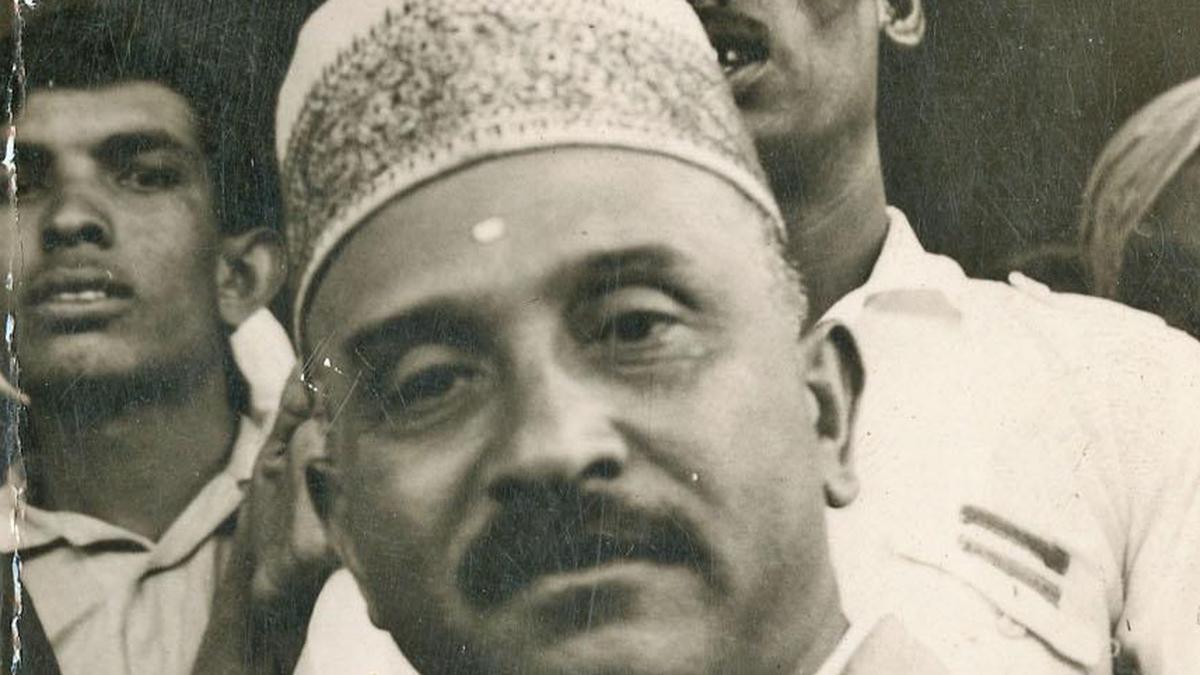
Mohammed Ismail (Muslim League) and his colleague, B. Pocker Sahib Bahadur, both from the State, were great votaries of separate electorates. Pocker Sahib Bahadur had argued that the minorities must have a method of representing their grievances. It was for that purpose that separate representation was asked for, and when the scheme of reservation was being dropped, “automatically” the question of separate electorate arose, said a report of this newspaper on May 26, 1949. Ismail had contended that “what we want is the right to self-expression, the right of being heard and the right of association. [A] separate electorate does not mean separatism at all. It means the recognition of the difference between one group of people and another. It is not a device to separate people.”


A.P. DGP pays tribute to Potti Sriramulu on his 125th birth anniversary, honouring his sacrifice for a separate Andhra Pradesh.

Discover the cultural and health significance of neem and jaggery during Ugadi, explained by author Ratna Rajaiah.

A minor fire at Thiruvananthapuram government hospital led to patient evacuations; no casualties reported, situation now under control.

BJP reveals 144 candidates for Bengal Assembly polls, featuring Suvendu Adhikari contesting against Mamata Banerjee in Bhabanipur.

A look at Puducherry Assembly elections in 2021, highlighting the current CM N. Rangasamy and key ministers from AINRC and BJP.

Parliament Budget Session LIVE: Follow The Hindu's latest updates on the Parliament Budget Session on March 17, 2026.

Assembly Elections 2026 LIVE: Follow the latest updates on elections from across West Bengal, Tamil Nadu, Kerala, Assam and Puducherry.

Nvidia chief Jensen Huang on Monday said he expects the artificial intelligence chip powerhouse to bring in at least a trillion dollars in revenue through next year.

Political crossovers intensify in Kerala ahead of the 2026 Assembly elections, challenging traditional party loyalties and alliances.

Ten Lee Pharma employees were injured when their mini-bus overturned in Miyapur; all are in stable condition.

Discover how to turn creative passion into a sustainable business by mastering finance, IP, and strategic growth.

Arjun Krish and Ria Dinesh win Best Telefilm at Kerala State Television Awards for their impactful short film, F for Freedom.

redBus data reveals a significant 76% rise in solo women travelers from Karnataka since 2019, highlighting increasing independence in travel.