Primary Country (Mandatory)

Other Country (Optional)

Set News Language for United States

Primary Language (Mandatory)
Other Language[s] (Optional)
No other language available

Set News Language for World

Primary Language (Mandatory)
Other Language(s) (Optional)

Set News Source for United States

Primary Source (Mandatory)
Other Source[s] (Optional)

Set News Source for World

Primary Source (Mandatory)
Other Source(s) (Optional)
  • Countries
    • India
    • United States
    • Qatar
    • Germany
    • China
    • Canada
    • World
  • Categories
    • National
    • International
    • Business
    • Entertainment
    • Sports
    • Special
    • All Categories
  • Available Languages for United States
    • English
  • All Languages
    • English
    • Hindi
    • Arabic
    • German
    • Chinese
    • French
  • Sources
    • India
      • AajTak
      • NDTV India
      • The Hindu
      • India Today
      • Zee News
      • NDTV
      • BBC
      • The Wire
      • News18
      • News 24
      • The Quint
      • ABP News
      • Zee News
      • News 24
    • United States
      • CNN
      • Fox News
      • Al Jazeera
      • CBSN
      • NY Post
      • Voice of America
      • The New York Times
      • HuffPost
      • ABC News
      • Newsy
    • Qatar
      • Al Jazeera
      • Al Arab
      • The Peninsula
      • Gulf Times
      • Al Sharq
      • Qatar Tribune
      • Al Raya
      • Lusail
    • Germany
      • DW
      • ZDF
      • ProSieben
      • RTL
      • n-tv
      • Die Welt
      • Süddeutsche Zeitung
      • Frankfurter Rundschau
    • China
      • China Daily
      • BBC
      • The New York Times
      • Voice of America
      • Beijing Daily
      • The Epoch Times
      • Ta Kung Pao
      • Xinmin Evening News
    • Canada
      • CBC
      • Radio-Canada
      • CTV
      • TVA Nouvelles
      • Le Journal de Montréal
      • Global News
      • BNN Bloomberg
      • Métro
How NASA’s proposed budget cuts could threaten the future of space exploration

How NASA’s proposed budget cuts could threaten the future of space exploration

CBC
Saturday, November 08, 2025 11:54:30 AM UTC

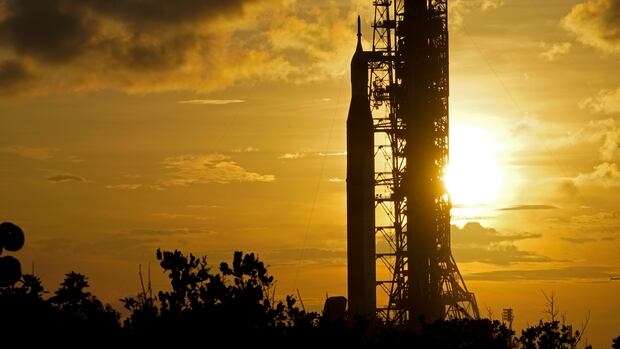
A tremendous effort is underway at NASA to send humans to Mars and return astronauts to the moon, including the flight of Canadian Jeremy Hanson on Artemis II early next year. Meanwhile, every other research program at the space agency is facing cuts.

The US administration has proposed a 24 per cent cut to NASA’s budget, which would make it the smallest NASA budget since before human spaceflight programs began in 1961. The proposal specifically calls for space science funding to be cut by 50 per cent, and the work force dropped down to a third of its current level.

And while these proposed cuts have not been approved by Congress, a recent report by the U.S. Senate Committee on Commerce, Science, and Transportation says that the space agency has started implementing the cuts anyway, with thousands of scientists already let go from various facilities around the U.S.

The Goddard Space Flight Center, where both the Hubble and James Webb Space Telescope were built, has already closed its physical Institute for Space Studies at Columbia University, laid off hundreds of employees, and — if the cuts continue — plans to cancel 41 planned or already active programs involving climate change or green energy.

The Jet Propulsion Laboratory in California, which builds and manages robotic spacecraft that have visited every planet in the solar system, is also being forced to downsize, and has already laid off hundreds of employees. 

Research facilities like these also build satellites that look down on the Earth, providing us with weather forecasts, hurricane tracking, ice loss in the arctic, and more. In fact, just about everything we know about the global changes happening to the Earth is thanks to orbiting satellites and the scientists who analyze their data. 

Scientific robots can operate for years in the harsh environment of space, and can be sent on one-way missions to the far reaches of our solar system. It's these robots, and the scientists who design, build and fly them, who are the real explorers.

But now these eyes on our planet, and beyond, are under serious threat.

Rather than being driven by science, it seems the future of NASA is being driven by politics. In the same spirit of competition between the U.S. and Soviet Union that drove the Apollo missions to land humans on the moon in the 1960s, the current administration wants to beat the Chinese to the moon through the Artemis program. 

From a monetary standpoint, it's far more expensive to send humans into space because they are heavy, require a lot of resources such as air, food, and water, and you have to bring them back alive.

In other words, the technology of human spaceflight is all about survival. Human missions are often mostly about pushing the limits of our endurance, and creating heroes in the process.

The current goal is to land people at the south pole of the moon and build a colony where they can stay and work.

The primary job will be to search for ice believed to be hiding in shadows at the bottom of craters that never see sunlight. Ice is a valuable resource on the moon, as it could provide both drinking water and rocket fuel in the form of hydrogen and oxygen.

It will take a lot of resources and funding to return to the moon. For the upcoming missions, NASA will be flying their giant Space Launch System rocket, which is not reuseable, and costs more than $4 billion US per launch.

Read full story on CBC
Share this story on:-
More Related News
Veronika the cow has a scratching broom, and she knows how to use it

The second Antonio Osuna-Mascaró and Alice Auersperg saw a video of Veronika the cow scratching her backside with a branch, they knew they had to drop everything to go meet her.

Dalhousie University strips Buffy Sainte-Marie of honorary degree

Dalhousie University in Halifax has revoked the honorary degree it awarded to Buffy Sainte-Marie in 2018 after a Mi’kmaw student raised concerns about the harms of maintaining the honour.

Penguins break records by moving breeding season in warming climate

Penguins in Antarctica are changing their breeding habits at record speed to survive rising temperatures from climate change, a decade-long study has found. 

First Nations leaders criticize B.C. for dropping drug decriminalization project

First Nations leaders in B.C. say the province’s decision to discontinue its drug decriminalization project is “a serious lapse of judgement."

As AI moves into the physical world, is Canada missing the boat on robotics?

A global race is underway to bring robotics into our everyday lives, with a new generation of AI-powered robots promising greater flexibility.

Canada's co-hosting the FIFA World Cup — and preparing for a potential surge in health emergencies. Here's how

As Toronto and Vancouver gear up to co-host FIFA World Cup games this summer, an emergency doctor worries that Canada's overburdened health-care system won't be able to handle any extra demand that could result.

Cree woman’s taxi offers more than just a ride for Indigenous women in crisis

The moment someone gets into Regan Gamble’s taxi, she knows what kind of music they like. Gamble, who owns and operates a taxi service specifically for Indigenous women called SheDrives, says she can predict her clients’ tastes — from Ernest Monias to Fawn Wood. 

Nuclear fusion seems hot right now — but how close is fusion power?

Nuclear fusion milestones from Canada's General Fusion and China's EAST reactor have caused a buzz over this potentially limitless, clean energy source becoming a reality amid rising power demand from AI and electrification. Meanwhile, new fusion startups have been popping up around the world and have drawn billions in private investment.

Soldiers, plumbers, volunteers begin to restore homes in Pimicikamak Cree Nation

Canada's Armed Forces personnel have joined the ranks of local tradesmen and volunteers to begin to repair hundreds of homes damaged n Pimicikamak Cree Nation in the aftermath of a power outage last month.

NASA rolls out giant rocket ahead of astronauts’ moon mission

It’s been 52 years since humans last visited the moon, but that’s about to change.

These fully grown sea lions won't stop nursing, and scientists don’t know why

Alexandra Childs never quite got used to the sight of fully grown Galápagos Islands sea lions happily suckling from their mothers’ teats.

‘Super-agers’ reveal how to stay sharp as you get older

This story is part of CBC Health's Second Opinion, a weekly analysis of health and medical science news emailed to subscribers on Saturday mornings. If you haven't subscribed yet, you can do that by clicking here.

Assembly of N.S. Mi'kmaw Chiefs buys land put up for sale near sacred petroglyphs

The Assembly of Nova Scotia Mi’kmaw Chiefs recently purchased lands adjacent to a petroglyph site in the Halifax area to protect it from development and keep it accessible.

Indigenous leaders urge citizens to carry status cards or tribal IDs in U.S.

Indigenous leaders on both sides of the border are advising their citizens on how to deal with U.S. Immigration and Customs Enforcement (ICE) agents if approached.

First Nations leaders call on universities to ban residential school denialist demonstrations

A First Nations PhD student at the University of British Columbia (UBC) says a demonstration last week created an unsafe space on campus for First Nations, Inuit, and Métis staff and students.

Millions of Canadian homes have high levels of cancer-causing radon. Is yours one of them?

You can’t see or smell radon, the cancer-causing gas lurking inside millions of Canadian homes.

Why do 3 major diseases disproportionately impact Black Canadians? New genome project aims to find out

In her 10 years as a health-care administrator, Cheryl Prescod has seen firsthand the ways Black Canadians can feel left behind by the blanket approach sometimes taken by the country's health-care system.

Indigenous roller derby film hits Canadian theatres

A documentary following a borderless Indigenous roller derby team will be screening at select Canadian cinemas this week.

Marineland gets ‘conditional approval’ from Ottawa to ship 30 belugas, 4 dolphins to U.S.

The Canadian government on Monday granted “conditional approval” to Marineland for the defunct amusement park in Niagara Falls, Ont., to ship 30 captive belugas and four dolphins to institutions in the United States.

Activist warns of ‘propaganda’ as CSIS officials tout agency’s new approach to Indigenous people

The Canadian Security Intelligence Service acknowledges its past investigating of Indigenous people has left a legacy of mistrust that persists today, but officials at the spy agency say the organization is mending its ways.

Waskaganish, Que., opens new, larger community health centre

As Waskaganish’s population grows, so does the demand for accessible health care.

Keeping an eye on the far side of the moon

When Canadian astronaut Jeremy Hansen travels beyond the moon on Artemis 2, part of his job will involve observing the far side of the moon, which is not visible from Earth. At the same time, scientists back on Earth will also be watching carefully, because they plan to eventually send telescopes and robots there to peer into deep space.

Does creatine work for menopausal symptoms? Doctors weigh in

It may seem like creatine is everywhere, with podcasters, wellness influencers and maybe even your neighbour promoting products. In fact, the creatine market is projected to increase in the U.S. and Canada.

Indigenous superheroes take on colonialism and saving the planet in new graphic novel

Imagine a network of Indigenous superhero operatives who battle colonialism, threats to the environment and reclaim stolen Indigenous artifacts around the world.

Can dogs actually talk to humans? Researchers put these clever canines to the test

By Roberto Verdecchia, director of Can Dogs Talk?

© 2008 - 2026 Webjosh  |  News Archive  |  Privacy Policy  |  Contact Us