How music nurtures life skills in children
The Hindu
How music nurtures life skills in children
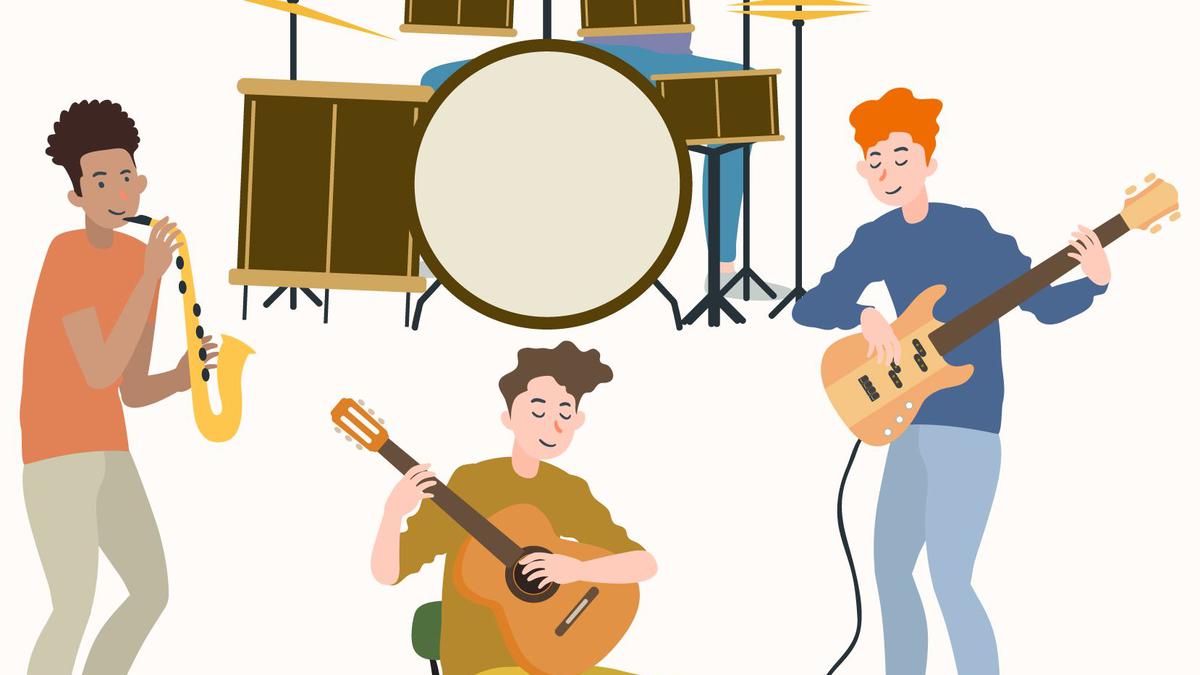
Our environments and experiences shape us. From gentle lullabies to catchy tunes, music has been an integral part of our lives since childhood. It helps us understand who we are, how the world works, and how everything is interconnected. Therefore, it is essential to recognise its importance as a valuable component of a well-rounded curriculum. It fosters holistic development and enhances students’ understanding of the world around them. Engaging in music not only promotes the development of musical proficiency but also equips students with skills, which they can apply to other aspects of life. Here are some ways in which music enables life skills.
Muti-sensory engagement: Music engages multiple senses, including hearing, sight, and touch. Scientific research has shown that we use both sides of our brain when we sing or play an instrument and that children who learn music have more neural activity than those not exposed to musical training. Playing complex musical sequences and reading sheet music also enhances the ability to mentally move objects in space and time and solve multi-step problems, which is spatial-temporal reasoning. This skill also allows us to read a map, solve a puzzle, pack luggage, or drive a car in traffic without relying exclusively on trial and error.
Enhance memory and recall: Learning new songs, melodies, and musical techniques improves memory. Musicians often use a technique called “chunking”, which is a way of remembering a large piece of information by separating it into small groups or chunks. This method leads to improved recall and cognitive flexibility.
Communication and language development: Musical elements like tempo, dynamics, and pitch help children convey feelings, moods, and emotions non-verbally and recognise and articulate them in everyday communication. Children naturally learn foreign languages through songs that allow them to remember words, phrases, and sentences within a real-life context.
Inhibitory control: Learning to play an instrument or participating in musical activities demands sustained attention and concentration. Apart from developing fine motor skills, children learn to focus on reading music notations, coordinating their movements, and maintaining time. Through consistent concentration practice, children develop their inhibitory control, honing their ability to effectively filter out distractions and maintain focus on their immediate task.
Divergent thinking: Music education has the potential to promote divergent thinking in children, enabling them to generate multiple ideas, solutions, or perspectives in response to an open-ended question or problem. It promotes creativity, flexibility, and originality of thought. Encouraging students to compose and improvise allows them to create their own melodies, rhythms, and interpretations. This process requires them to experiment and develop unique ideas.
Encourage risk-taking and perseverance: Learning music promotes a willingness to explore and step outside one’s comfort zone. Learning music also involves performing before an audience, which encourages students to overcome stage fright, fear of making mistakes, and the pressure of public performance. When children commit to learning music, they practice regularly, overcome mistakes, and set and achieve long-term goals. This naturally helps them to develop perseverance as a life skill.


The ₹88.41 crore AMRUT scheme aims to eliminate Kavali's water scarcity, transforming the town’s infrastructure and services.

A 4.1 magnitude earthquake struck Sikkim's Mangan district; no casualties or property damage reported.

Telangana government updates building rules, increasing TDR usage, allowing more floors, and easing setback regulations for developers.

The escalating Israel-Iran conflict over the South Pars gas field threatens global energy security and impacts India's energy imports.

Delhi's weather forecast: clear skies, maximum temperature around 30°C, and moderate air quality with an AQI of 154.

Union Minister Kiren Rijiju meets Tamil Nadu Bishops and pastors to discuss minority welfare and counter anti-BJP narratives.

Japan may consider minesweeping in the Strait of Hormuz post-ceasefire, says Foreign Minister Motegi, amid ongoing regional tensions.

Delhi University job fair guidelines excluding School of Open Learning students spark protests over equity and access to opportunities.

Rwanda's Fanny Utagushimaninde, at 15, becomes the youngest player to score a T20 international century.

Assembly polls 2026: Follow updates from The Hindu on the upcoming elections in five States, on March 22, 2026

Currently, only the services in the 32 series stop at the section of the road adjacent to the Broadway terminus, temporarily closed on account of reconstruction work. Small traders association tells R. Ragu that ensuring the services now accommodated at the temporary terminus at Island Grounds stop at NSC Bose road would benefit visitors to the markets in Parrys

The Hindu photo feature on Aragam which is now known as book village. Photos and text by Imran Nissar

The silent reading movement in the Mylapore-Mandaveli-RA Puram area showed up first at Nageswara Rao Park around two years ago, with modest ambitions, when Balaji launched it along with other reading enthusiasts from the region. This initiative has now moved parks, and seems to set to get entrenched in one. Due to renovation work at Nageswara Park, the reading session became irregular. With the Nageswara Rao park work gaining more surface area, it had to be shifted elsewhere. And it seems set to continue with a newly discovered green patch in RK Nagar in the Sundays to follow.