How Jamaica took out an insurance policy for itself, and why it’s about to pay off after Hurricane Melissa
CBC
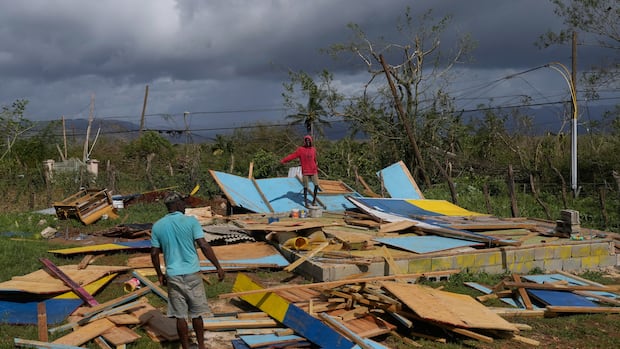
For the past decade, Jamaica has been building layers of financial protection in the event of a natural disaster. Now, after Hurricane Melissa tore through the country, destroying homes, roads and essential infrastructure, the country's strategy might pay off — and provide a model for climate-vulnerable nations elsewhere.
Last year, the country issued $150 million US in a catastrophe or “cat” bond — triggered in case of certain parameters related to how strong a hurricane is and where it passes through.
“They are linked to the central pressure of the hurricane when it makes landfall,” said Florian Steiger, CEO of Icosa Investments, a Swiss firm that focuses on catastrophe bonds. A third party needs to verify the trigger, but there’s no question in this case the necessary threshold has been crossed.
“Based on everything we've seen, the payouts are going to happen.”
Funds could get to Jamaica in a matter of days. The country also has multiple eggs in its disaster risk basket — including insurance policies to cover extreme rainfall and tropical storms through a regional pool that provides disaster insurance to Caribbean countries. Additionally, it can draw on lines of credit with the World Bank and the Inter-American Development Bank.
"Jamaica's strategy is, in my perspective, one of the most comprehensive of any country globally at the minute," said Conor Meenan, a risk financing adviser at the U.K.-based Centre for Disaster Protection.
In total, Jamaica's Finance Ministry says it has about $820 million US available in financing to draw from in the days and weeks right after a disaster. That won’t cover all of the likely billions of dollars in damages needed, but the insurance-related financing will flow to Jamaica much faster and help quickly restore the most essential services like roads, health care and telecommunications.
Jamaica’s $150-million US catastrophe bond was issued in 2024 with the help of the World Bank. The country funded the bond itself, while investors, mostly investment firms in North America and Europe, bought it. The bond matures in 2027, covering four hurricane seasons.
This was the second cat bond issue for Jamaica. The first round, in 2021, was funded by donors and provided the country $185 million US in case of disaster. Jamaica decided to renew that initial one last year.
If a payout isn't triggered, the $150-million US bond behaves much like a regular one, with Jamaica paying out the full principal back to investors by Dec. 29, 2027, plus interest. And given the disaster risk, it came with an attractive interest rate of around seven per cent per annum.
And if it is, the total payout would be to the country instead of investors, depending on the severity of the hurricane. It starts at 30 per cent and continues all the way to the full bond amount. The triggers are based on a hurricane's central air pressure and whether it passes over certain parts of the country.
That’s what sets this bond apart from other forms of insurance: Rather than being based on the amount of damage or cost of rebuilding, the insurance pays out based on the severity of the storm.
This map from the World Bank shows the air pressure limits over different parts of Jamaica for triggering the catastrophe bond:
“They divide Jamaica and some of the surrounding ocean around it into boxes,” said Steve Evans, owner and editor of Artemis, an insurance and securities-focused publication.


The former secretary general of NATO says he doesn't think allies will be pulled further into the conflict in the Middle East, but he's concerned the ongoing war with Iran will benefit Russia's economy and take the world's attention away from the invasion of Ukraine.

As American and Israeli strikes pound Iran — while it attacks shipping and energy infrastructure across the Persian Gulf — U.S. President Donald Trump made a new threat to Tehran's leaders.

The armed man who rammed his vehicle into one of the largest Reform synagogues in the U.S. Thursday has been identified as a 41-year-old naturalized citizen born in Lebanon, according to federal officials.

With jagged cliffs rising from the Arabian Sea, the Strait of Hormuz is striking in its scenery — and these days, its emptiness. This resource superhighway, which normally hosts more than a hundred of the world’s largest oil and liquid natural gas (LNG) tankers every day, has seen no more than a handful all week.

The Canadian government said Tuesday it is alarmed by the escalation of violence and attacks in Lebanon, as the war in the Middle East expands.

In a resounding victory that is guaranteed to reshape Nepal's politics, rapper-turned-politician Balendra Shah appeared headed for a landslide win in the South Asian country's first polls since youth-led protests toppled the previous government last fall.

China’s latest blueprint for driving growth in its economy was largely written before the U.S. and Israel instigated the most far-reaching war in the Middle East in decades.

U.S. President Donald Trump's firing of Homeland Security Secretary Kristi Noem on Thursday overshadowed the announcement of his plans to nominate Republican Sen. Markwayne Mullin as her successor.

The truck carrying Nepali prime ministerial candidate Balendra Shah was swarmed by cheering supporters in the capital, Kathmandu, on Saturday, unable to inch forward as the former rapper, wearing sunglasses and a sleek black suit, danced on top of the roof.

Israel sent troops into southern Lebanon on Tuesday and warned residents of more than 80 villages to evacuate as the Iran-backed militant Hezbollah group said it was ready for an "open war" with Israel in the wake of the U.S.-Israeli war with Iran.

U.S. President Donald Trump has given Americans a short list of his objectives in attacking Iran, but when it comes to the justification for launching the war and how the conflict is expected to play out, he and his team are sending mixed messages.

Omid Golabkesh dragged his suitcase down a long hallway marking the exit of the Kapikoy border crossing in eastern Turkey. He had nearly reached the end of an exhausting journey that included a 12-hour drive to the checkpoint from his home in Tehran.