How do heatwaves impact India’s labour productivity?
The Hindu
Heatwaves in India pose a significant threat to workers, agriculture, and livestock, prompting the need for strategic action plans.
The monsoon has arrived more than a week in advance, giving a respite from the intense heat in India. A heatwave gripped India in early April, though heatwave conditions were observed as early as February 27–28 as large parts of the country witnessed temperatures soar.
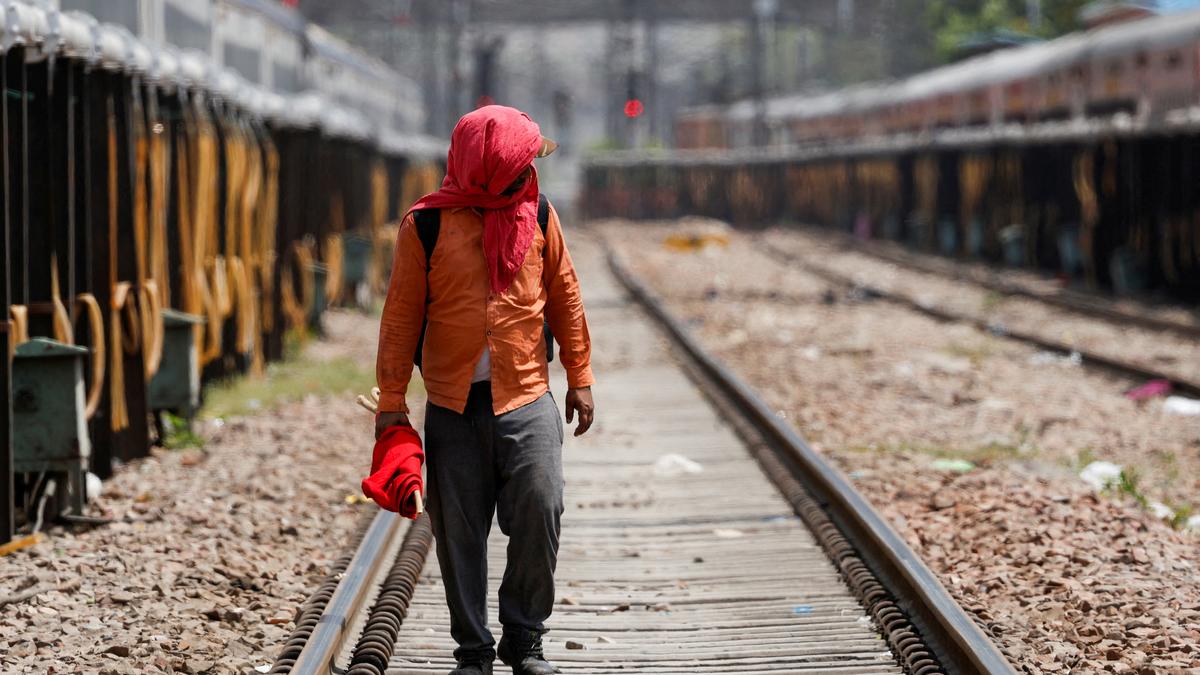
Heatwaves could have a drastic impact on the economy. In a report in 2024, the International Labour Organization (ILO) warned that more than 70% of all workers worldwide are at risk of exposure to excessive heat. It added that India lost an estimated $100 billion from heat-induced productivity losses. Small businesses and informal workers like construction workers, farmers, street vendors and food delivery partners bore the brunt.
Excessive heat can have a devastating impact on agriculture. Studies show that just 1 degree of warming reduces wheat yields by about 5.2% in India. Heatwaves, late in the rice growing season, can reduce yield.
Heatwaves, a period of unusually high temperatures compared to normal, occur mainly from March to June and hit a peak in May. Most States are prone to heat waves in varying degrees with Central, Northwest, East & north Peninsular India bearing the brunt.
A recent report by CEEW states that about 57% of Indian districts, which account for 76% of the country’s population, face a high to very high heat risk. Delhi, Maharashtra, Kerala, Gujarat, Rajasthan, Tamil Nadu, Andhra Pradesh, Madhya Pradesh, and Uttar Pradesh face the highest heat risk. It notes that over the last 40 years (1981–2022), heat extremes in India have increased linearly. This led to landmark heatwaves in 2013, 2016, 2019, 2022, and 2024.
“Nearly 23 States are heatwave-prone in India. There has been a linear increase in the number of very hot days and the number of very warm nights,” said D.r Vishwas Chitale, Senior Programme Lead, CEEW, who noted that the rate of increase in warm nights exceeds that of hot days.
Rapid urbanisation has only exacerbated the issue as cities tend to retain heat during the day, which delays cooling after sunset, making nights warmer. This contributes to the “urban heat island effect”, where cities get hotter than neighbouring rural areas. The CEEW report noted that between 2005 and 2023, built-up areas have expanded rapidly in almost every Indian district, especially in Tier-II and Tier-III cities like Pune, Thoothukudi, Kolhapur, and Guwahati. “You’re not getting any relief from the daytime hot temperature even when you sleep at night. If there are no cooling mechanisms available to you, then your productivity is going to go down,” he said.


Mines Ministry to auction 19 critical mineral blocks on March 23, expanding strategic resources for clean energy and technology sectors.

Five top firms lose ₹1 lakh crore in market value, with HDFC Bank experiencing the largest decline of ₹56,124.48 crore.

HDFC Bank terminates three senior officials over client onboarding issues at its DIFC branch amid ethical concerns following chairman's resignation.

Air India CEO warns of potential flight cuts and reduced travel demand due to rising fuel costs amid ongoing Gulf conflict.

Options are widely used by retail traders to speculate on the value of the stock for immediate gains and such behaviour in large scale can distort the market

India achieves 1 billion tonne coal production for the second consecutive year, ensuring stable energy supply and economic growth.

Generic drugmakers in India launch affordable Semaglutide versions, targeting a $1 billion diabetes and weight loss market.

Indian and Asian refiners eye Iranian oil purchases as U.S. waives sanctions amid energy crisis linked to the Iran-Israel war.

Iran war impacts pesticide prices, warning of a 20-25% rise and increased risk of counterfeit products during the kharif season.

India's forex reserves fell by $7 billion to $709.76 billion, according to RBI data for the week ending March 13.

Natco Pharma will launch its Semaglutide injection (multi dose vials) in the domestic market on Saturday.

Flipkart announces a 105% bonus payout for 2025, rewarding employees for strong growth and performance metrics.

Core sector growth in India plummeted to 2.3% in February, amid declining domestic production and impending West Asia crisis impacts.