How do 3D glasses work?
The Hindu
All glasses are cool, but 3D glasses take it to the next level—they’re the supercharged version of ordinary eyewear. They bring you closer to living your dream of stepping right into the movie you’re watching. But have you ever wondered how 3D movies create the thrilling illusion of objects flying straight at you?
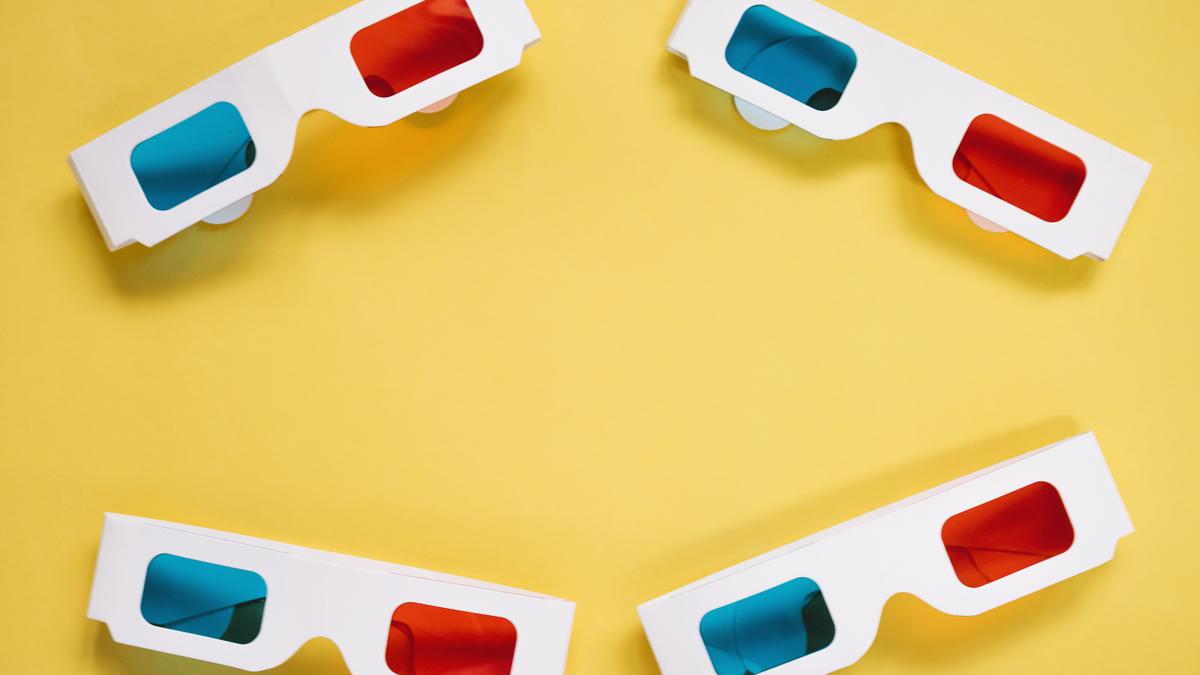
3D glasses are special eyewear crafted to transform flat movie screens into immersive three-dimensional experiences. They create the illusion of depth, making scenes feel like they’re leaping off the screen and pulling you into the action.
Our eyes work together to perceive depth, a process called binocular vision that helps us judge distances and the relative positions of objects. In the real world, objects reflect light to each of our eyes from slightly different angles. Our brain processes these differences, creating a single image with depth.
3D glasses mimic this natural ability when we watch a 3D movie. Stereoscopic images are captured or created from two slightly different perspectives, just like how our eyes see the world. These images are then projected on a screen, and the 3D glasses, equipped with special lenses, filter the light so each eye receives a slightly different image.
This process, based on the principle of stereoscopy, tricks the brain into merging the two images into one, interpreting the differences as depth cues. The result? Flat screens come alive, creating the illusion of objects popping out or receding into the background, making you feel like you’re part of the action.
3D glasses come in several types, each using unique technology to create the illusion of depth:
From the nostalgic anaglyph lenses to cutting-edge active shutter technology, 3D glasses continue to evolve, enhancing how we experience movies and beyond.
Beyond movies, 3D technology has revolutionised several fields:


The 2026 U.S. cholesterol guidelines urge starting screening and treatment at 30 to prevent cardiovascular disease effectively.

Olam Festival 2026 in Thiruvananthapuram returns March 27-29 with 120+ vendors, music, art, and cultural zones.

A few storytellers in Thiruvananthapuram share their journeys, challenges, and evolving methods on World Storytelling Day, inspiring young minds.

76-year-old Kurian Jacob from Kerala triumphs with seven medals, including five golds, at the Open Masters Games in Abu Dhabi.

Explore the nature of the human mind as an emergent property of brain activity and complex neural interactions.

CERN's Large Hadron Collider discovers the Xi-cc-plus particle, enhancing understanding of quantum mechanics and baryon behavior.

Vibha Batra’s latest book, Spotless (Hachette India) is a novel in verse for young adults

In its first edition, the Madras Art Salon spotlights the works of journalist and artist Narayan Lakshman at The Botanical Club, a social space in the British Deputy High Commission, Chennai

Cholesterol enhances melanoma cell invasion by making nuclei squishier, revealing a potential treatment target in cancer progression.

The designers reinterpret the Swedish artist’s symbolic forms and colour energy through contemporary resortwear silhouettes

Discover the inspiring legacy of Bibha Chowdhuri, a pioneering woman in physics and a trailblazer in STEM history.

Discover the inspiring legacy of Bibha Chowdhuri, a pioneering woman in physics and a trailblazer in STEM history.

Ashdeen’s Spring 2026 collection features saris inspired by the designer’s Parsi gara archive