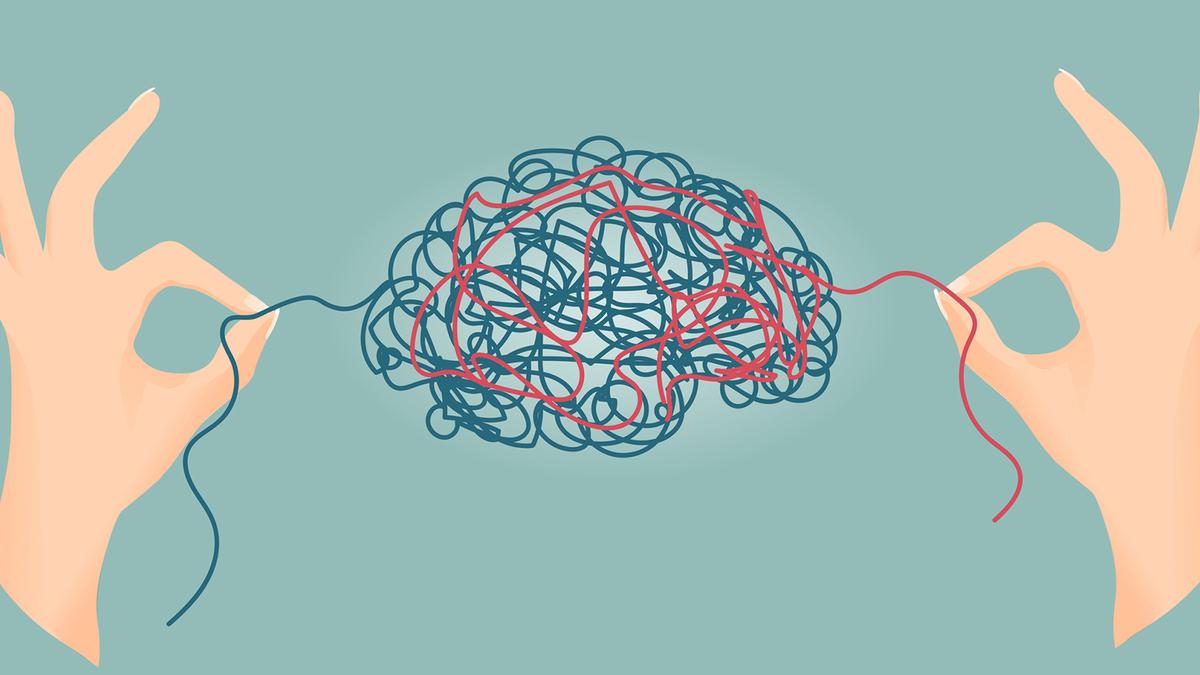
How could you forget? The mysterious, mischievous memory-machine
The Hindu
Exploring the intricate world of memory, from neuroscience to cultural narratives, revealing its manipulative and mysterious nature.
Whether we are trying to pull off a pickle recipe for our family or trying to impress a gathering with a well-timed joke, a large chunk of our daily cognitive, social, and communicative activities are invested towards making memories, and retrieving old ones.
I use the word chunk not because it sounds cool (it undoubtedly does) but because, incidentally, it is used by Joseph LeDoux, a neuroscientist who works on anxiety and memory as well as by David Herman, a cognitive narratologist. The latter examines how cultures and collectives remember and encode data, beliefs, and values, through narrative chunks that often operate as storytelling functions and figures such as metaphors. Memory studies as a discipline is perfectly (and sometimes precariously) situated between the molecular and monumental dimensions of remembering and forgetting, examining neurons as well as narratives, subliminal sentient experiences as well as shared social rituals.
As we experience, often to our embarrassment, memory may manifest itself by paradoxically producing its absence. Examples can include struggle to remember a name or where one kept a key (the latter being a very common experience for this author). It can also acquire complex collective dimensions whereby cultures and nations forget certain events and figures from their past, sometimes accidentally sometimes strategically (Paul Connerton’s essay ‘Seven Types of Forgetting’ is a brilliant study of the same). It is safe (and scientifically valid) to assume that one cannot study memory sans a study of forgetting, that commemoration may also be complexly shaped by forms of oblivion or even erasure. Thus, the verbs could and did normally associated with forgetting (as reflected in the title of this piece) also imply intentionality, action, or agency rather than passive accidental erasure.
It gets even more interesting and strange as one begins to plumb the depths of the mysterious memory-machine. For then, you realise that memory is not just retrieval or reconstruction. It is also oriented towards the future, both at the level of imagination and action. This is true in the immediate personal sense (for example one can go ahead and maneuver a meeting only if one remembers the relevant information) as well as in the collective sense as evinced in the futuristic appeal and aspiration of nostalgia that may be instrumentalised and even weaponised for political purposes.
Charan Ranganath (a globally acclaimed neuroscientist with Chennai connections) offers a brilliant bird’s eye view of the processes of memory in Why We Remember? In a work filled with anecdotes from music concerts, birthday parties, and complex neuroscientific experiments in laboratories, Ranganath writes how, despite growing up almost entirely in the United States, his memory of Tamil words always experiences more retrieval whenever he visits Chennai. Research reveals that context is a vital element in the memory process. If one re-situates or disconnects contexts, strange things can take place in the memory machine.
A funny example is known as the butcher on the bus phenomenon, whereby one’s familiar butcher is not recognised or remembered simply because he isn’t in his market clothing and happens to be traveling in a bus like all other passengers, thus appearing atypical and out of context. Memory is thus both semantic (recalling data related to learnt knowledge) and episodic (sensitive to sentient experiences and connected to contexts). It is both retrieval (where the neuroanatomy of the hippocampus plays a vital part) and information and emotion processing (where the prefrontal cortex comes in). It thus integrates information with emotion, knowledge with experience, emerging less as a static entity and more as an interactive activity. With so much going on, it is but obvious that memory is both mysterious and mischievous, throwing lifeboats and anchoring the self during moments of cognitive and existential struggle, while also playing tricks, like Puck in A Midsummer Night’s Dream, pouring wrong potions on the wrong heads.
The manipulative dimension of memory is well-known and documented in research and writings alike. Elizabeth Loftus’ neuroscientific work on memory, misinformation, and punitive processes foregrounds how frequently false memories may be planted, sometimes through strategic interrogation techniques that may be racially or socially biased. Likewise, Salman Rushdie remembered how afraid he was of being invaded, as a boy during the 1962 Indo-China war, despite the fact that he was outside of India during that time, simply because the many news reports and radio broadcasts made a strong affective implant that subsequently operated as false memory. Thus, apart from its problematic proximity to forgetting and future-imagination, memory is also notoriously manipulative and plastic.


Set between the Siwalik hills and the plains, Butwal offers travellers a mix of regional cuisine, pilgrimage trails to Lumbini and the comfort of Hyatt’s new hospitality landmark

Explore 2026's wallpaper trends in India, highlighting botanicals and handmade designs that enhance modern homes with nature-inspired aesthetics.

Mercedes-Benz CLA 250+ with EQ Technology review: design, performance, range and features explained. Discover how the new electric CLA combines advanced AI, long range, fast charging and futuristic styling for the next generation of luxury EVs.

AI tool for sparrow conservation

BTS’s comeback with ‘Arirang’ marks a major global music event. When does the album release, and where can you watch their concert live stream? We have all the details

The 2026 U.S. cholesterol guidelines urge starting screening and treatment at 30 to prevent cardiovascular disease effectively.

Olam Festival 2026 in Thiruvananthapuram returns March 27-29 with 120+ vendors, music, art, and cultural zones.

A few storytellers in Thiruvananthapuram share their journeys, challenges, and evolving methods on World Storytelling Day, inspiring young minds.

76-year-old Kurian Jacob from Kerala triumphs with seven medals, including five golds, at the Open Masters Games in Abu Dhabi.

Explore the nature of the human mind as an emergent property of brain activity and complex neural interactions.

CERN's Large Hadron Collider discovers the Xi-cc-plus particle, enhancing understanding of quantum mechanics and baryon behavior.

Vibha Batra’s latest book, Spotless (Hachette India) is a novel in verse for young adults

In its first edition, the Madras Art Salon spotlights the works of journalist and artist Narayan Lakshman at The Botanical Club, a social space in the British Deputy High Commission, Chennai