How climate change will make hosting the Winter Olympics more challenging
ABC News
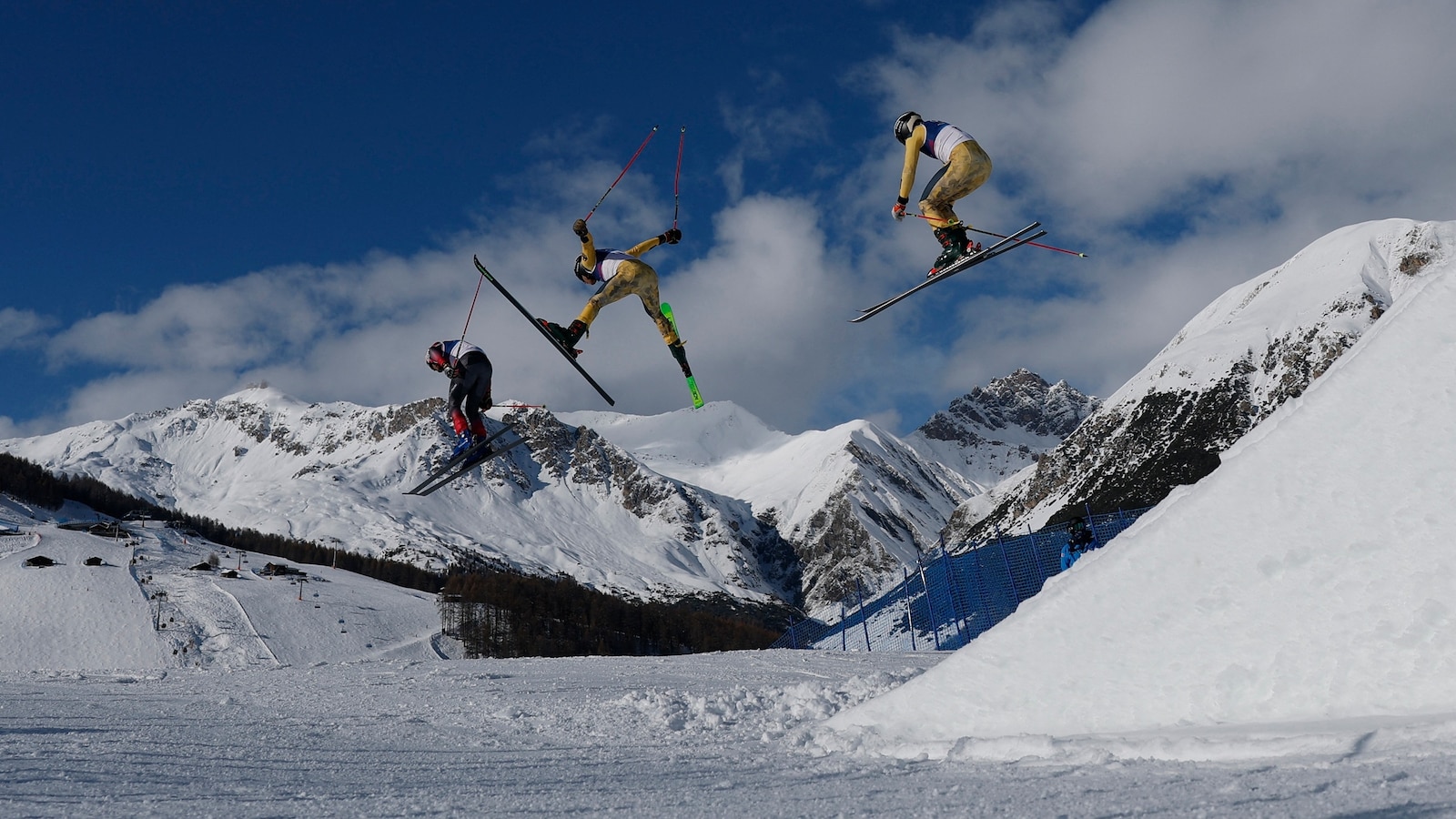
Hosting the Winter Olympics will be more challenging in the future.
Hosting the Winter Olympics will be more challenging in the future as global warming impacts host cities traditionally known for climates suitable for competitions such as skiing and snowboarding, according to climate scientists.
The 2026 Winter Olympics are about to kick off, but the Milano Cortina Games will take place in a much warmer world than in years past.
Average temperatures in Cortina, Italy, have risen by 6.4 degrees Fahrenheit since the region first hosted the Winter Olympics in 1956, according to a recent analysis by Climate Central. The warming trends have led to fewer freezing days and a shortage of naturally made snow.
"The number of freezing days, which is what you need to have snow, has dropped by almost 20%," Marcene Mitchell, senior vice president for climate change for the World Wildlife Fund, told ABC News.
As a result, event organizers were required to ship in 3 million cubic yards of artificial snow, despite the games taking place in the high altitudes of the Italian Alps.


Nepal is counting votes after its first national election since a violent youth uprising toppled the government

Japan's Foreign Ministry says a second Japanese national has been detained in Iran and requested the early release of both people

Conservative Anglican leaders have overhauled Gafcon’s leadership and signal a sharper break from the historic Anglican Communion

Cologne Cathedral, a famous German landmark and popular tourist draw, will start charging an admission fee to visitors as church officials struggle with rising maintenance costs

Families of Kenyan recruits duped with promises of work in Russia who ended up on the front lines of the fighting in Ukraine are petitioning the country’s parliament to ban the recruitment of Kenyans for Moscow’s war

For years, Iran’s theocratic government warned it would blanket the Middle East with missile and drone fire if it felt its existence was threatened

Canadian and Australian prime ministers have called for a de-escalation of the Iran war but added the Iranians must never gain a nuclear weapon

China has set an economic growth target of 4.5% to 5% for this year, a slight decrease in the face of a prolonged property slump and other headwinds and global uncertainty

North Korean leader Kim Jong Un inspected his new destroyer for two straight days ahead of its commissioning and observed a test of cruise missiles fired from the warship, vowing to accelerate the nuclear-armament of his navy, state media said Thursday

Nahuel Gallo, an Argentine military police officer, is urging the international community to push Venezuela to free 24 foreigners still in detention

Ten horses — five black, five white — entered the sand ring first

Police in Puerto Rico say an armed suspect flung open the door of an ambulance and fatally shot a man who was being treated by medics for bullet wounds he received during a shooting earlier in the U.S. territory’s capital

Russian President Vladimir Putin on Wednesday hosted Hungarian Foreign Minister Péter Szijjártó for talks in Moscow