How climate change affected the shape of elephant teeth Premium
The Hindu
Existing elephant species are the remnants of a once prosperous lineage of megaherbivores called proboscideans, whose evolutionary epic spanned 60 million years and some 200 species.
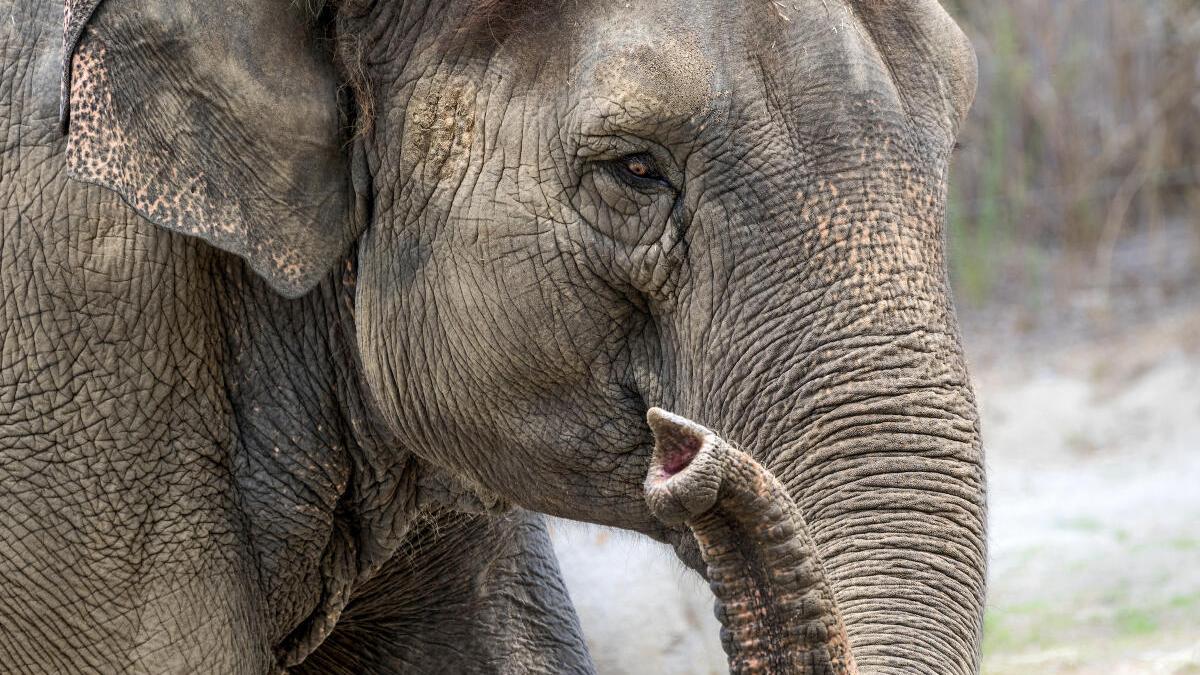
Seeing elephants in the wild is a timelessly awe-inspiring experience. There are only three living species today: the African savannah elephant, African forest elephant, and Asian elephant.
They are the remnants of a once prosperous lineage of megaherbivores called proboscideans, whose evolutionary epic spanned 60 million years and some 200 species. The African continent was the centre stage of this story.
But, until now, it hasn’t been clear how natural selection favoured modern elephants as the only tiny surviving branch of proboscideans.
A new study by palaeontologists Juha Saarinen and Adrian Lister provides the answers. Lister supervised my PhD, which focused on evolutionary relationships of fossil elephants. Saarinen hosts my current postdoctoral position at the University of Helsinki, as we’re pursuing research stemming from these findings.
They focused on the emergence of elephants’ highly specialised, multi-plated cheek teeth from the primitive dentition of earlier proboscideans. Their conclusions demonstrate that behavioural adjustments in response to changing environments can produce sustained transformative trends in animals’ adaptive structures over tens of millions of years.
Modern elephants’ diets consist of copious amounts of tough, fibrous, often low-quality fodder. They’re able to eat this way because of their teeth: six massive grinding teeth per jaw half that erupt and expend sequentially in a horizontal “queue” throughout the animal’s life, each successively larger than the previous tooth. The adult molars are as big as bricks.
Enamel ridges that align longitudinally along the tooth shear up the vegetation like a cheese grater as the jaws move. These teeth also have high crowns that continuously erupt into position as the older chewing surface wears away, like lead pushing up in a mechanical pencil. This helps elephants deal with continuous tooth attrition from chewing.


Explore 2026's wallpaper trends in India, highlighting botanicals and handmade designs that enhance modern homes with nature-inspired aesthetics.

Mercedes-Benz CLA 250+ with EQ Technology review: design, performance, range and features explained. Discover how the new electric CLA combines advanced AI, long range, fast charging and futuristic styling for the next generation of luxury EVs.

AI tool for sparrow conservation

BTS’s comeback with ‘Arirang’ marks a major global music event. When does the album release, and where can you watch their concert live stream? We have all the details

The 2026 U.S. cholesterol guidelines urge starting screening and treatment at 30 to prevent cardiovascular disease effectively.

Olam Festival 2026 in Thiruvananthapuram returns March 27-29 with 120+ vendors, music, art, and cultural zones.

A few storytellers in Thiruvananthapuram share their journeys, challenges, and evolving methods on World Storytelling Day, inspiring young minds.

76-year-old Kurian Jacob from Kerala triumphs with seven medals, including five golds, at the Open Masters Games in Abu Dhabi.

Explore the nature of the human mind as an emergent property of brain activity and complex neural interactions.

CERN's Large Hadron Collider discovers the Xi-cc-plus particle, enhancing understanding of quantum mechanics and baryon behavior.

Vibha Batra’s latest book, Spotless (Hachette India) is a novel in verse for young adults

In its first edition, the Madras Art Salon spotlights the works of journalist and artist Narayan Lakshman at The Botanical Club, a social space in the British Deputy High Commission, Chennai

Cholesterol enhances melanoma cell invasion by making nuclei squishier, revealing a potential treatment target in cancer progression.