How can India meet its rising power demand?
The Hindu
India's electricity demand is growing rapidly, posing challenges and opportunities for transitioning to renewables by 2030.
As the fastest-growing major economy in a rapidly heating world, India’s electricity demand is growing fast. Since FY21, India’s electricity consumption has risen at approximately 9% per annum, compared to an average of 5% annually in the preceding decade. The Central Electricity Authority (CEA) had projected electricity demand to grow at a 6% CAGR between 2022 and 2030. However, recent trends suggest a strong likelihood of overshooting these estimates. Can India’s power sector keep up with this demand and transition to renewables at the same time?
Besides economic growth and urbanisation, climate change-induced heat stress, marked by increasingly hotter summers, is one of the key factors driving electricity demand. Currently, industries, households, and agriculture comprise 33%, 28%, and 19% of total electricity use in India, respectively. Yet, household electricity demand has grown the fastest over the past decade. The summer of 2024 witnessed a 40-50% year-on-year growth in room air conditioner sales, driven by rising incomes and record-breaking temperatures. All-India peak demand crossed 250 GW on May 30, 2024, which was 6.3% higher than projections. In 2025, after recording the warmest-ever February in 125 years, India must now brace for extended heatwaves and a peak electricity demand growth of 9-10%.
In short, India’s electricity demand is growing fast and becoming more and more uncertain.
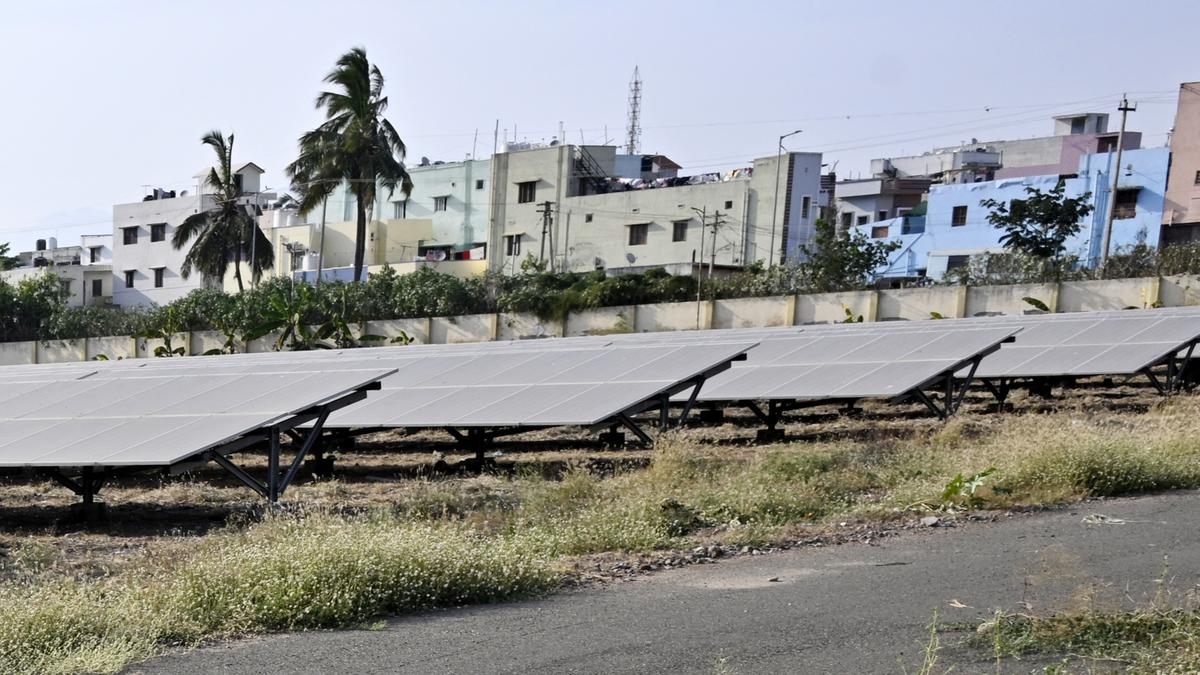
Since the early 2000s, power generation capacity has quadrupled to 460 GW, making India the third-largest electricity producer globally. Driven by the imperatives of clean energy transition, India’s power sector is undergoing a major shift with the rise of Renewable Energy (RE) technologies like solar and wind. In 2010, the Indian government set a target of 20 GW of RE by 2020, which was revised upwards in 2014 to 175 GW by 2022. In 2021, India further amped its target to achieve 500 GW of non-fossil fuel power capacity by 2030.
The government has continuously adopted several long-term and short-term measures to meet the spikes in demand. For instance, to manage the peak in 2022, it increased coal allocation to the power sector and prioritised its transportation through railways. It also directed imported coal-based power plants to operate at full capacity. States that have added substantive solar capacities utilised the surplus solar power to meet day peaks. Nights peaks continue to pose a challenge.
In many ways, 2024 was a landmark year — India added a record 28 GW of new RE capacity, bumping up the share of RE in the electricity mix to 13.5%. The share of coal in the capacity mix fell below half, though it still caters to 75% of power demand. India’s RE capacity now stands at 165 GW. Another 32 GW of RE is expected to be commissioned in 2025. In the following five years, India would need to add about 50 GW of RE every year to meet its 2030 goal.
Episodes of power shortages in the last two years amid rapid growth in demand pose an important question. How should India act and plan to meet its rising energy demand reliably and cost-effectively?


Power Minister highlights energy security and renewable transition during Bharat Electricity Summit 2026 amid global tensions.

The rupee hits a record low of 93.08 against the dollar, pressured by rising oil prices and FII outflows.

OpenAI said on Thursday it will buy Python toolmaker Astral, as the ChatGPT maker seeks to strengthen its portfolio against rival Anthropic to gain more share in the artificial intelligence coding tools market.

Crude oil prices drop over 2% as Netanyahu reassures investors amid ongoing Iran conflict and rising energy market concerns.

PPAC designated as nodal agency to enhance data collection on domestic fuel and energy stocks for improved mandate enforcement.

Indian markets plunged over 3% amid soaring crude prices, rupee depreciation, and escalating West Asia geopolitical tensions in March 2026.

Government launches ₹497 crore RELIEF scheme providing credit insurance to exporters affected by the West Asia crisis, focusing on MSMEs.

Crude oil futures rise amid Middle East attacks, pushing Brent above $116 on fears of tightening global supply.

West Asia conflict delays India’s FTA talks with GCC and Israel, while UK and EU agreements proceed as planned in 2024.

Russian Urals oil vessels will reach India on March 21 amid stable fuel prices and diversified LPG imports.

Warner Bros. dominated the Academy Awards, but Paramount’s looming acquisition of the studio signals the biggest restructuring of the industry in decades and a battle over the future of Hollywood itself

HDFC Bank board calls Atanu Chakraborty’s resignation baffling, affirms robust corporate governance and strong market confidence.

RNFI and Jio Payments Bank launch cardless UPI QR cash withdrawals for instant access across urban, semi-urban, and rural India.