How can collector be final arbitrator of Waqf properties, Opposition asks in meeting
The Hindu
Heated debate over Waqf Bill, Opposition walks out, concerns raised over collector as final arbitrator.
At a stormy eight-hour-long second sitting of Parliament’s Joint Committee on Waqf (Amendment) Bill 2024, there was a heated exchange between the Opposition and the government members, especially on the clause allowing the District Collector to be the final arbitrator on Waqf properties.
The Opposition briefly walked out in protest after panel chairman and BJP MP Jagdambika Pal refused to allow one of the witnesses to depose. The meeting began at 11 a.m. and went on till 7 p.m. The argument arose in the second half of the deliberations when advocate Fuzail Ahmad Ayyubi, who had deposed on behalf of Indian Muslims of Civil Rights (IMCR), New Delhi, returned to speak for Uttar Pradesh Sunni Central Waqf Board.
Also read | Building on favourable change in the 2024 waqf Bill
Mr. Pal, according to sources, said the panel has already heard Mr. Ayubbi’s views, while the Opposition said, that the second time around he will specifically be speaking on Uttar Pradesh. After Mr. Pal refused to relent, the Opposition walked out. Though, within a few minutes after registering their protest, they returned.
The Opposition expressed reservations on Section 3 of the law that makes the collector the “final arbitrator” of the Waqf properties. Several Opposition leaders argued that the collector cannot be the judge in the government’s own case. The collector has no quasi-judicial authority. The collector is a revenue officer and does not have expertise to survey properties which the Act requires. Samajwadi Party MP Muhibullah, as per sources, contended that Waqf is part of the Islamic identity and should be treated as an intra-community affair. A collector, he argued, cannot be given a “supervisory role”.
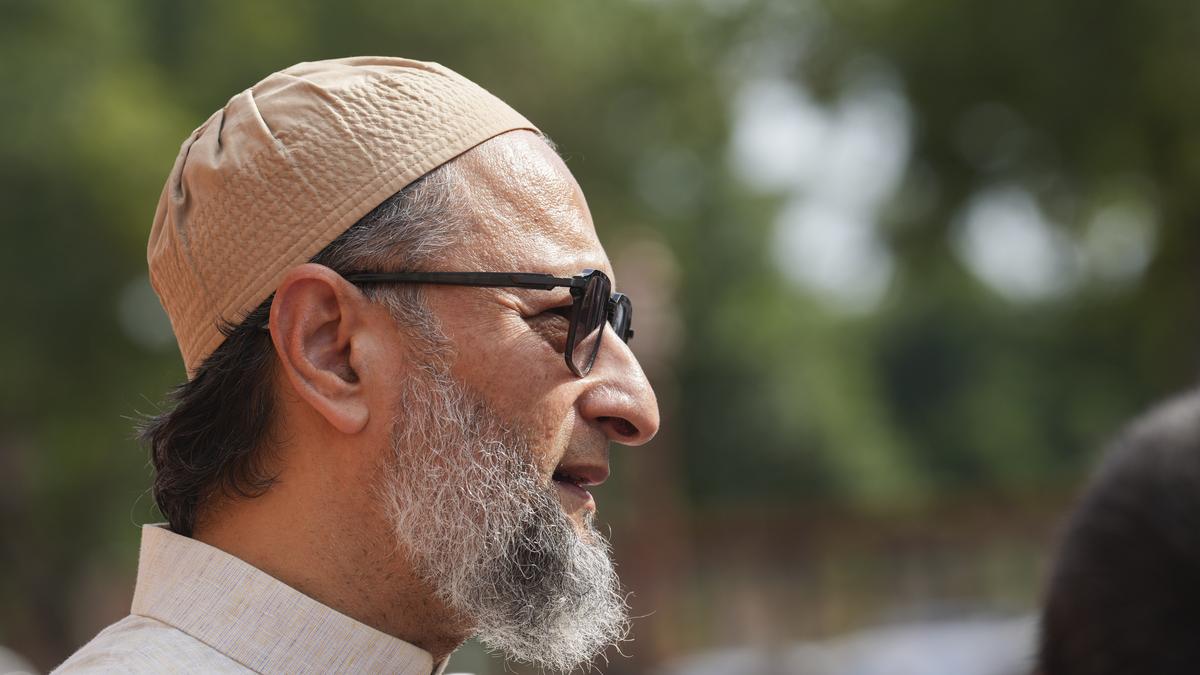
All India Majlis-E-Ittehadul Muslimeen MP Asaduddin Owaisi, said sources, flagged the consequences that the law will have on Uttar Pradesh. He argued that the Waqf properties in the State are governed by a State legislation.
“A majority of these properties were in the nature of ‘waqf by user’ and an overwhelming majority of these properties were religious in nature. The deletion of ‘waqf by user’ from the amended law will mean that the title of these properties numbering over one lakh will be destabilised and made vulnerable to encroachment,” he said during the meeting. Others Opposition leaders supported Mr. Owaisi’s arguments.


Puducherry Assembly elections test the INDIA bloc's unity as parties file nominations amidst seat allocation uncertainty.

T.N. CM Stalin advocates for constitutional safeguards to maintain state representation in delimitation amid women’s reservation discussions.

Rohit Pawar files complaint in Bengaluru alleging conspiracy in Ajit Pawar's air crash; Maharashtra police had refused FIR.

Armed extremists attack Mongkot Chepu village again, firing on students and injuring civilians amid rising tensions in Manipur.

TGNPDCL bags ‘Governance Now’ award

Perundurai's industrial growth faces challenges of pollution, water scarcity, and healthcare, impacting residents ahead of the 2026 elections.

The Travancore Devaswom Board asserts that courts should respect community beliefs in its Supreme Court submission on Sabarimala's entry issue.

Karnataka cancels Deendayal Upadhyay event at KSOU due to protocol violations, citing inconsistency with university objectives.

Illegal pickle unit busted in Hyderabad, one arrested; unhygienic stock worth ₹3 lakh seized

Karnataka has entered a state of demographic transition where a large working-age population will no longer be enough to drive economic growth, and future gains will depend on how productively people are employed, the ‘State of Working India 2026’ report said.

Key demands in Sulur Assembly constituency include reviving the powerloom sector, addressing farmers' needs, and protecting River Noyyal.

Kodihalli urges Karnataka CM to allocate ₹10,000 crore revolving fund for seamless procurement of farm products under MSP scheme.

Kerala's political parties continue to marginalize women candidates, highlighting a troubling disconnect between gender demographics and representation.