How a Supreme Court decision backing the NRA is thwarting Trump’s retribution campaign
CNN
As Harvard University, elite law firms and perceived political enemies of President Donald Trump fight back against his efforts to use government power to punish them, they’re winning thanks in part to the National Rifle Association.
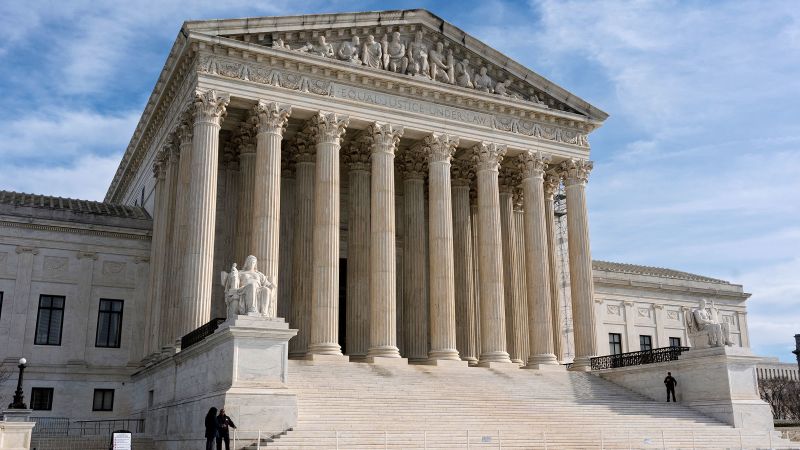
As Harvard University, elite law firms and perceived political enemies of President Donald Trump fight back against his efforts to use government power to punish them, they’re winning thanks in part to the National Rifle Association. Last May, the Supreme Court unanimously sided with the gun rights group in a First Amendment case concerning a New York official’s alleged efforts to pressure insurance companies in the state to sever ties with the group following the deadly 2018 school shooting in Parkland, Florida. A government official, liberal Justice Sonia Sotomayor wrote for the nine, “cannot … use the power of the State to punish or suppress disfavored expression.” A year later, the court’s decision in National Rifle Association of America v. Vullo has been cited repeatedly by federal judges in rulings striking down a series of executive orders that targeted law firms. Lawyers representing Harvard, faculty at Columbia University and others are also leaning on the decision in cases challenging Trump’s attacks on them. “Going into court with a decision that is freshly minted, that clearly reflects the unanimous views of the currently sitting Supreme Court justices, is a very powerful tool,” said Eugene Volokh, a conservative First Amendment expert who represented the NRA in the 2024 case. For free speech advocates, the application of the NRA decision in cases pushing back against Trump’s retribution campaign is a welcome sign that lower courts are applying key First Amendment principles equally, particularly in politically fraught disputes.


Janet Mills and her allies are counting on a gender gap to narrow Platner’s wide lead ahead of the June 9 primary to decide who will face incumbent Republican Sen. Susan Collins. They are betting that the unfiltered style that has brought Platner widespread attention as someone who could help Democrats reach young men will backfire with women.

Why do people “pledge allegiance” to a “state” that is no longer a state? And what spurs someone to not just attack innocent people, but to then make a statement of loyalty while doing so?

A Supreme Court case examining state deadlines for election ballots sent in the mail is just the tip of the spear in President Donald Trump’s war on mail-in voting.

As a shrinking number of Transportation Security Administration agents work to keep hourslong security lines moving despite not being paid, President Donald Trump stepped into the fray Saturday, announcing he will send Immigration and Customs Enforcement officers to airports by Monday if Congress doesn’t agree to a plan to end the partial government shutdown.

Donald Trump wants us to believe that a deal with Cuba is close at hand. After this past week, I am not so sure.

The search for missing 84-year-old Nancy Guthrie, mother of “Today” show host Savannah Guthrie, has stretched into another anguished week, with mounting pressure on investigators and a family grappling with uncertainty.

Cuba’s Ministry of Energy announced Saturday evening that entire island has suffered another electrical blackout, leaving more than 10 million people without power.

Iran’s attempt to strike a US-UK base over 2,000 miles (over 3,000 kilometers) off its coast has renewed questions about Tehran’s military capabilities and how far its missiles can reach.

For years, President Donald Trump has offered crass and insensitive comments about people who died – especially his foes. That reached a new level on Saturday.

Robert Mueller, the former FBI director who led the historic probe into alleged collusion between Donald Trump’s 2016 campaign and the Russian government, has died. He was 81.

Marlon Batres is not OK. The assistant principal says he is in constant fear for his students, staff and even himself after federal agents swarmed the streets.

To hear some prominent MAGA voices tell it, the marathon Senate debate over the “SAVE America Act” is an existential one for the Republican Party. But the urgency to pass the legislation is not felt by Americans more widely.

In the days after winning the Democratic nomination for Senate, Illinois Lt. Gov. Juliana Stratton spoke to the two women with whom she could make history next year.