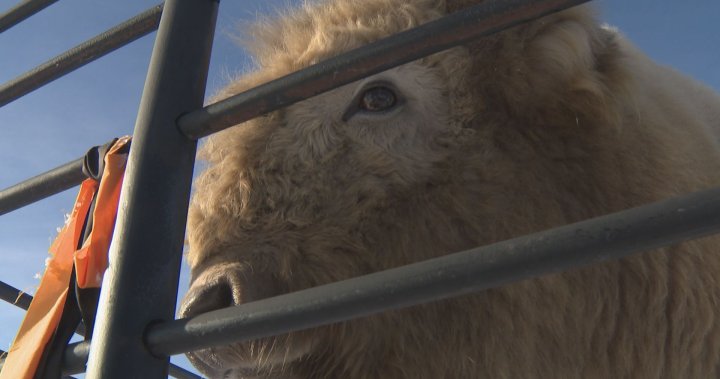
How a ranch on the Siksika First Nation became a destination for people seeking hope
Global News
Across many indigenous cultures, the white buffalo is a sacred animal because it's seen as a symbol of hope.
The story of how two white buffalo came to the Siksika First Nation, east of Calgary, is a story of light after darkness. Across many indigenous cultures, the white buffalo is a sacred animal because it’s seen as a symbol of hope. The story begins, however, in a residential school, a place where many indigenous children experienced trauma, loneliness, illness and abuse.
“I was born in a residential school. That’s when my mother and dad conceived me,” Lisa Big Snake explains. “I didn’t have an opportunity to be raised with my father. My mom left the school and my dad didn’t leave with her.”
Big Snake is now a successful business owner, mother and grandmother but the shadows cast by years of trauma passed down through generations have been difficult to overcome.
“For the first time in my life, I feel that I have a vision and I have a path that I’m going to walk with my head held high because as a young girl I felt that hopelessness that are youth are feeling now.”
In late 2019, Big Snake’s home community of Ochapowace First Nation east of Regina was struck by tragedy. A series of suicides had the community reeling and members reached out to Big Snake’s husband, Carlon, for help.
“They needed something in their community and I think the idea of a having a white bison would give hope,” he said.
Carlon Big Snake agreed to look for a white bison for the Ochapowace First Nation. He made calls and followed leads in North and South Dakota, Missouri and Montana.
“They told me that a fellow with a white buffalo had moved to Canada,” he recalled.


Nominations have officially opened for drivers to rank Ontario's worst roads.

Dashcam video shows the wild scene as a vehicle crashed into two parked cars at a high speed on Shaunslieve Drive in Bedford.

City of Wetaskiwin officials have issued a statement on the decision to ban Mayor Joe Branco from city hall — but it does little to clarify the ongoing situation.

An Abbotsford woman who was sexually abused as a child is speaking out after suffering years of abuse at the hands of her stepfather, starting at the age of just 12 years old.

Technology Minister Nate Glubish says such images, known as deepfakes, can cause people serious harm and that changing the law should create a new layer of protection.

Renters in Quebec may soon have final say over whether they're allowed to keep pets in their homes following a legal ruling that no-pet clauses in leases violate Charter rights.

Alberta RCMP say they have located a Grey 2022 Ford F-150 involved in the fatal highway shooting of an Edmonton man earlier this month. The suspect remains at large.

Education Minister Paul Calandra, however, said he won't use the notwithstanding clause if he moves to eliminate trustees in Ontario.

U.S. President Donald Trump said on Sunday that he would order federal immigration agents to airports to assist TSA. Canadians landing the U.S. should be prepared.

Three overpasses in Saskatoon have been hit in the past three weeks, with charges announced against the driver in the first incident.

Auditor General Karen Hogan says there are critical weaknesses in the integrity controls for the International Student Program.

Return trips by Canadian residents from the U.S. fell 22 per cent in January compared with a year earlier, according to the latest data.

Three byelections are being held on April 13 and the results could have an impact on both the makeup of Parliament and how long it lasts.