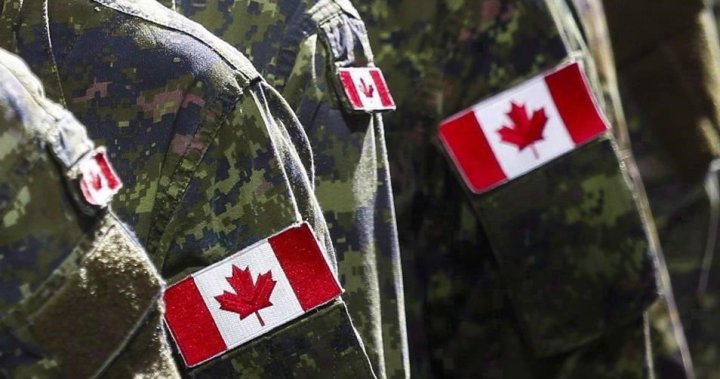
‘Home-grown disinformation’ a growing threat to Canadian Armed Forces: report
Global News
A report for Canada’s military research branch finds the Armed Forces are 'poorly placed and inadequately prepared' to defend against misinformation and disinformation campaigns.
The Canadian Armed Forces are “poorly placed and inadequately prepared” to guard against misinformation and disinformation campaigns from both “homegrown” actors and foreign adversaries, according to a new report prepared for the military’s research branch.
Prepared for Defence Research and Development Canada, the report also found that the CAF has an “ad hoc” approach to countering disinformation and needs a broader strategic plan for “information operations.”
Failing to address the issue could lead to greater dissatisfaction within the ranks, make it harder for the Canadian Armed Forces (CAF) to retain members and deepen an already serious recruitment crisis, suggested the report.
Disinformation and misinformation are terms often thrown around in the wake of the 2016 U.S. presidential election, and definitions vary. But broadly speaking, disinformation refers to incorrect information purposely spread by malicious actors, while misinformation refers to incorrect information spread by people who believe it to be true.
The report says that while the CAF does have “significant … capabilities” to address misinformation and disinformation, it also suggested those resources are largely “untapped due to an institutional mindset … rooted firmly in the pre-Internet Cold War.”
“The situation should be of particular concern to an organization in a self-described ‘existential crisis,’ which makes the (Department of National Defence and the) CAF more susceptible to harm by mis- and disinformation … especially to domestic forms,” the report read.
While the term “information operations” can conjure up images of wartime propaganda and mistruths, Brett Boudreau, a retired colonel and the author of the report, said it can also apply to everything from how the Forces communicate within the ranks to the kind of “information warfare” the world has seen during Russia’s invasion of Ukraine.
The report – which was informed by interviews with current and former senior defence and security officials – provide a long list of recommendations to improve the CAF’s handling of information operations, but mainly that the defence community needs to incorporate information operations into their overarching strategy, instead of just putting out public relations fires as they arise.


Members of Parliament are back in the House of Commons today, where the government is expected to face tough questions about new auditor general reports and the war in Iran.

Two Air Canada pilots are dead after their flight originating from Montreal collided with a fire truck at New York’s LaGuardia Airport Sunday night.

With more rain in the forecast, crews continue to deal with a mudslide earlier this week that covered a road in Coquitlam in debris, posing risk to Metro Vancouver's water supply.

A former BC Ferries CEO says the Queen of the North sinking remains ‘disturbing’ 20 years later. The ferry struck an island in Wright Sound on March 22, 2006. Two people died.

The 2026 Kraft Hockeyville top two contestants have been named. The winner receives $250,000 for ice rink upgrades, and the runner-up will receive a prize worth about $100,000.

The Office of the Parliamentary Budget Officer scrutinizes federal spending decisions and helps to cost out campaign proposals during elections.

Man’s best friend is proving to be a true lifeline. All across Saskatchewan, service dogs are providing essential, life-changing support every day.

Two days after the first day of spring, parts of Atlantic Canada and Quebec will see another blast of winter with Environment Canada forecasting several centimetres of snow.

UNESCO recognized several Maritime historical groups including the executive director of the Black Loyalist Heritage Centre for their work on the Black Loyalist archive.

Aid shipments are beginning to arrive in Cuba and a Russian oil delivery is expected this month, but fuel shortages remain critical.

Tensions flared as CAQ leadership rivals clashed over Quebec’s “third link” project in the first debate to replace Premier François Legault.

Toronto police have charged a 60-year-old man with second-degree murder in connection with the death of Xian Wei Shao, whose remains were discovered in a north end home last week.

Finance Minister François-Philippe Champagne says the government has found ways to cut spending by $60 billion but cautions that published spending cuts require important context.