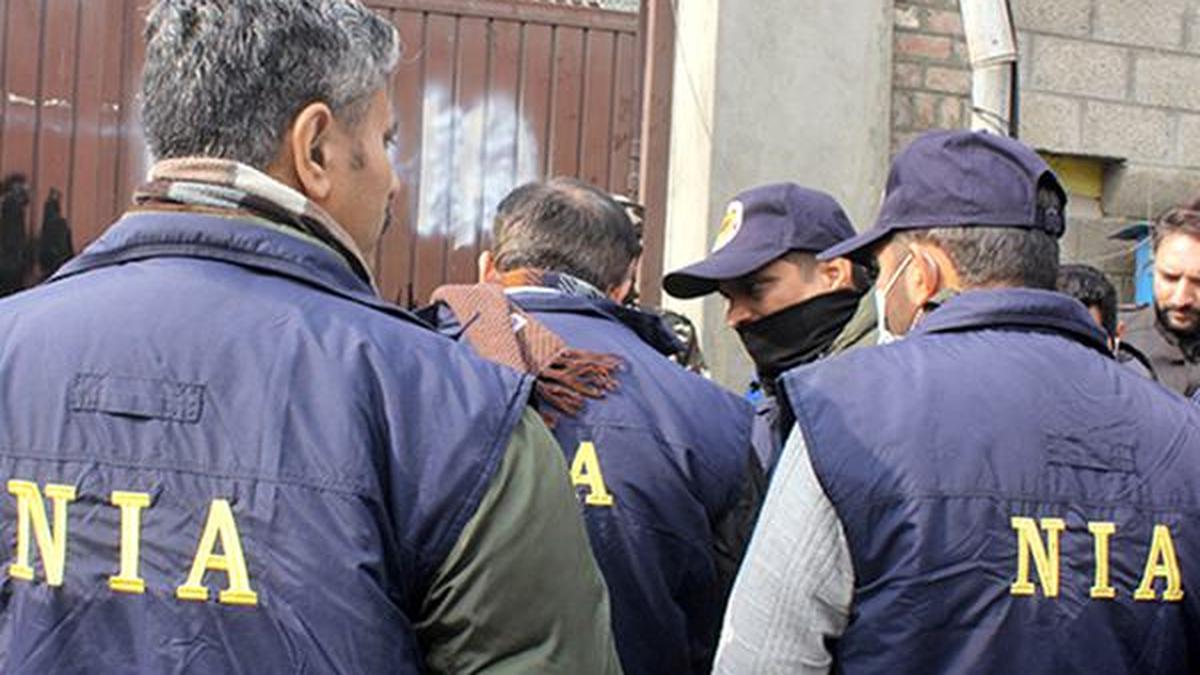
Hizb-ut-Tahrir case: NIA arrests key operative from Puducherry
The Hindu
Tamil Nadu Hizb-ut-Tahrir case: NIA arrests key accused in Tamil Nadu HuT case for spreading secessionism and anti-India ideology in Puducherry.
The National Investigation Agency arrested a key accused in the Tamil Nadu Hizb-ut-Tahrir (HuT) case related to spreading disaffection and secessionism “by promoting the ideology of the anti-India outfit” in Puducherry, officials said on Wednesday (October 9, 2024).
The central agency arrested Faizul Rahman, a ‘nakib’ or ‘State amir (chief)’ of the HuT on Tuesday (October 8, 2024) from Puducherry. He is the seventh accused in NIA custody now.
The case is related to “a conspiracy by one Hameed Hussain and other accused to spread disaffection and secessionism by promoting the ideology of the anti-India outfit,” an NIA spokesperson said.
The agency alleged that Mr. Rahman was actively engaged with the other arrested members of the gang in propagating secessionism and seeking military assistance from Pakistan to liberate Kashmir.
“The ulterior motive of the conspiracy was to establish Khilafat by overthrowing the Government of India by waging a violent Jihad,” the spokesperson said.
Mr. Rahman and others used social media to spread their propaganda, and campaign against voting, “terming it un-Islamic/Haram as per the ideology of Hizb-ut-Tahrir, NIA investigations have revealed,” the official said.
The arrested members were allegedly spreading the “violent ideology” of HuT at the behest of the organisation’s central media office to their followers through secret and encrypted communication platforms.


OpenAI is close to securing about $10 billion in fresh funding from investors, boosting its valuation to $850 billion, including the money raised, a person familiar with the matter said, confirming an earlier report in Bloomberg News

Discover the key changes in the New Income Tax Rules 2026, simplifying compliance and enhancing deductions for taxpayers.

Palantir, which won a contract to supply AI systems to Britain’s Financial Conduct Authority, will not have access to regulatory intelligence, an FCA official said

Arm Holdings announced a new artificial intelligence data centre chip on Tuesday which it said will add billions of dollars of revenue

Amazon said on Monday its Amazon Web Services region in Bahrain has been “disrupted” amid the current conflict in the Middle East

Petroleum Ministry directs reforms to enhance natural gas infrastructure, streamline approvals, and ease transition from LPG to PNG.

The Sora decision means the end of a blockbuster $1 billion deal between Disney and the ChatGPT maker that was announced a little more than three months ago.

Regulator mandates city gas distributors to provide piped gas to educational institutions within five days, supporting India's transition from LPG to PNG.

NHAI's Raajmarga InvIT listed on BSE, enhancing investor participation in highway infrastructure with strong demand and oversubscription.

HDFC Life Insurance faces ₹172 crore Income Tax order for alleged violations, plans to appeal the decision.

Air-conditioner makers in India are looking forward to FY27 with hope as the war in West Asia threatens to impact plastic component availability and consumer sentiment, adding to the challenges around raw material price and new energy label, a senior executive of a leading company has said.

Rupee falls 23 paise to an all-time low of 93.76 against the U.S. dollar amid foreign fund outflows and global uncertainties.

Stock markets surged nearly 2% as Trump paused strikes on Iran, boosting investor confidence amid easing geopolitical tensions.